

Caitlin Raymond: How STOP-BABESIOSIS Just Rewrote 40 Years of Practice
Caitlin Raymond, Assistant Professor of Pathology and Transfusion Medicine at University of Wisconsin-Madison, shared a post on LinkedIn:
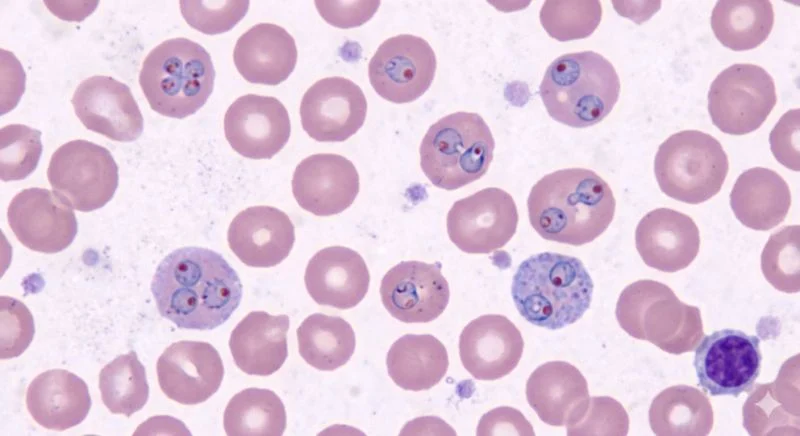
“We’ve been performing RBC exchange for severe babesiosis since 1980.
Until 2026, the entire controlled evidence base for that practice was 28 patients.
The STOP-BABESIOSIS investigators just changed that.
- 629 patients across 82 sites, 15 years of data
- Sequential target trial emulation to minimize bias
- Nearly 5-fold reduction in death or 30-day readmission with exchange (aOR 0.22, 95% CI 0.09–0.51)
- Consistent across 8 sensitivity analyses
The caveats are real – residual confounding, small death count, readmissions driving most of the composite.
And an RCT is almost certainly never coming.
But for a procedure built on case reports and mechanistic logic for four decades, this is about as close to a definitive answer as we’re going to get.
New post breaks down the evidence – including where the O’Bryan 2021 Yale data fit in – for the overworked fellow trying to make sense of it.”
Other posts featuring Caitlin Raymond on Hemostasis Today.
-
Aug 11, 2026, 11:47Rucha Patil: Strengthening Evidence-Based Haemophilia Care Across India
-
Aug 11, 2026, 11:38Maria Hadjidemetriou: The Patient Perspective in Thalassemia Care
-
Aug 11, 2026, 11:04Wolfgang Miesbach: The Critical Need for Tailored Dosing in VWD
-
Aug 11, 2026, 08:20Hasan Abbas Zaheer: Strengthening Universal Access to Safe Blood in Pakistan
-
Aug 11, 2026, 08:07Nicola Pozzi: Advancing Hemostasis Through Scientific Collaboration at Hemostasis GRC
-
Aug 11, 2026, 07:50When Access to Care Changes Everything – WFH
-
Aug 11, 2026, 07:41Kevin Land: How Cellular Therapy Is Changing Transfusion Medicine
-
Aug 11, 2026, 07:35Kuldeep Singh Bhadauria: Building the Future of Hemophilia Care in India
-
Aug 11, 2026, 07:28Archil Jaliashvili: When Every Minute Matters Time Becomes a Therapy