


Limiaa Babikir: What Is Polyspecific DAT?
Limiaa Babikir, Medical Laboratory Technologist at King Abdulaziz Hospital for National Guard, shared a post on LinkedIn:
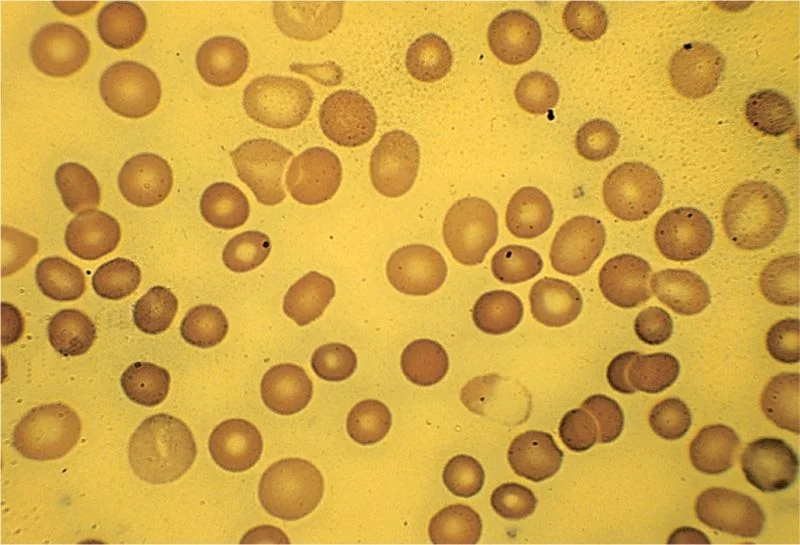
“Autoimmune hemolytic anemia (peripheral blood).
Spherocytes are commonly seen on the peripheral blood smear when extravascular immune hemolysis has occurred.
Serum Bilirubin (primarily indirect) and LD are usually elevated, and Urobilinogen may be increased in urine and stool specimens.
The DAT is usually positive.
The DAT (also called the direct antiglobulin test, and previously called the direct Coombs’ test) detects antibody and/or complement coating patient’s red cells.
In the DAT, patient red cells are washed to remove adherent proteins and then reacted with a reagent containing high-titer, polyspecific antibodies against both IgG (all subclasses) and complement, then examined for resulting red cell agglutination.
This is called the polyspecific DAT.”
Stay updated with Hemostasis Today.
-
Sep 25, 2026, 13:32Gevorg Yaghjyan: Low Drug Levels, Higher Cardiovascular Risk in Lupus
-
Sep 25, 2026, 12:53Bastu Odoka: What Happened to Blood Donation?
-
Sep 25, 2026, 12:43Thomas Dayspring: Reshaping the Biology of Atherosclerotic Plaques with New Therapies
-
Sep 25, 2026, 12:14Garima Sharma: Community Clinical Linkages for Better Postpartum Cardiovascular Care
-
Sep 25, 2026, 10:49Shefina S: From Presenting to Hosting at TRANSCON 2026
-
Sep 25, 2026, 10:37Michelle Leona Cecil: Hemophilia Advocacy and the Power of Community
-
Sep 25, 2026, 10:13Michael Baria: Platelet Concentration and PRP Outcomes in Partial Rotator Cuff Tears
-
Sep 25, 2026, 09:49Haley Coleman: Volunteering to Support Hemophilia Awareness
-
Sep 25, 2026, 08:55Hitarth Mehta: BHMS Students Gain Practical Exposure to Haemophilia Diagnosis