


Stop Asking Doctors to Do More – Reimagining the Care Team – The US Oncology
The US Oncology Network shared a post on LinkedIn:
“When someone hears the words ‘you have cancer,’ their first questions are often simple – How soon can I be seen? What happens next? Who will help me understand this?
Across community oncology, we see the anxiety that builds during prolonged waiting periods.
Patients often arrive at the oncologist’s door after weeks of referrals, testing, and uncertainty.
The longer the wait, the heavier the worry.
That reality is colliding with another:
Demand for oncology services continues to rise, care delivery is growing more complex, and practices are being asked to meet higher expectations for access, coordination, and continuity.
Practices in The US Oncology Network (The Network) are navigating these same pressures: growing patient volume, increasing clinical complexity, and finite physician capacity, while remaining committed to delivering high quality, patient centered care.
The question for practice leaders and physicians becomes:
How do we protect timely access, continuity, and compassion – without overextending clinicians or compromising care?
One of the most practical and scalable answers is intentional integration of Advanced Practice Providers (APPs) into the care model.
Why APP integration is foundational to community oncology
In many community practices, oncologists carry a workload that is both clinically intense and administratively heavy.
At the same time, patients are navigating more treatment options, more testing, more follow-ups, and more decisions than ever before.
In this environment, access is not just about getting on the schedule – it is about having a care team that can keep care moving forward.
This is where intentional APP integration can transform the experience for both patients and physicians.
Across practices in The Network, APPs are positioned as fully integrated members of the care team who expand capacity, strengthen continuity, and support physicians in focusing on the most complex clinical decision-making.
In this model, APPs play a direct role in expanding new patient capacity while also managing follow-up care, initial intake, and ongoing treatment for appropriate patient populations.
This team-based approach allows oncologists and APPs to share responsibility for new patient visits, address acute changes in therapy, and lead complex clinical decision-making-while ensuring continuity, timely access, and high-quality care across the cancer continuum.
As Dr. Leslie Busby, Chief Medical Officer at The Network notes:
‘When APPs are integrated intentionally, it changes how our entire care team functions.We’re able to see patients sooner, spend more time on complex decisions, and ensure patients feel supported between visits.’
This distinction is critical: integration is not the same as simply adding APPs. Integration requires role clarity, aligned workflows, appropriate scheduling and billing models, and a shared commitment.
How The Network supports intentional APP integration
What differentiates The Network’s approach is the way APP integration is supported and operationalized across practices.
Rather than a one size fits all model, practices partner with dedicated APP Services experts who work alongside clinical and administrative leaders to assess current state, identify opportunities, and guide implementation of tailored strategies.
This work includes:
- Data driven analysis of visit volume, scheduling patterns, billing, and capacity
- On‑site assessments to understand clinic flow, roles, and opportunities for optimization
- Structured recommendations supported by defined KPIs
- Ongoing evaluation to understand what is working and where adjustments are needed
In parallel, The Network invests in comprehensive onboarding and education to ensure APPs are prepared to step into their roles with confidence.
This includes immersive, in- person onboarding programs offered multiple times each year, standardized competency milestones, and ongoing professional development across oncology specialties.
The goal is consistency without rigidity – creating a strong foundation while allowing practices to adapt models to their unique needs.
Real world examples of APP integration at work
One example of intentional APP integration in practice is the APP‑led Benign Hematology Program implemented across multiple practices in The Network.
At one practice, expanding APP led benign hematology consults significantly increased access to care.
Within a year of implementation, APPs more than tripled their new patient capacity, helping reduce time to first appointment for new cancer patients from 15 days to just 7 days.
This shift allowed physicians to focus on complex oncology care, while patients benefited from faster access and more timely evaluation.
At another practice, the launch of an APP led benign hematology model helped clarify roles and expand access within months.
APPs now manage a meaningful share of new benign hematology consults, contributing to a 50% reduction in time to first appointment – from 8 days to 4 days – while maintaining high patient satisfaction and continuity of care.
While each practice implemented the model differently, the impact was consistent: faster access for patients, clearer roles for care teams, and preserved capacity for physicians.
These outcomes are reinforced by broader Network trends, including sustained growth in APP roles across medical, surgical, and radiation oncology, and continued investment in APP leadership development and governance structures.
Benign hematology is one example of how intentional APP integration can unlock access and capacity across the practice.
A forward-looking perspective
If your practice is feeling the pressure of volume, complexity, and staffing, you are not alone.
The answer is intentional care team design – building models that allow every clinician to practice at the top of license and every patient to feel supported at every step.
APP integration is not a staffing tactic.
It is a care strategy.
And across The Network, practices are continuing to grow, refine, and scale APP led models that expand access, strengthen clinical teams, and improve continuity of care today – while laying the groundwork for future innovation.
As care delivery continues to evolve, this commitment to intentional APP integration positions community oncology to adapt, lead, and meet what comes next.
About the Series
Innovating Together Inside The Network
At The US Oncology Network, innovation is more than a concept-it’s a shared commitment to continuous improvement in cancer care.
Through this series, we highlight the technology, programs, and efficiencies driving meaningful progress across The Network. From clinical advancements to operational enhancements, these stories reflect how we’re working together to elevate care, empower providers, and improve outcomes for patients-one innovation at a time.
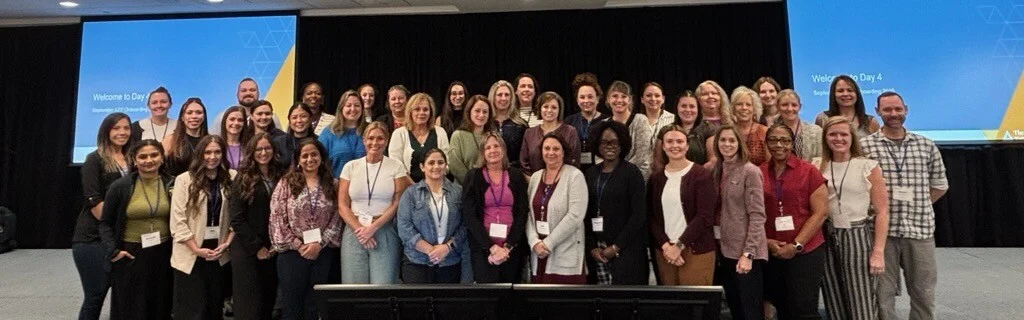
By Eileen Redmond Vella, Director of Advanced Practice Providers; Dylana Smith, Senior Manager, APP Services”
Elizabeth Rauschenberg, Advanced Practice Provider Lead at Maryland Oncology Hematology, shared The US Oncology Network’s post on LinkedIn, adding:
“This resonates strongly in benign hematology, where access, continuity, and longitudinal relationships are just as critical as clinical expertise.
Thoughtful APP integration allows hematologists to focus on complex diagnostic decision-making and disease strategy, while APPs drive continuity of care for patients managing chronic conditions like anemia, anticoagulation disorders, ITP, and sickle cell disease.
When care teams are intentionally designed, patients benefit from earlier access, more touchpoints, and consistent education – without asking clinicians to do more at the expense of burnout.
This model isn’t about task shifting; it’s about practicing at the top of license for everyone on the team.
Excited to see this mindset gaining traction and shaping sustainable, patient-centered care.”
Proceed to the video attached to the post.
Stay updated with Hemostasis Today.
-
Sep 30, 2026, 01:52Javed Anees: DADA2 – When a Young Stroke Is More Than a Stroke
-
Sep 30, 2026, 01:51How a Venous Thrombus Becomes Revascularized – ISTH
-
Sep 29, 2026, 22:45Victor Agunyego: Paracetamol – The Most Common Drug We Underestimate
-
Sep 29, 2026, 22:42Nova Sinclair: Advancing the Future of Hematology – Meet Our 2027 Organizing Committee
-
Sep 29, 2026, 22:41Lorenz Räber: Intracoronary Imaging in PCI – Why, When, How, and Which Modality?
-
Sep 29, 2026, 22:31Selma Turkovic: Pleased to Deliver the Opening Presentation at Kingston Hospital
-
Sep 29, 2026, 22:31Miguel Teran: Ultrasound and Simulation in Arterial Blood Sampling
-
Sep 29, 2026, 22:28Mohammad Refaei: Navigating Your Career in Hematology From Training to Practice
-
Sep 29, 2026, 22:27Matteo Foschi: 10 Clinical Pearls for Antithrombotic Therapy in Secondary Stroke Prevention