

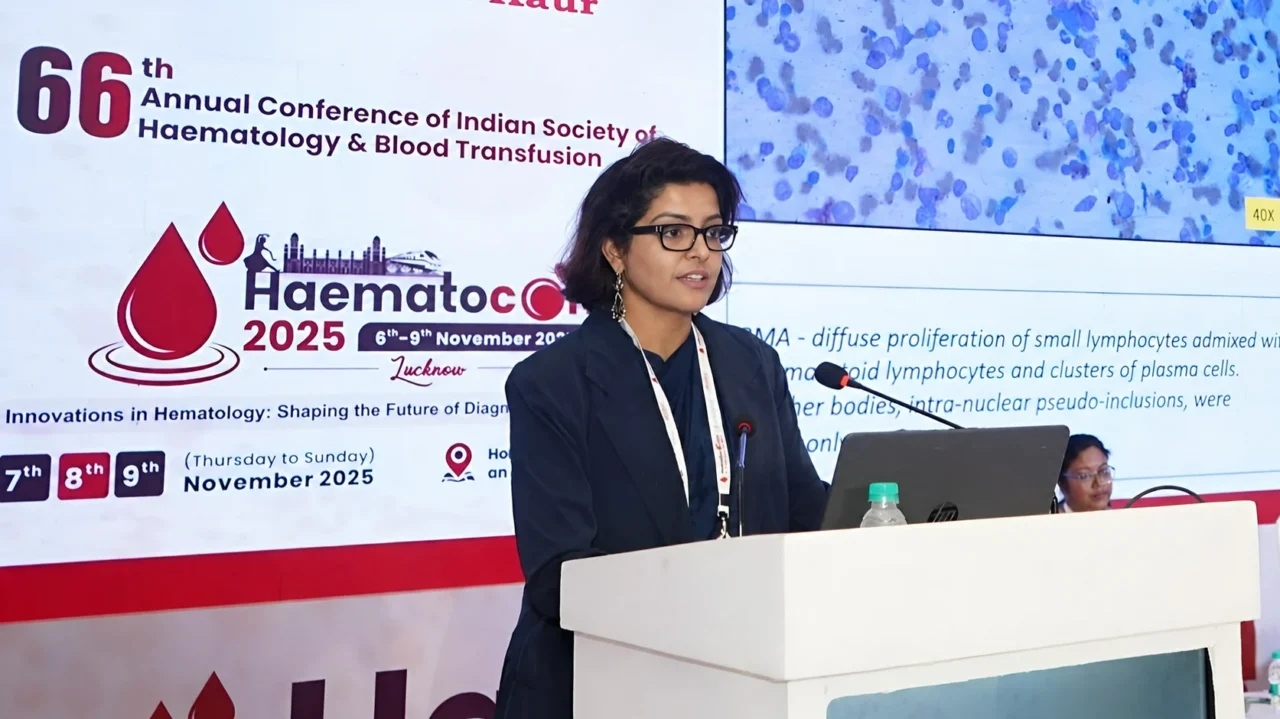
Gurpreet Kaur Sagoo: A Rare Bone Marrow Failure Syndrome That Challenges Early Diagnosis
Gurpreet Kaur Sagoo, Professor at Armed Forces Medical College, shared a post on LinkedIn about a recent article she and her colleagues co-authored, published in Medical Journal of Dr. D.Y. Patil Vidyapeeth, adding:
”Congenital amegakaryocytic thrombocytopenia (CAMT) is a rare autosomal‑recessive bone‑marrow‑failure syndrome that can mimic several other neonatal and infantile thrombocytopenic disorders, leading to diagnostic dilemmas. The key is to suspect CAMT early in infants with persistent or progressive thrombocytopenia, even when presentation is atypical or delayed
Core diagnostic features of CAMT
- Thrombocytopenia at or shortly after birth, often severe (<50K/cumm )with normal‑sized platelets and no dysmorphic features.
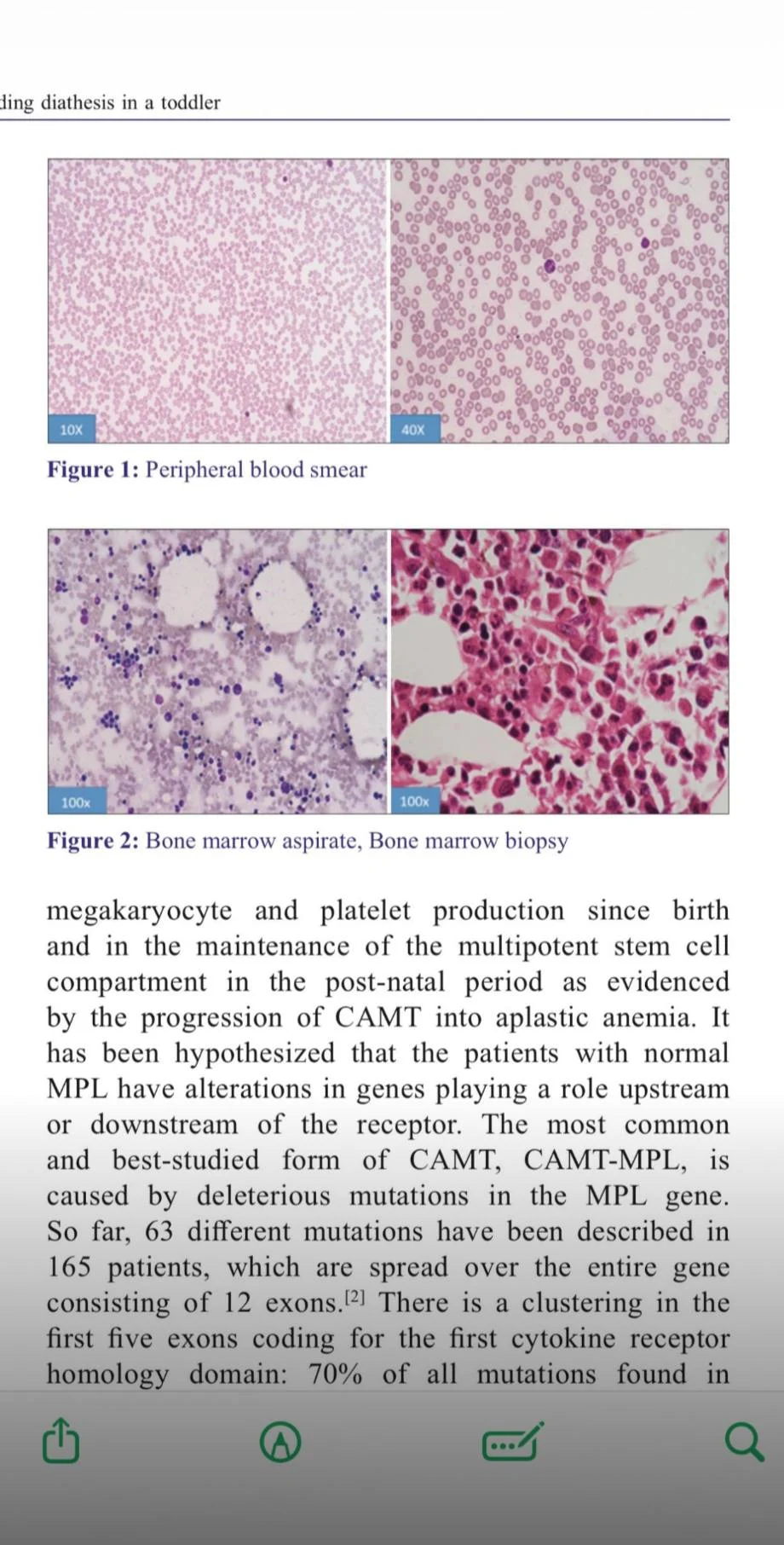
- Bone‑marrow examination shows absent or markedly reduced megakaryocytes; red and white lineages are usually normal initially but may progress to pancytopenia.
- Serum thrombopoietin (TPO) levels are very high due to loss of c‑MPL receptor‑mediated clearance, and genetic testing confirms homozygous or compound heterozygous MPL mutations.
Common diagnostic dilemmas
1. Differentiating from acquired thrombocytopenias Neonatal thrombocytopenia is more often acquired (e.g., infection, immune, disseminated intravascular coagulation) than congenital.
Dilemmas arise when:
- Thrombocytopenia is detected only after the newborn period, because CAMT can present beyond the first days of life.
- No family history or obvious consanguinity is present, so clinicians lean toward transient or immune causes. Points to consider:
- Persistent thrombocytopenia despite resolution of infection or sepsis warrants bone‑marrow evaluation and TPO testing.
- Normal platelet size and normal early red/white cell counts favor CAMT over some immune or consumptive causes.”
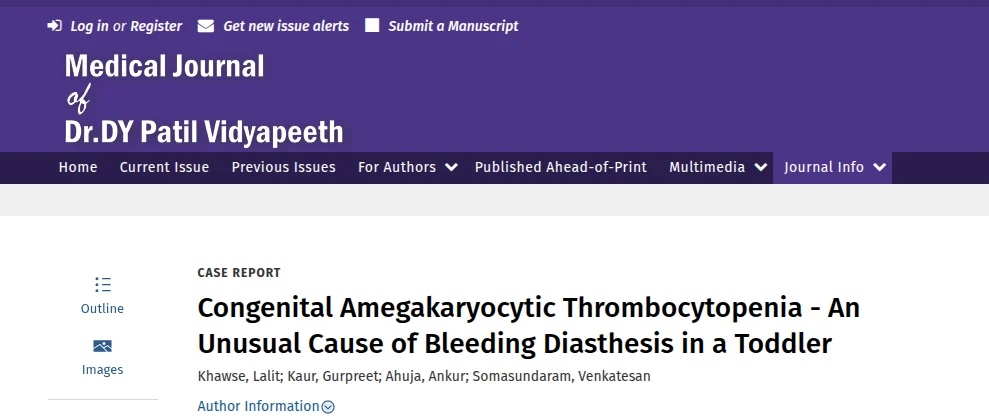
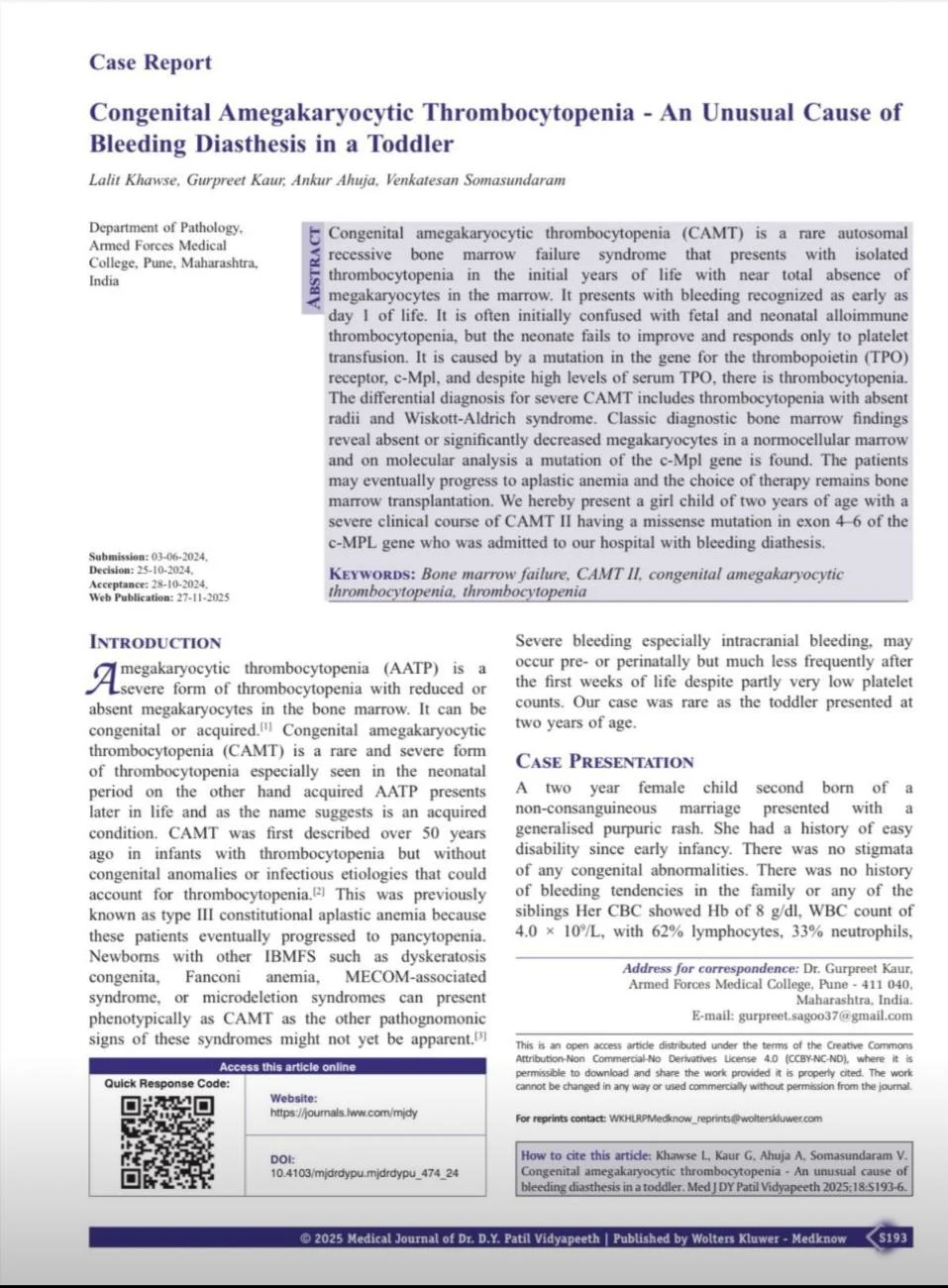
Title: Congenital Amegakaryocytic Thrombocytopenia – An Unusual Cause of Bleeding Diasthesis in a Toddler
Authors: Lalit Khawse, Gurpreet Kaur, Ankur Ahuja, Venkatesan Samasundaram
Stay updated on all scientific advances with Hemostasis Today.
-
Sep 25, 2026, 12:53Bastu Odoka: What Happened to Blood Donation?
-
Sep 25, 2026, 12:43Thomas Dayspring: Reshaping the Biology of Atherosclerotic Plaques with New Therapies
-
Sep 25, 2026, 12:14Garima Sharma: Community Clinical Linkages for Better Postpartum Cardiovascular Care
-
Sep 25, 2026, 10:49Shefina S: From Presenting to Hosting at TRANSCON 2026
-
Sep 25, 2026, 10:37Michelle Leona Cecil: Hemophilia Advocacy and the Power of Community
-
Sep 25, 2026, 10:13Michael Baria: Platelet Concentration and PRP Outcomes in Partial Rotator Cuff Tears
-
Sep 25, 2026, 09:49Haley Coleman: Volunteering to Support Hemophilia Awareness
-
Sep 25, 2026, 08:55Hitarth Mehta: BHMS Students Gain Practical Exposure to Haemophilia Diagnosis
-
Sep 25, 2026, 07:25Varun Capoor: How Therapeutic Apheresis and Transfusion Medicine Can Complement Clinical Management in SCD