

Tareq Abadl: Massive Transfusion – The Hidden Citrate Risk
Tareq Abadl, Medical Lab Specialist, shared a post on LinkedIn:
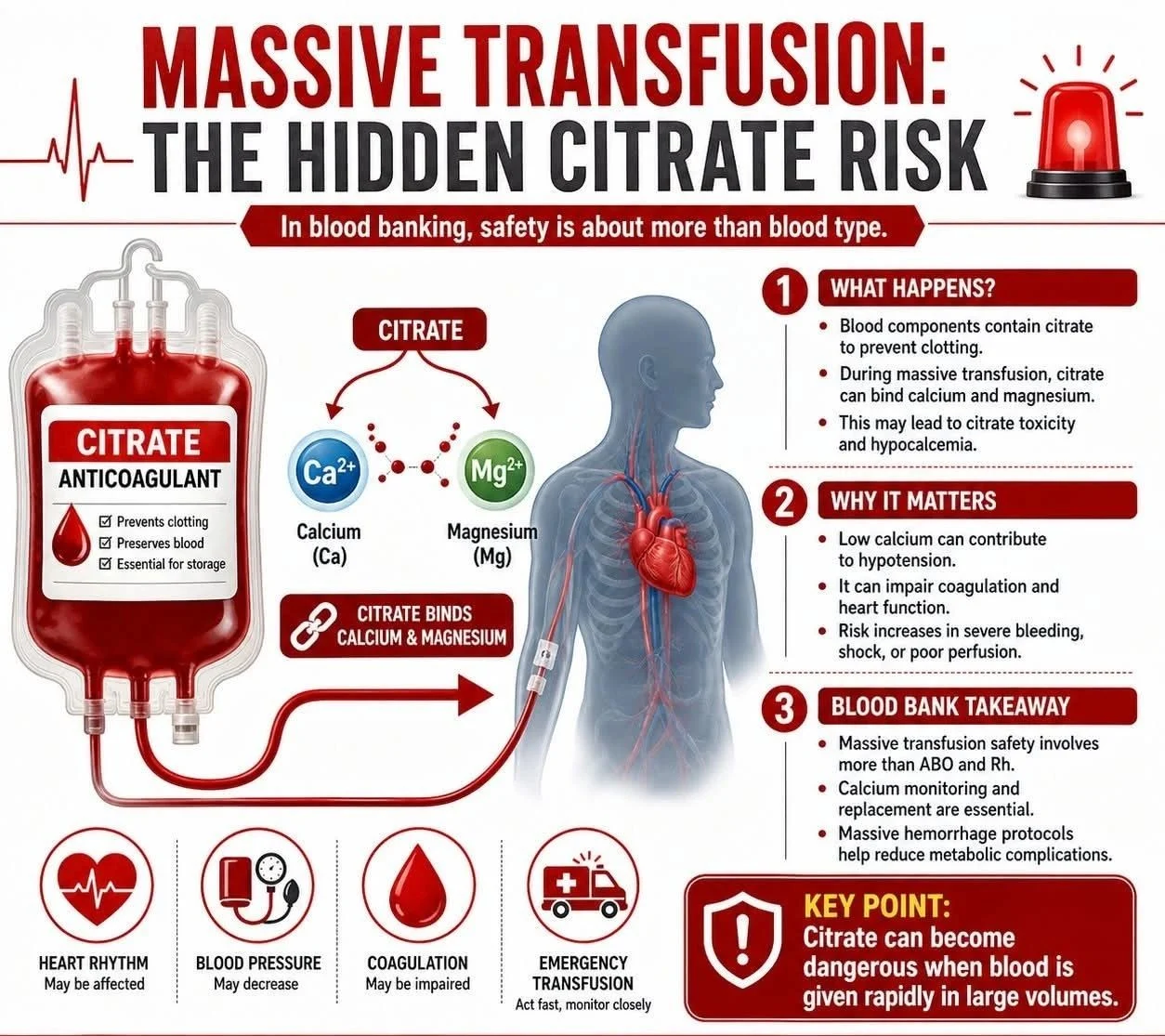
“Did you know that during massive transfusion, one hidden danger is not the blood type – but the anticoagulant inside the blood bag?
Blood components are stored with citrate to prevent clotting.
During massive transfusion, large amounts of citrate can bind calcium and magnesium in the patient’s bloodstream, leading to citrate toxicity and hypocalcemia.
Why does this matter?
Because calcium is critical for:
- Cardiac contractility
- Coagulation pathways
- Neuromuscular function
- Cellular stability.
When citrate accumulates faster than the body can metabolize it, patients may develop:
- Hypotension
- Reduced ventricular function
- Arrhythmias
- Coagulopathy
- Tetany or increased neuromuscular excitability.
Under normal conditions, citrate is rapidly metabolized through the Krebs cycle, mainly by the liver, kidneys, and skeletal muscle. But in trauma, shock, hypothermia, liver dysfunction, or poor tissue perfusion, citrate clearance decreases significantly – making toxicity more likely during rapid transfusion.
An important point in transfusion medicine:
- Hypocalcemia in massive transfusion is often dilutional and citrate-related at the same time.
That is why modern Massive Transfusion Protocols (MTPs) emphasize:
- Monitoring ionized calcium
- Early calcium replacement
- Close assessment of coagulation and electrolytes
Prevention of the ‘lethal triad’:
- Hypothermia
- Coagulopathy
- Acidosis.
Another interesting blood bank fact:
- Plasma and platelets usually contain more citrate than packed RBCs, so the risk may increase when large amounts of these components are transfused rapidly.
This is a powerful reminder that transfusion safety is not only about ABO and Rh compatibility.
Blood bank science also involves understanding metabolic, electrolyte, and coagulation complications during emergency transfusion support.”
Other posts featuring Tareq Abadl on Hemostasis Today.
-
Sep 25, 2026, 16:26Gemma Postil: AI Tools in Modern Health Research
-
Sep 25, 2026, 16:01Mostafa Hammam: When aPTT Correction Is Not the End
-
Sep 25, 2026, 15:50Adam Boruchov: Registration Is Open For The 2026 New England Hematologic Diseases Symposium
-
Sep 25, 2026, 15:23Bringing Hope and Treatment Access to Morocco’s Hemophilia Community – World Federation of Hemophilia
-
Sep 25, 2026, 15:22Alejandro González Veliz: Targeting Atherosclerosis Before the First Event
-
Sep 25, 2026, 15:00Sarah Richardson: Finding Strength Through Bleeding Disorders Advocacy
-
Sep 25, 2026, 14:54James Fildes: Modeling Device Related Thrombosis in Multi Organ Systems
-
Sep 25, 2026, 14:51Platelet Metabolic Reprogramming: How Cellular Energy Drives Thrombosis
-
Sep 25, 2026, 14:46Thomas Maxwell: From Hemophilia Shame to Strength – Walking for Bleeding Disorders