


Muhammad Usman: A Practical Overview of Major Blood Components and Their Clinical Use
Muhammad Usman, Medical Laboratory Technologist and Shift Supervisor at Mujahid Hospital, shared a post on LinkedIn:
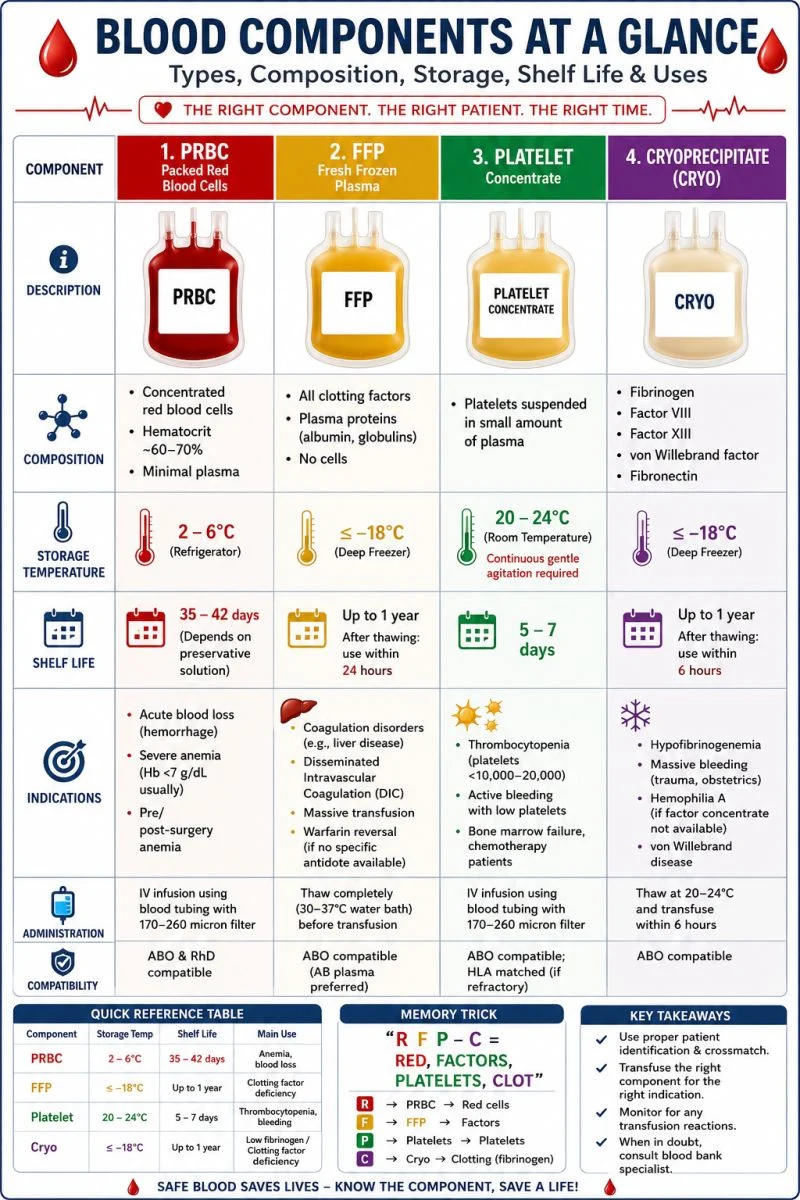
“Blood Components Overview
Packed Red Blood Cells (PRBC):
Composition
- Concentrated red blood cells
- Hematocrit ~60–70%
- Minimal plasma
Storage Temperature
2–6°C (refrigerator)
Shelf Life
35–42 days (depends on preservative solution)
When to Use
- Acute blood loss (hemorrhage)
- Severe anemia (Hb less than 7 g/dL usually)
- Pre/post-surgery anemia
Fresh Frozen Plasma (FFP):
Composition
- All clotting factors
- Plasma proteins (albumin, globulins)
- No cells
Storage Temperature
–18°C or colder (deep freezer)
Shelf Life
- Up to 1 year
- After thawing: use within 24 hours
When to Use
- Coagulation disorders (e.g., liver disease)
- Disseminated Intravascular Coagulation (Disseminated Intravascular Coagulation)
- Massive transfusion
- Warfarin reversal (if no specific antidote available)
Platelet Concentrate:
Composition
Platelets suspended in small amount of plasma
Storage Temperature
20–24°C (room temperature)
Continuous gentle agitation required
Shelf Life
5–7 days
When to Use
- Thrombocytopenia (platelets <10,000–20,000)
- Active bleeding with low platelets
- Bone marrow failure, chemotherapy patients
Cryoprecipitate:
Composition
- Fibrinogen
- Factor VIII
- Factor XIII
- von Willebrand factor
Storage Temperature
–18°C or colder
Shelf Life
- 1 year
- After thawing: use within 6 hours
When to Use
- Hypofibrinogenemia
- Massive bleeding (trauma, obstetrics)
- Hemophilia A (if factor concentrate not available)
- Von Willebrand disease
Quick Memory Table:
| Component | Temp | Shelf Life | Main Use |
| PRBC | 2–6°C | 35–42 days | Anemia, blood loss |
| FFP | Less than –18°C | 1 year | Clotting factor deficiency |
| Platelets | 20–24°C | 5–7 days | Low platelets |
| Cryo
|
Less than –18°C
|
1 year
|
Low fibrinogen
|
Easy Memory Trick:
‘RFP-C: Red, Factors, Platelets, Clot’
- R stands for PRBC, which provides red cells.
- F stands for FFP, which provides clotting factors.
- P stands for Platelets, which provide platelets.
- C stands for Cryo, which supports clotting through fibrinogen.”
Stay updated with Hemostasis Today.
-
Sep 29, 2026, 22:45Victor Agunyego: Paracetamol – The Most Common Drug We Underestimate
-
Sep 29, 2026, 22:42Nova Sinclair: Advancing the Future of Hematology – Meet Our 2027 Organizing Committee
-
Sep 29, 2026, 22:41Lorenz Räber: Intracoronary Imaging in PCI – Why, When, How, and Which Modality?
-
Sep 29, 2026, 22:31Selma Turkovic: Pleased to Deliver the Opening Presentation at Kingston Hospital
-
Sep 29, 2026, 22:31Miguel Teran: Ultrasound and Simulation in Arterial Blood Sampling
-
Sep 29, 2026, 21:47Javed Anees: DADA2 – When a Young Stroke Is More Than a Stroke
-
Sep 29, 2026, 22:28Mohammad Refaei: Navigating Your Career in Hematology From Training to Practice
-
Sep 29, 2026, 22:27Matteo Foschi: 10 Clinical Pearls for Antithrombotic Therapy in Secondary Stroke Prevention
-
Sep 29, 2026, 22:26A Global Call for Action on Cardiovascular Health on World Heart Day – ISTH