

A Century After Its Discovery, VWD Remains Dramatically Underdiagnosed Worldwide – RPTH Journal
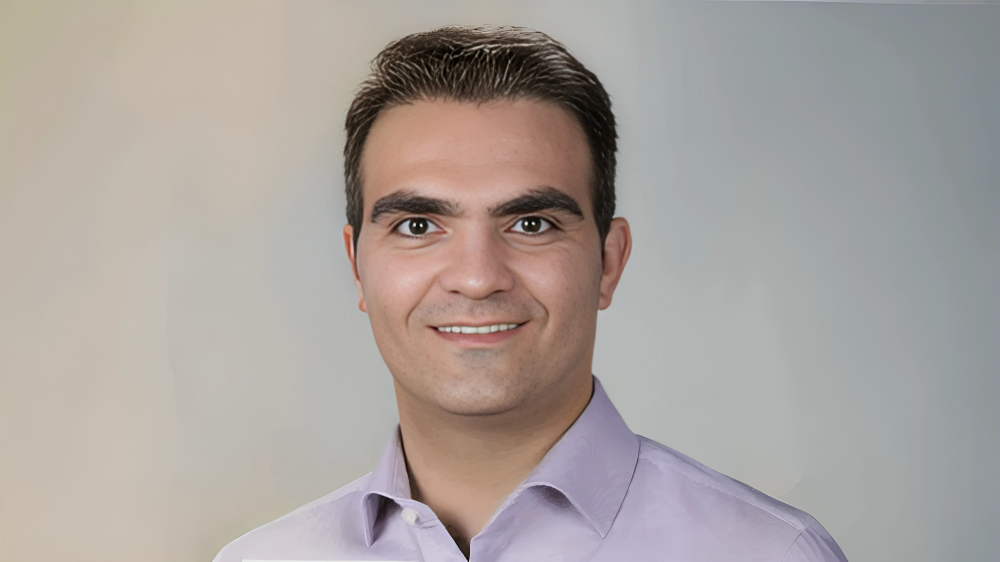
RPTH Journal shared on LinkedIn about a recent article by Omid Seidizadeh et al, adding:
”A century after its discovery, von Willebrand disease (VWD) remains dramatically underdiagnosed worldwide.
A new RPTH review highlights one of the most striking paradoxes in hematology.
Although VWD is the most common inherited bleeding disorder, the vast majority of affected individuals remain undiagnosed or misdiagnosed.
The numbers are staggering:
- Population studies estimate VWD prevalence at 0.8%–1.6%
- At least 1 in 1000 individuals likely has a clinically significant disease
- Yet global registry prevalence averages only 25.6 per million
Many patients experience:
- recurrent mucosal bleeding
- iron deficiency anemia
- chronic fatigue
- impaired quality of life
- missed school/work
- delayed surgical or obstetric recognition
Why does underdiagnosis persist after 100 years?
The review outlines several key barriers:
- Limited awareness among clinicians and the public
- Poor access to specialized VWF testing
- Biological variability of VWF levels
- Complex and heterogeneous phenotypes
- Assay variability and diagnostic inconsistency
- Misclassification as platelet disorders or hemophilia A
Meaning patients may intermittently appear ‘normal’ in routine testing.
The paper also highlights major global inequities. In low- and middle-income countries, only the most severe VWD phenotypes are typically diagnosed due to limited access to specialized laboratory infrastructure.
The message of this review is powerful:
The next century of VWD should not focus only on discovering new biology, but on ensuring patients are actually diagnosed.
A thoughtful and important review bridging bleeding disorders, women’s health, global health equity, diagnostic medicine, and laboratory hematology.”
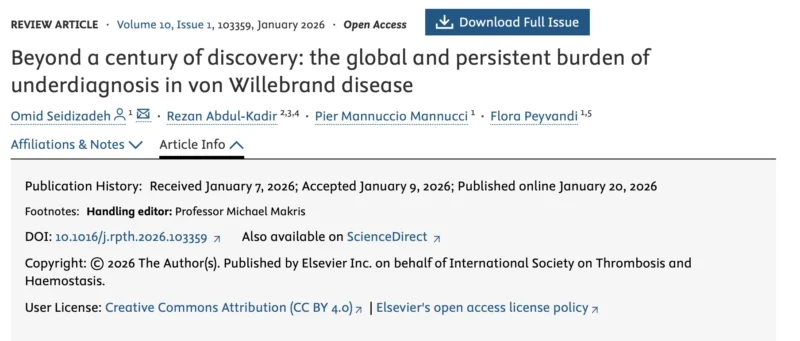
Title: Beyond a century of discovery: the global and persistent burden of underdiagnosis in von Willebrand disease
Authors: Omid Seidizadeh, Rezan Abdul-Kadir, Pier Mannuccio Mannucci, Flora Peyvandi
Stay updated on all scientific advances with Hemostasis Today.
-
Oct 14, 2026, 20:36How Does Inflammation Reshape Red Blood Cell Production? – ASH
-
Oct 14, 2026, 20:30Marilena Vrana: Putting Faces to the Chain – Donors and Patients Connect in Milan for IPAW 2026
-
Oct 14, 2026, 20:25Asim Alam: Hillsborough County and Partners Demonstrate Drone-Based Emergency Blood Delivery
-
Oct 14, 2026, 20:19Zahid Khanzada: 3rd Position in the Hematology Quiz at PCUH
-
Oct 14, 2026, 20:14Samiul Bashir: The 47th Recognized System in Transfusion Medicine
-
Oct 14, 2026, 20:06Mavis Agnes Kisakye: Petition Advocating for Enhanced Haemophilia Care Presented to EALA Parliament
-
Oct 14, 2026, 20:03Sheharyar Raza: What Are Ways AI and ML Are Impacting How We Collect and Transfuse Blood?
-
Oct 14, 2026, 19:58Alessandro Lucchesi: Three Minutes of RiseMPN 2025
-
Oct 14, 2026, 19:55Talha Waseem: HbA1c – What Does Its Name Actually Mean?