


Daniel Ben-Mordechay: The Critical Role of Ultrasound in Early Detection of DVT
Daniel Ben-Mordechay, Chief Executive Officer at Orimed GTD, shared a post on LinkedIn:
“Deep Vein Thrombosis (DVT): The Critical Role of Ultrasound in Early Detection
Deep Vein Thrombosis (DVT) is a potentially life-threatening condition caused by thrombus formation within the deep venous system, most commonly in the lower extremities.
If left untreated, part of the clot may embolize to the pulmonary circulation, resulting in pulmonary embolism (PE), a major cause of cardiovascular morbidity and mortality.
Ultrasound is the imaging modality of choice for evaluating suspected DVT.
It is non-invasive, radiation-free, widely available, and provides real-time assessment of venous anatomy and flow.
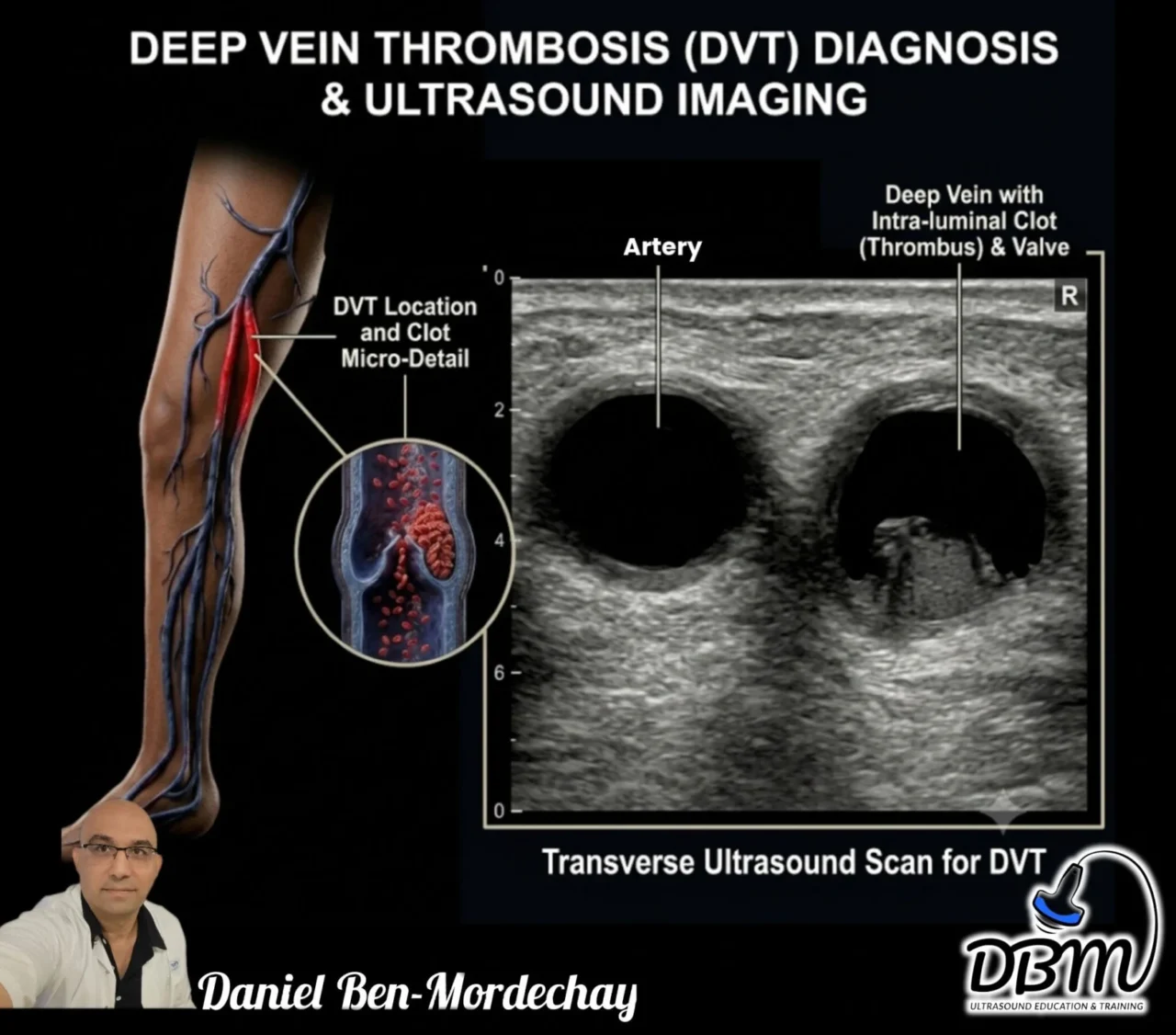
In this transverse ultrasound image, the artery demonstrates a patent lumen, while the adjacent vein appears to contain intraluminal echogenic material suspicious for thrombus.
When associated with loss of venous compressibility, these findings are highly suggestive of DVT.
Key ultrasound findings
- Loss of complete venous compressibility (the most important diagnostic sign)
- Visualization of intraluminal thrombus
- Venous enlargement in acute thrombosis
- Reduced or absent Doppler flow
- Loss of respiratory phasicity and augmentation
- Why Early Detection Matters
- Prevention of pulmonary embolism
- Reduction of morbidity and mortality
- Lower risk of post-thrombotic syndrome
- Preservation of long-term venous function
Compression ultrasonography remains the cornerstone of DVT diagnosis, and POCUS continues to expand the ability of clinicians to rapidly evaluate patients at the bedside.
With appropriate training, focused compression ultrasound provides excellent diagnostic accuracy for proximal lower-extremity DVT and has become an essential skill in modern clinical practice.”
Stay updated with Hemostasis Today.
-
Nov 9, 2026, 09:29Veronica Sanchez: A Framework for Woman’s Health
-
Nov 8, 2026, 19:31Anna Kajaste-Rudnitski: Presenting AAV-Induced p53 Signalling in Human CNS Cells at ESGCT 26
-
Nov 8, 2026, 19:29David McIntosh: Cybersecurity Matters, but Blood Availability Remains the Bigger Challenge
-
Nov 8, 2026, 19:26Wenxue Ma: An Integrative Framework for Macrophage-Mediated Therapeutic Resistance in Cancer
-
Nov 8, 2026, 19:25Yildiz Yigit: Presenting a Polycythemia Vera Case at the MPN Subcommittee Session
-
Nov 8, 2026, 18:56Denis Oduor: Strengthening the Regulation and Delivery of Blood Transfusion and Transplantation Services
-
Nov 8, 2026, 18:28Raghavendra Rao: A Narrative Review on Chronic Venous Disease during Pregnancy
-
Nov 8, 2026, 17:57Dhiren Patel: PLD1-Derived Phospholipids Regulate NAD Kinase and ROS Production in Neutrophils
-
Nov 8, 2026, 17:48Andra T.: What Causes Antiphospholipid Syndrome? – Four Steps, not One Cause