

Caplacizumab in Immune-Mediated TTP: Evidence from the Largest Global Real-World Cohort
Immune-mediated thrombotic thrombocytopenic purpura (iTTP) is a rare but life-threatening thrombotic microangiopathy characterized by severe ADAMTS13 deficiency caused by autoantibody-mediated inhibition.
The resulting accumulation of ultra-large von Willebrand factor (vWF) multimers leads to uncontrolled platelet adhesion and aggregation, triggering widespread microvascular thrombosis and multiorgan ischemic injury.
Despite major therapeutic advances with therapeutic plasma exchange and immunosuppressive treatment, the acute phase of iTTP remains a medical emergency.
Rapid interruption of microthrombus formation continues to be a central therapeutic objective in order to prevent early mortality and organ damage.
Caplacizumab and Mechanism of Action
Caplacizumab is a nanobody directed against the A1 domain of von Willebrand factor. By inhibiting the interaction between vWF and platelets, it rapidly prevents the formation of microvascular platelet-rich thrombi.
Unlike immunosuppressive therapies, its effect is immediate and independent of the underlying autoimmune process. This unique mechanism makes caplacizumab particularly effective in the acute phase of iTTP, where time-to-intervention is critical.
Caplacizumab is an approved therapy for iTTP and has been integrated into international treatment strategies. In routine clinical practice, its use is generally initiated according to local protocols as part of first-line management.
It received regulatory approval in the European Union in 2018 and in the United States in 2019.
As a result, caplacizumab is now widely used in combination with therapeutic plasma exchange and immunosuppressive therapy. In this setting, it serves as a rapid-acting “bridge” therapy, providing immediate protection against ongoing microvascular thrombosis until immune recovery and restoration of ADAMTS13 activity are achieved.
From Trials to Real-World Practice: Does the Benefit Persist?
The clinical efficacy of caplacizumab was first established in the pivotal TITAN trial, followed by confirmation in the larger HERCULES trial. Both studies demonstrated that caplacizumab significantly accelerates platelet normalization, reduces disease exacerbations, and improves overall clinical outcomes in acute iTTP.
At the EHA 2026 Congress, Professor Flora Peyvandi (University of Milan, former President of ISTH) presented the largest international real-world cohort of patients treated with caplacizumab to date.
Study Design
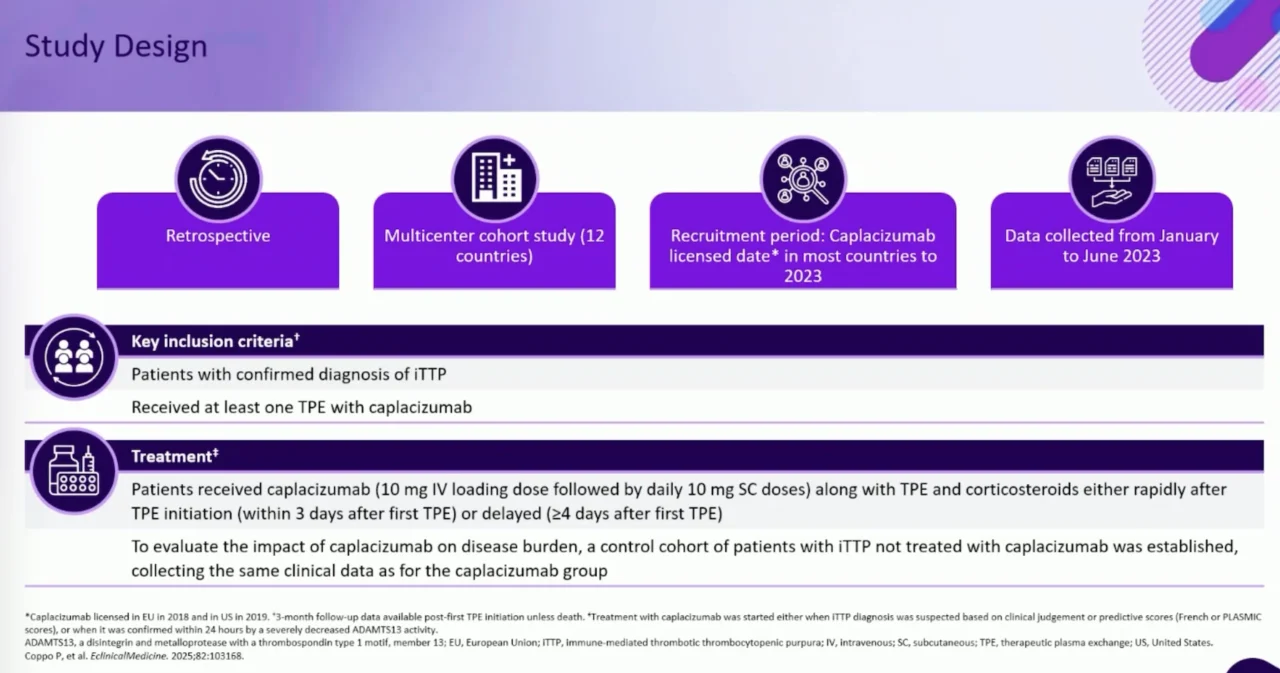
This retrospective, multinational observational study included 1,067 patients treated with caplacizumab, of whom 1,015 met inclusion criteria and were analyzed. A contemporaneous control cohort of 510 patients with iTTP treated without caplacizumab was used for comparison.
Most patients in the caplacizumab group received modern triple therapy comprising caplacizumab, TPE, and immunosuppression. Baseline characteristics were generally well balanced between groups.
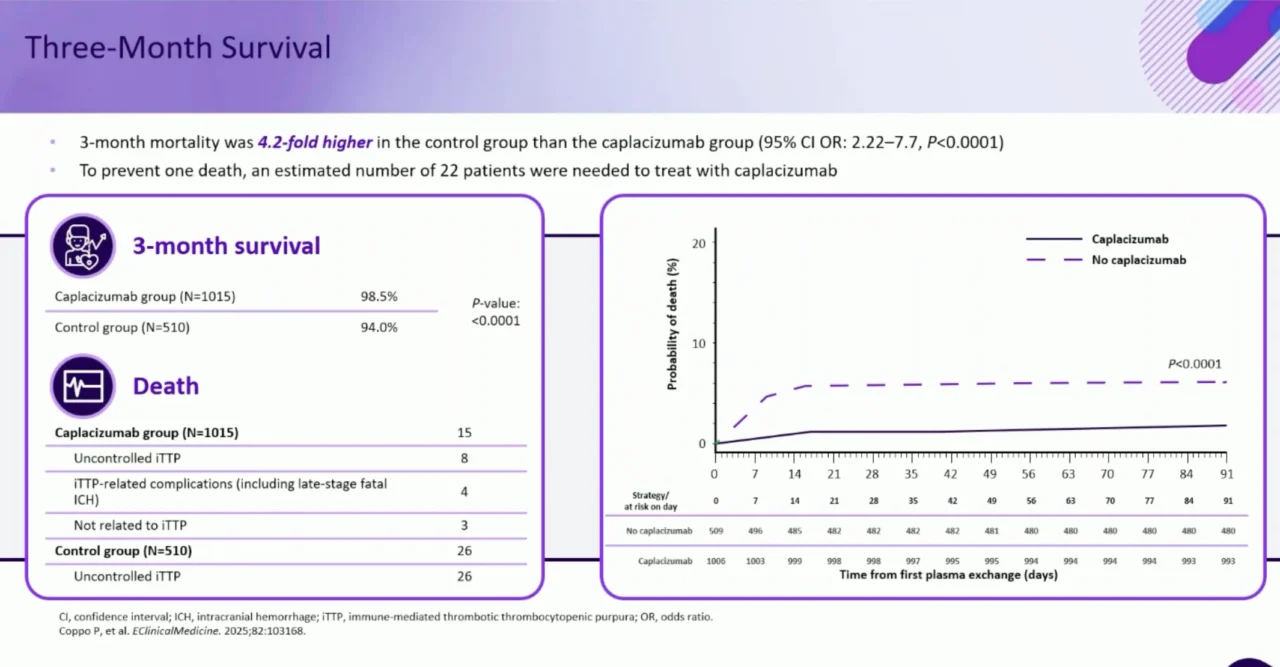
Importantly, disease severity at presentation was comparable, and neurological involvement was even more frequent in the caplacizumab cohort, suggesting that outcomes were not driven by milder disease in treated patients.
Key Baseline Characteristics
Most patients in the caplacizumab group received a modern triple therapy approach combining caplacizumab, therapeutic plasma exchange (TPE), and immunosuppression. A subset of patients received early initiation of caplacizumab within the first three days of diagnosis.
Baseline demographic and disease characteristics were overall well balanced between groups, with no major differences likely to confound outcomes.
Importantly, patients receiving caplacizumab were not less severely affected at presentation; in fact, neurological involvement was more frequently observed in this group, suggesting comparable or even higher disease severity.
Mortality Outcomes: Can early microvascular control change survival in iTTP?
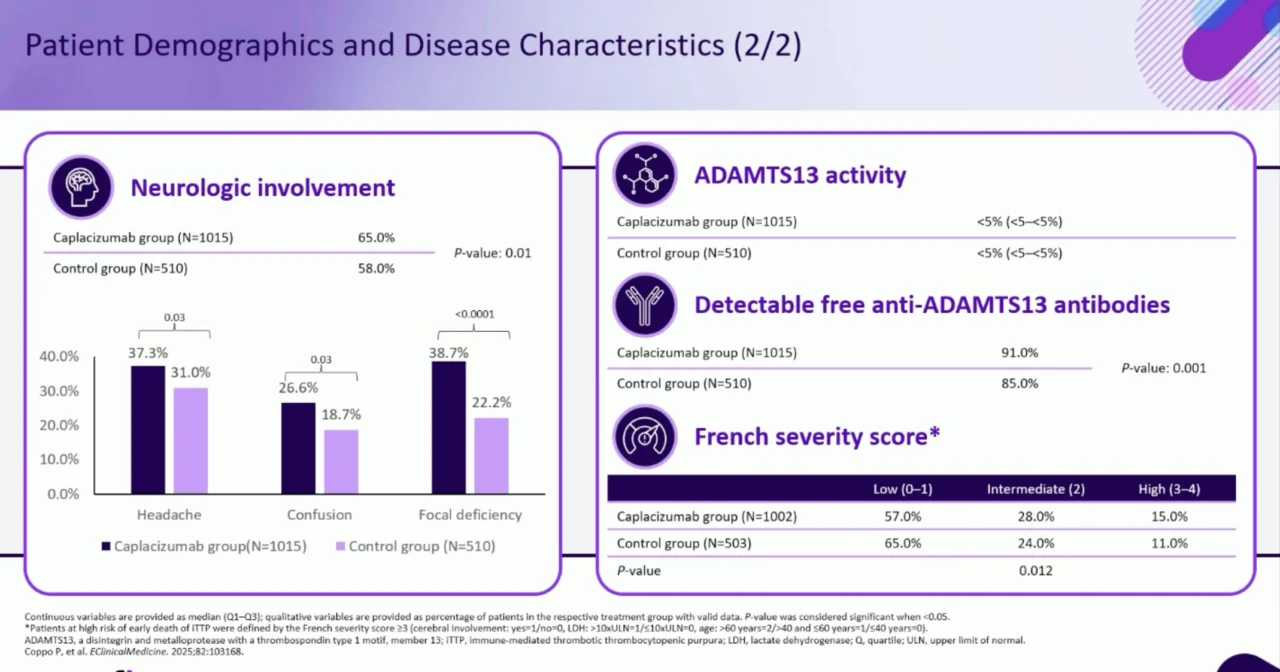
The primary endpoint of the analysis was 3-month mortality. A marked survival difference was observed between groups, with mortality approximately 4.2-fold higher in patients treated without caplacizumab.
This translated into a number needed to treat (NNT) of approximately 22 to prevent one death, indicating a clinically meaningful survival benefit in real-world practice.
Importantly, mortality differences were driven by early events. Deaths occurred earlier in the control group, with a median time to death of approximately 7 days compared with 11 days in the caplacizumab group, underscoring the fulminant and time-critical nature of acute iTTP.
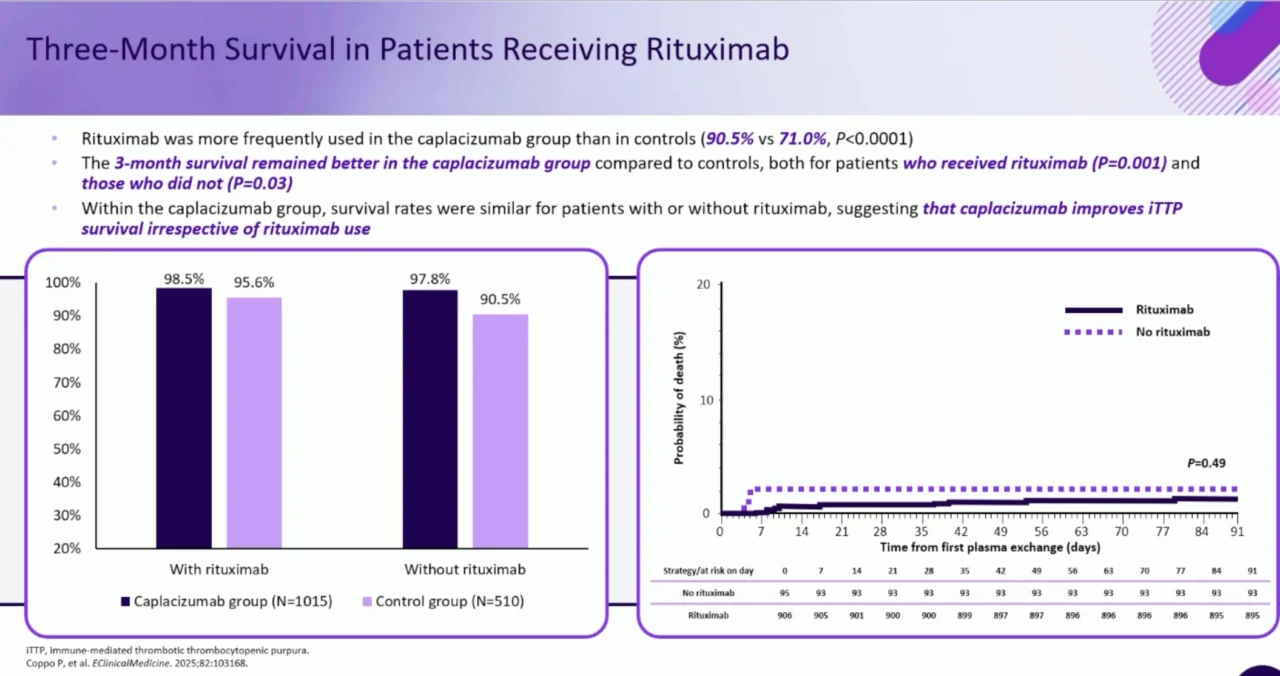
Three-month survival analysis demonstrated superior survival among patients treated with caplacizumab.
Rituximab Use and Survival
Rituximab was used more frequently in patients receiving caplacizumab.
Nevertheless, superior 3-month survival was observed irrespective of rituximab use, and survival within the caplacizumab-treated group was similar whether or not rituximab was administered.
These findings support the concept that caplacizumab primarily influences the acute thrombotic phase of iTTP, whereas rituximab contributes to longer-term immune remission through suppression of autoantibody production.
These observations also align with current thinking that the immediate clinical benefit in acute iTTP is driven by rapid interruption of microvascular thrombosis, while immunosuppressive therapies such as rituximab primarily affect the underlying autoimmune process and recovery of ADAMTS13 activity over time.
Disease Control and Clinical Outcomes
Caplacizumab demonstrated a profound effect on disease control.
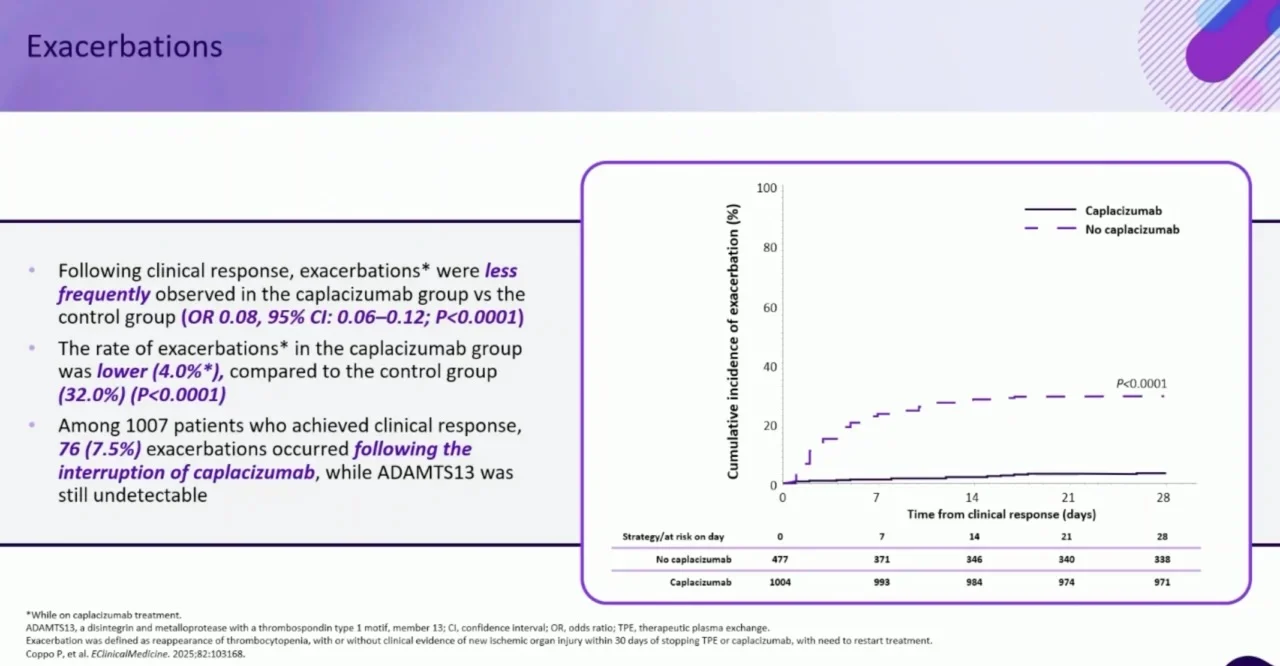
Refractoriness occurred in only 1.0% of treated patients compared with 10.1% in the control group, representing a nearly tenfold reduction. Exacerbations were also significantly reduced (approximately 4% versus 32%), with a number needed to treat of 3.6 patients to prevent one exacerbation.
Among patients achieving clinical response, a small proportion experienced relapse after discontinuation of caplacizumab while ADAMTS13 activity remained severely reduced, highlighting the importance of distinguishing clinical recovery from immunological remission.
ADAMTS13 Recovery and Treatment Timing
Time to recovery of ADAMTS13 activity above 20% was similar between groups (approximately 29 days in the caplacizumab group versus 31 days in controls). However, delayed recovery patterns were less frequent in the caplacizumab cohort.
Importantly, delayed initiation of caplacizumab was associated with an increased risk of refractoriness and exacerbation, reinforcing the importance of early treatment initiation as part of frontline therapy.
Clinical Response and Plasma Exchange Burden
Caplacizumab was associated with faster clinical recovery, with a median time to response of approximately 5 days compared with 6 days in the control group. The distribution of response times was more consistent and less variable in the caplacizumab group.
Patients receiving caplacizumab also required fewer therapeutic plasma exchange sessions to achieve clinical stabilization, reflecting faster disease control and reduced treatment burden.
Safety Profile
The safety profile of caplacizumab was consistent with its mechanism of action. Bleeding events were generally uncommon and manageable, with intracranial bleeding reported only rarely.
Particular caution is warranted in patients receiving concomitant anticoagulant or antiplatelet therapy, and management should be guided by the clinical situation.
Has Caplacizumab Changed the Natural History of iTTP?
The findings from the largest international real-world cohort presented at EHA 2026 provide compelling real-world evidence supporting the effectiveness of caplacizumab.
The analysis suggests clinically meaningful reductions in mortality, refractoriness, exacerbations, and treatment burden while reinforcing the importance of early initiation during the acute phase of iTTP.
Early use of caplacizumab is key to improving outcomes in acute iTTP.
-
Sep 15, 2026, 02:59Caterina Casari: Curious about How Gene Editing is Revolutionizing Our Field?
-
Sep 15, 2026, 02:53Alejandro González Veliz: Can Lifestyle Changes Actually Reverse Atherosclerosis?
-
Sep 15, 2026, 02:08Eugenia Gianos: ACC CVPrevention Council’s New Statin Resources
-
Sep 15, 2026, 01:58Shinya Goto: Country Specific Randomized Trial Show the Merit of DOAC in Intermediate Risk of A
-
Sep 15, 2026, 01:37Lesley Van Wyk: Exploring Sickle Cell Disease – The HbS Story
-
Sep 15, 2026, 01:31Luca Seffin: To the Science, the People, and the Journey – Thank You SR-Tiget
-
Sep 14, 2026, 23:49Heghine Khachatryan: New evidance – Antiphospholipid Antibodies and Ischemic Stroke
-
Sep 14, 2026, 23:42Eman M. Elsabbagh: Successful HCT Does Not End at Engraftment
-
Sep 14, 2026, 23:31Antonis Kattamis: Proud to Be Part of this Endeavour and Senior Author of the Pivotal Trial