

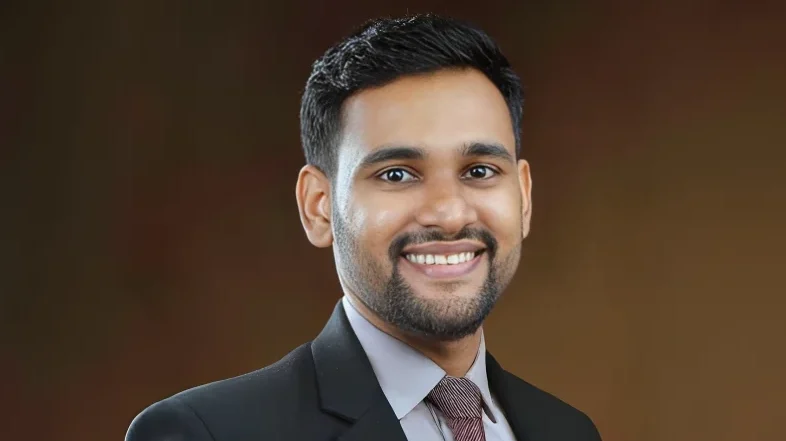
Arun V. J.: Did You Know A Glass Of Water is The Best Way To Retain A Blood Donor?
Arun V. J., The Leader of Transfusion Medicine at Malabar Medical College, shared a post on LinkedIn:
“Did You Know A Glass Of Water Is The Best Way To Retain A Blood Donor?
A glass of water before donation prevents more problems than a doctor on standby.
Most blood donation camps get the basics wrong. Not because of bad intentions. Because nobody taught the organisers what “good” looks like.
I’ve helped organise enough camps to see the same mistakes repeat. Donors waiting in long lines with no water. Registration forms filled in the open where everyone can see. First-time donors left alone with their anxiety. No follow-up after the camp ends.
The camp collects 30 units and everyone calls it a success. But fifteen people walked away before donating. Eight of them won’t come back. Three had reactions that a glass of water could have prevented.
The fix is not budget. It’s sequence.
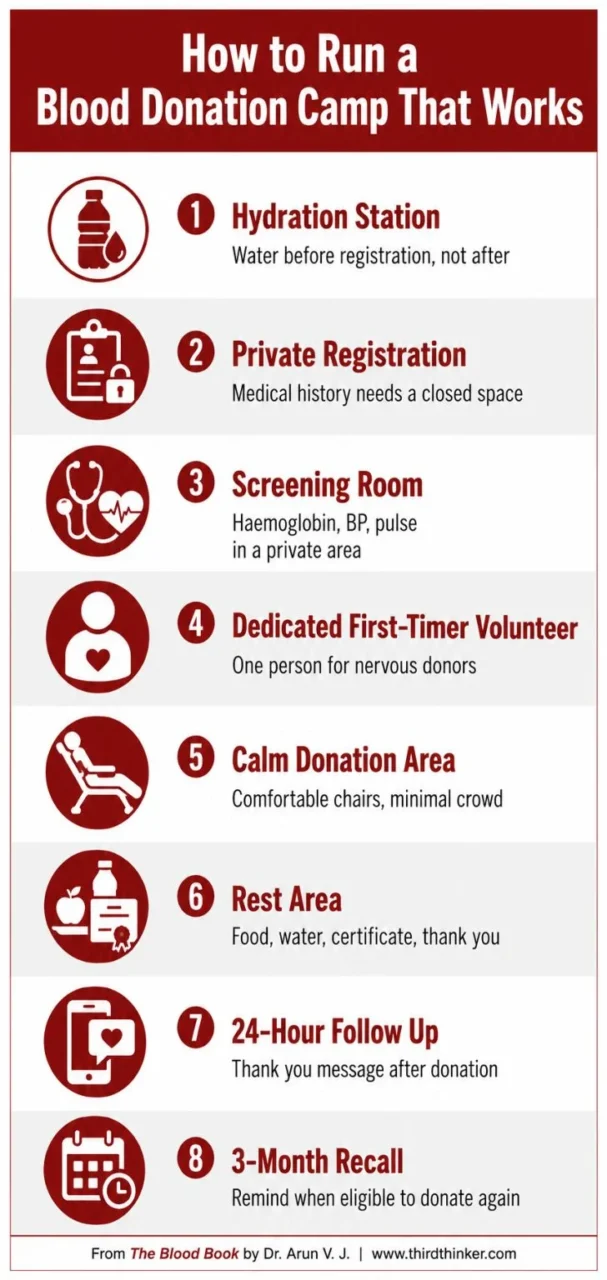
Hydration comes before registration. Every donor drinks water before anything else. A hydrated donor is significantly less likely to feel dizzy during or after donation.
Registration needs a private space. The form asks about medications, sexual history, recent illnesses. Nobody answers honestly at an open table where fifty people are watching.
Screening happens behind a partition. Haemoglobin, blood pressure, pulse, temperature. The result is shared clearly. ‘Your haemoglobin is 13.2, you’re eligible.’ Not just ‘you’re fine.’ Specific numbers calm nervous donors.
First-time donors get one dedicated volunteer. Someone who walks with them through every step, stays nearby during donation, and checks on them during rest. Twenty minutes of one volunteer’s attention. What it gives you is a donor who feels cared for and comes back.
The rest area is not an afterthought. Food, water, a certificate, a genuine thank you. The last ten minutes of the camp decide whether the donor remembers the experience as pleasant or stressful.
Follow up within 24 hours. ‘Thank you for donating. Please rest and stay hydrated. Your donation will support patients at [hospital name].’
Follow up again at three months. ‘You’re now eligible to donate again. Our next camp is on [date]. Would you like to come?’
Most camps never send this message. That’s exactly where repeat donors are made.
A camp is not a one-day event. It’s a system. The organisations that build it as a system never struggle with donor numbers.
I covered the complete camp framework in Chapter 14 of The Blood Book.
And this is exactly the kind of thinking I write about in my fortnightly newsletter, The Doctor Who Builds. How doctors can go beyond the clinic and build systems, programmes, and communities that outlast them.”
Find more posts featuring Arun V. J. on Hemostasis Today.
-
Oct 8, 2026, 22:44ISTH 2027 Abstract Submission Opens November 23
-
Oct 8, 2026, 22:41Kunihiro Hattori Pioneering Research for People With Hemophilia A – The Albert and Mary Lasker Foundation
-
Oct 8, 2026, 17:00Sally Mandour: Platelet Size And Shape Can Reveal The Diagnosis
-
Oct 8, 2026, 16:49Neil Morgan: Advancing Understanding Of Bleeding Disorders Of Unknown Cause
-
Oct 8, 2026, 16:38Beverley Hunt: Advancing Pulmonary Embolism Care Through Collaboration And Learning
-
Oct 8, 2026, 16:19Cedric Hermans: Six Webinars Advancing Haemophilia Care And Beyond
-
Oct 8, 2026, 16:09Luana Banu: Every Donation Connects A Human Chain
-
Oct 8, 2026, 15:51Khaled Musallam: A New Era In Thalassemia Care
-
Oct 8, 2026, 15:40Juan J. Ortiz։ Catheter Directed Therapy In Pulmonary Embolism