


Hamza Mohamed: Key Highlights from the 2026 AHA/ACC Multisociety Guideline on Acute PE
Hamza Mohamed, Medical Director and Medical Resident St. Paulos MMH at Ethiopian Health professionals’ Associations, shared a post on LinkedIn:
“Key Highlights from the 2026 AHA/ACC Multisociety Guideline on Acute Pulmonary Embolism (PE)
The 2026 AHA/ACC guideline represents the first comprehensive U.S. clinical practice guideline dedicated entirely to the evaluation and management of acute pulmonary embolism. It introduces several important practice-changing recommendations.
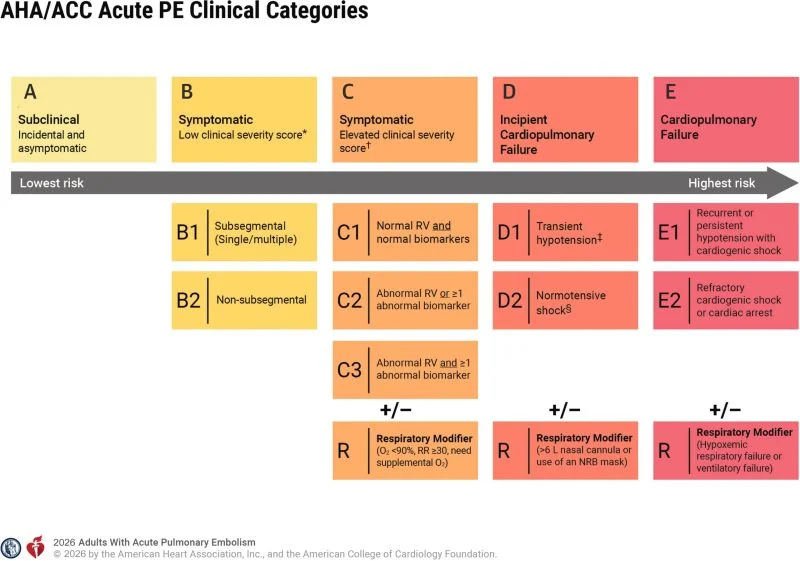
1. A new PE classification replaces ‘massive’ and ‘submassive’
The guideline introduces AHA/ACC Acute PE Clinical Categories (A–E), providing a more precise framework based on clinical severity, RV dysfunction, biomarkers, and hemodynamic status to guide management.
2. More patients can be treated as outpatients
- Category A: Asymptomatic PE – safe ED discharge.
- Category B: Symptomatic but low-risk PE – early discharge is generally recommended.
This highlights a shift toward individualized, resource-conscious care.
3. PE Response Teams (PERTs) receive a Class I recommendation
Multidisciplinary PE teams are now strongly recommended to facilitate rapid risk stratification and timely treatment decisions.
4. Anticoagulation updates
- LMWH is preferred over UFH when initial parenteral anticoagulation is needed (unless specific indications for UFH exist).
- DOACs are preferred over warfarin in eligible patients because they reduce recurrent VTE and major bleeding.
5. Advanced reperfusion therapies
Systemic thrombolysis, catheter-directed therapies, mechanical thrombectomy, and surgical embolectomy should be selected according to the new A–E risk categories, with the strongest role in patients with hemodynamic compromise.
6. Extended anticoagulation
Patients with a first unprovoked PE or persistent risk factors should generally continue anticoagulation beyond the initial 3–6 months, after balancing bleeding risk.
7. Long-term follow-up is now emphasized
Patients should be assessed for persistent dyspnea and functional limitation for at least 12 months to detect chronic thromboembolic pulmonary disease (CTEPD) or other post-PE complications.
Take-home message:
The 2026 guideline moves PE management toward precision medicine—replacing outdated terminology, expanding outpatient management for low-risk patients, prioritizing multidisciplinary care, and strengthening long-term follow-up.”
Stay updated with Hemostasis Today.
-
Oct 5, 2026, 22:55Steve Humphreys: A Big Thank You to BSHT for Providing Me With a Recent Skills Exchange Award
-
Oct 5, 2026, 22:52William McKeown: Great to Be in Istanbul for the Opening of the EHC 2026
-
Oct 5, 2026, 22:48Laura Quintas Lorenzo: A New Approach to Healthcare for von Willebrand Disease at EHC 2026
-
Oct 5, 2026, 22:46Anas Zayad: Pleased to Share Our New Review on Thrombosis in SCD and Beta Thalassemia
-
Oct 5, 2026, 22:44Cihan Ay: Honouring Eric Kandel and Eugene Braunwald at the Medical University of Vienna
-
Oct 5, 2026, 22:42Heather L. Gornik: Testing for Aortic and Arterial Thrombosis at VSS 2026
-
Oct 5, 2026, 22:34Hasan Abbas Zaheer: Honoured to Have Co-Authored One of the Four Reviews in The Lancet Thalassemia Series
-
Oct 5, 2026, 22:34Kamyar Shameli: Understanding the Coagulation Cascade – How Anticoagulants Prevent Blood Clots
-
Oct 5, 2026, 22:31Risika Samanta: Pediatric ITP in a 12-year-old – An Atypical Presentation without a Viral Prodrome