


Mahmoud Mehawed/LinkedIn
Sep 19, 2026, 00:48
Mahmoud Mehawed: Heparin vs Warfarin vs DOACs Understanding the Key Differences
Mahmoud Mehawed, Pharmacist at Innova Pharmacy, shared a post on LinkedIn:
“Heparin vs. Warfarin vs. DOACs
When managing thrombotic conditions, selecting the right anticoagulant requires balancing pharmacology, onset timing, monitoring parameters, and clinical safety profiles.
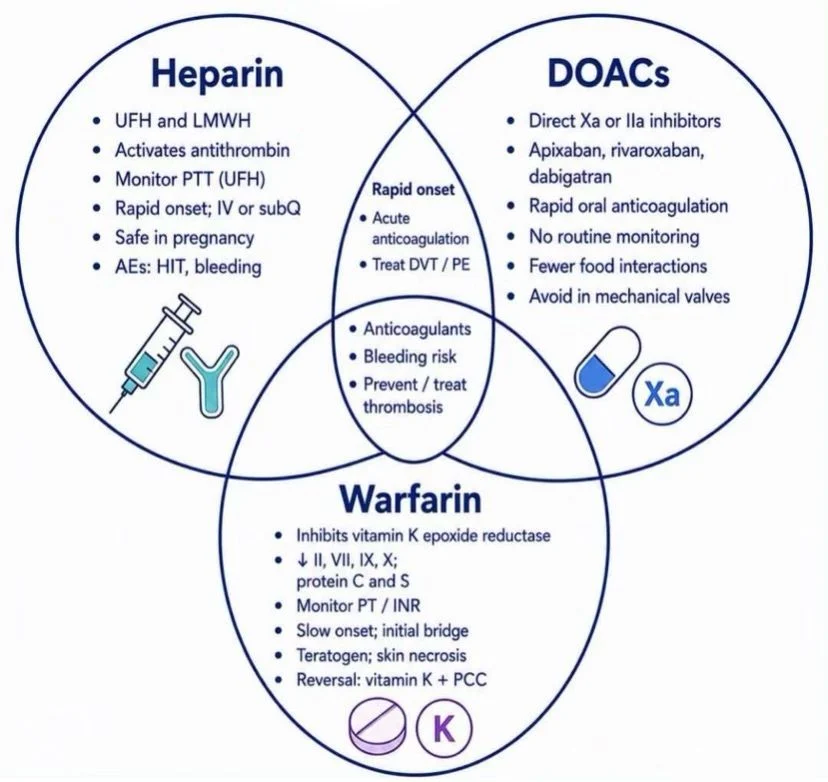
This comparative Venn diagram breaks down the key characteristics of three major anticoagulant classes:
- Heparin (UFH and LMWH):
Acts by activating antithrombin and provides rapid-onset anticoagulation via intravenous or subcutaneous administration. It is safe to use in pregnancy, requires PTT monitoring for unfractionated heparin, and carries risks such as bleeding and heparin induced thrombocytopenia (HIT).
- Warfarin:
Functions by inhibiting vitamin K epoxide reductase, suppressing clotting factors II, VII, IX, X, as well as proteins C and S. It features a slow onset requiring an initial bridge, demands routine PT INR monitoring, and has specific considerations including teratogenicity, skin necrosis risks, and reversal protocols using vitamin K and PCC.
- DOACs (Direct Oral Anticoagulants):
Comprise direct factor Xa or thrombin (IIa) inhibitors (such as apixaban, rivaroxaban, and dabigatran) that offer rapid oral anticoagulation without the need for routine monitoring or major food interactions, though they should be avoided in patients with mechanical heart valves.
- Overlapping Clinical Goals:
Across all classes, these agents function as vital anticoagulants carrying an inherent bleeding risk while sharing core therapeutic objectives in preventing and treating thrombosis, managing acute conditions like DVT PE, and achieving rapid therapeutic onset where applicable.”
Stay updated with Hemostasis Today.
-
Sep 18, 2026, 17:48Ronak H. Mistry: Updated ASH Guidelines Bring New Focus to Iron Deficiency
-
Sep 18, 2026, 17:32Hassan Kawtharany: New Ferritin Cutoffs for the Diagnosis of Iron Deficiency With or Without Anemia
-
Sep 18, 2026, 17:20Abhishek G P: GAVE as an Important Cause of Chronic Gastrointestinal Blood Loss
-
Sep 18, 2026, 17:08Irem Karaman Sebin: ASH 2026 Changes a Key Concept in Iron Deficiency
-
Sep 18, 2026, 16:51Adarsh Krishnan Sundara Rajan: Is VTE the Most Underdiagnosed Critical Threat in Modern Healthcare?
-
Sep 18, 2026, 16:19CRISPR and Hemophilia: The Next Frontier of In Vivo Gene Editing
-
Sep 18, 2026, 16:13Christian Irsara: PF4 Immunothrombosis Following Natural Adenovirus Infection
-
Sep 18, 2026, 16:10Leo Nicolai։ The Spleen Emerges as a Key Regulator of Thromboinflammation
-
Sep 18, 2026, 16:05Targeting Factor XI to Reduce Thrombosis Without Compromising Hemostasis – ISTH