


Abhijit Majumder: Deep Vein Thrombosis – A Silent but Preventable Medical Emergency
Abhijit Majumder, Nursing Operations Manager, shared a post on LinkedIn:
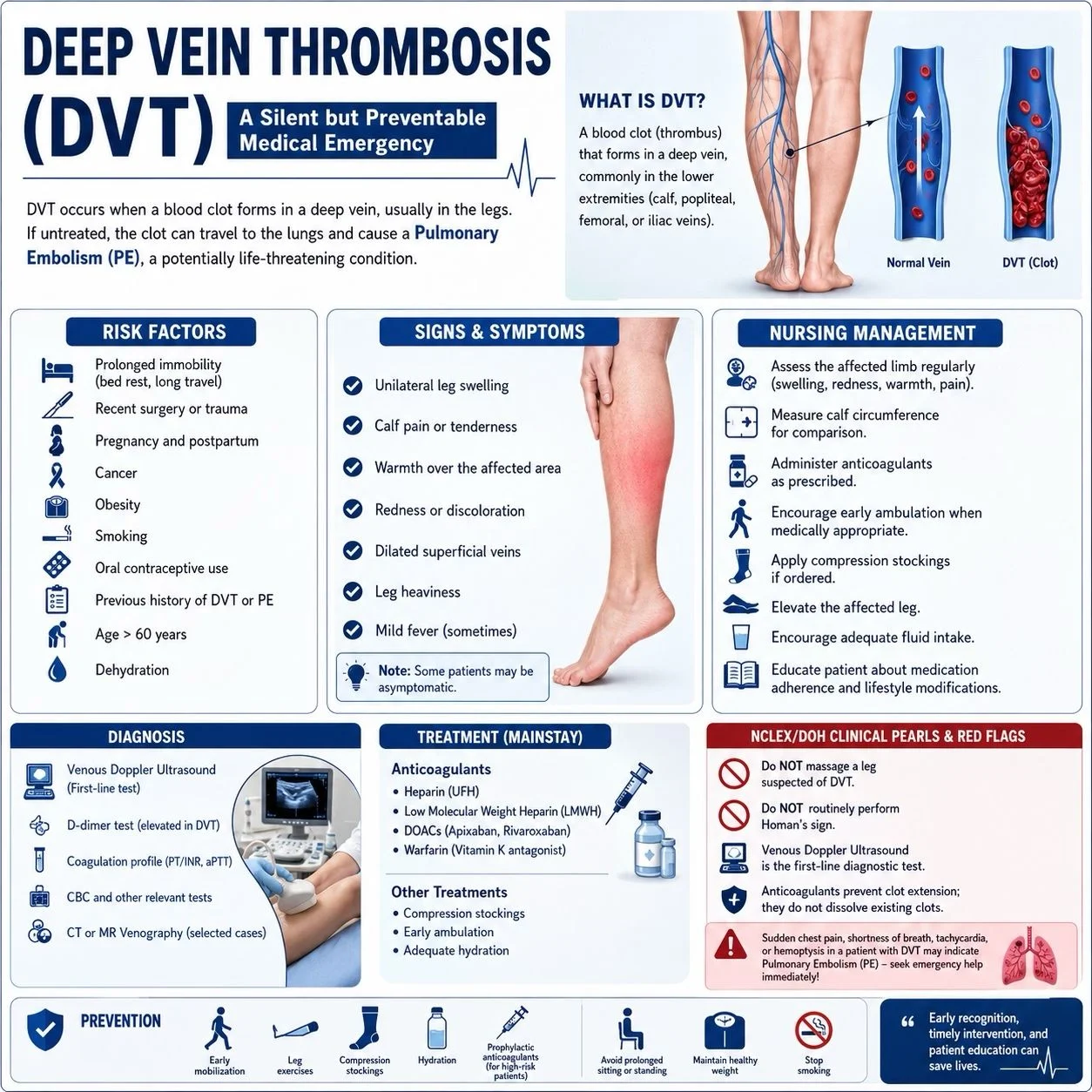
“Deep Vein Thrombosis (DVT): A Silent but Preventable Medical Emergency
Deep Vein Thrombosis (DVT) occurs when a blood clot forms in a deep vein, most commonly in the legs. If left untreated, the clot can travel to the lungs and cause a Pulmonary Embolism (PE)—a potentially life-threatening complication.
Common Risk Factors
- Prolonged bed rest or immobility
- Recent surgery or trauma
- Pregnancy
- Cancer
- Obesity
- Smoking
- Oral contraceptive use
- Previous history of DVT
Signs and Symptoms
- Unilateral leg swelling
- Calf pain or tenderness
- Warmth over the affected area
- Redness or discoloration
- Dilated superficial veins
Nursing Priorities
- Assess the affected limb regularly.
- Measure calf circumference for comparison.
- Administer anticoagulants as prescribed.
- Encourage early ambulation when medically appropriate.
- Apply compression stockings if ordered.
- Educate patients on hydration, mobility, and medication adherence.
Red Flags
Sudden shortness of breath, chest pain, tachycardia, or coughing up blood in a patient with DVT may indicate Pulmonary Embolism and requires immediate emergency intervention.
Clinical Reminder: Do not massage a limb suspected of DVT, as it may increase the risk of clot dislodgement.
As nurses, early recognition, timely intervention, and patient education are essential in reducing complications and improving outcomes.
What strategies do you find most effective for preventing DVT in hospitalized patients? Share your thoughts below!”
Stay updated with Hemostasis Today.
-
Oct 11, 2026, 10:44Logesh. M: Managing Warfarin-Associated Recurrent Epistaxis and Anticoagulant Safety
-
Oct 11, 2026, 10:28Sébastien Béland: Validating RUDAS for Detecting Neurocognitive Impairment in Sickle Cell Disease
-
Oct 10, 2026, 17:58Archo Farzana Batool: Exploring Medical Writing Through an Article on Iron Deficiency Anemia
-
Oct 10, 2026, 17:53Assessing Frailty in Adults With Hemophilia – JTH
-
Oct 10, 2026, 17:52Fatma Sadeghi: Reducing Maternal Health Inequalities Through Nursing Advocacy
-
Oct 10, 2026, 17:50Grzegorz Hensler: How Apheresis Transformed Blood Cell Separation and Collection
-
Oct 10, 2026, 17:47Hemant K Sharma: Japan’s Universal Artificial Blood Research – A Potential Breakthrough in Transfusion Medicine
-
Oct 10, 2026, 17:40John Strouse: Learning About Bleeding Disorders and Sickle Cell Disease at FWGBD
-
Oct 10, 2026, 17:34Mae Caime: Speaking at the Annual Women’s Retreat for the Hemophilia Community in Florida