

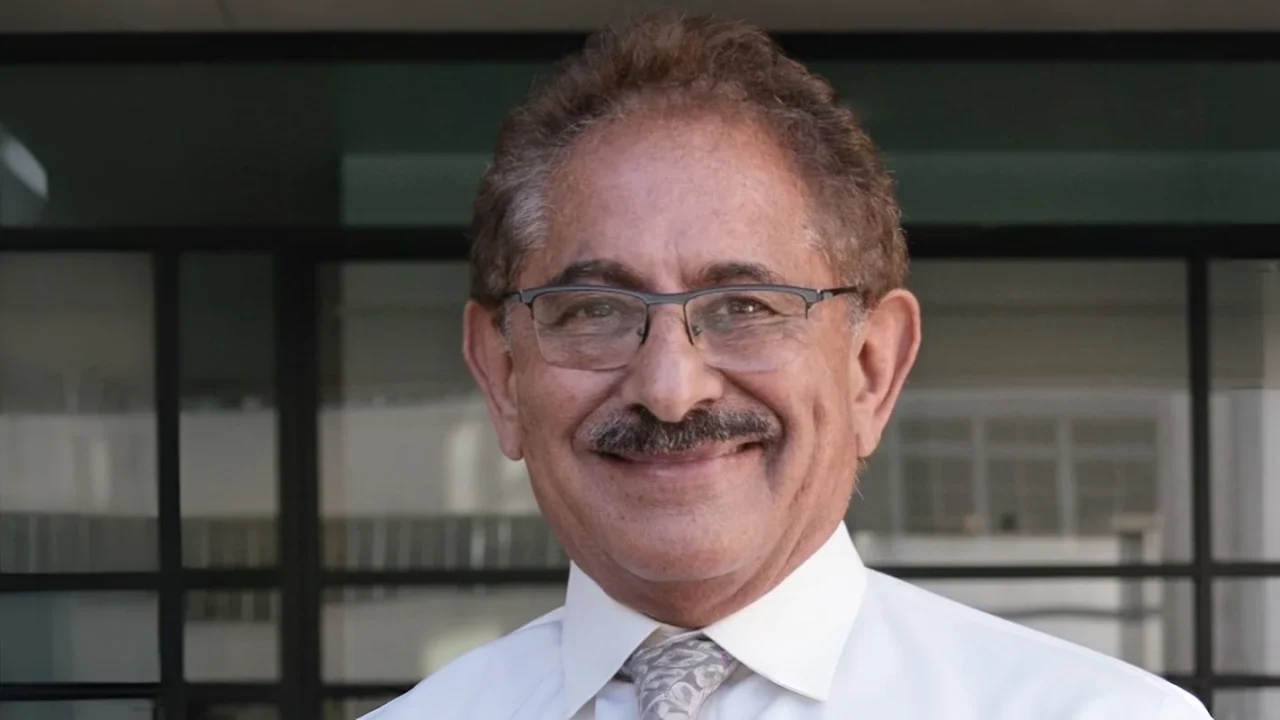
Ahvie Herskowitz: Therapeutic Plasma Exchange as a Precision Cancer Weapon
Ahvie Herskowitz, Founder and Medical Director at Anatara Medicine, President at American College for Advancement in Medicine, shared a post on LinkedIn:
“Therapeutic Plasma Exchange (TPE) as a precision cancer weapon
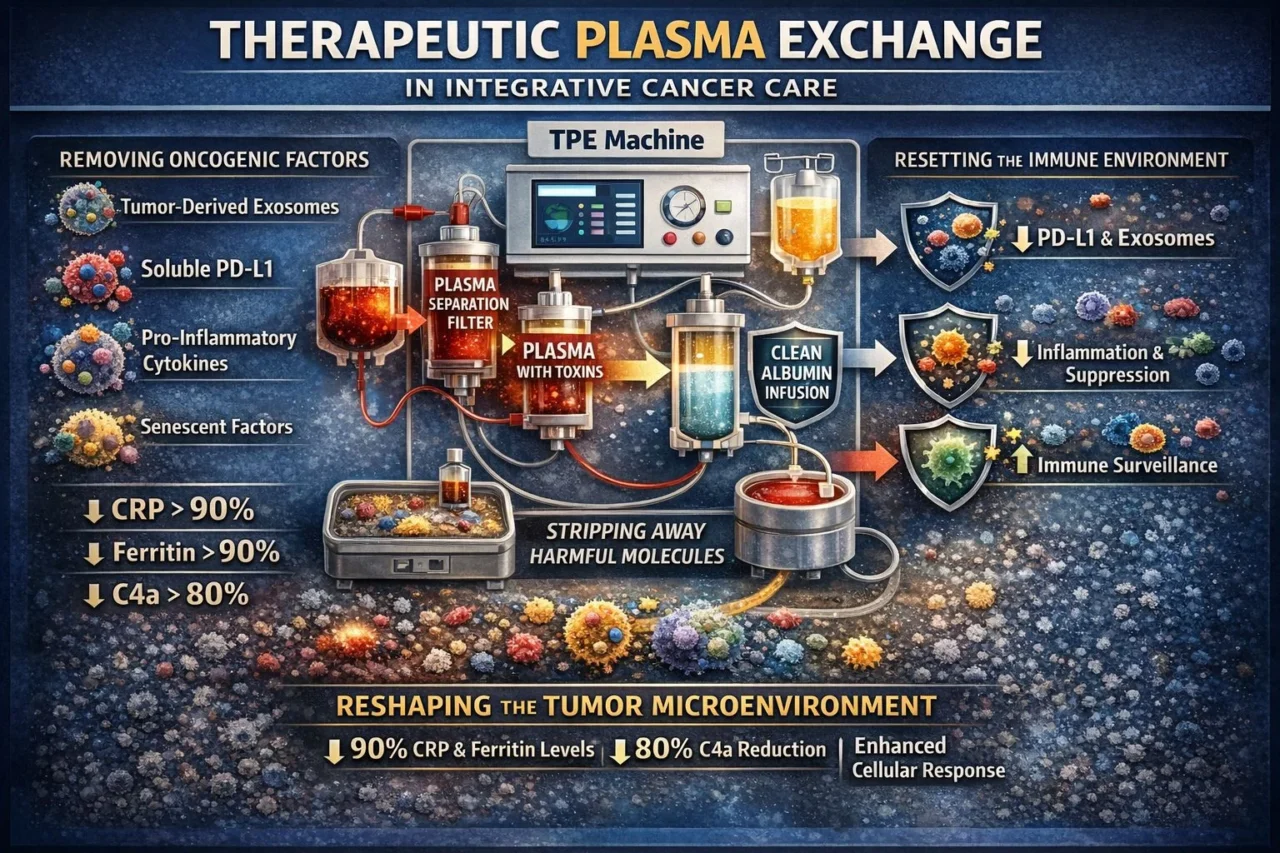
A question I’ve been exploring in-depth over recent years: if the plasma itself is carrying oncogenic signaling molecules – tumor-derived exosomes, soluble PD-L1, senescence-associated secretory phenotypes, pro-inflammatory cytokines – can we intervene at the level of the blood’s liquid component and meaningfully shift the tumor microenvironment?
Therapeutic plasma exchange (TPE) has been used for decades in autoimmune conditions like thrombotic thrombocytopenic purpura, Guillain-Barré syndrome, and myasthenia gravis.
In recent studies, and what I presented at the Advanced Applications in Medical Practice (AAMP) conference this past fall, is the application of TPE in advanced cancer – specifically to strip the plasma of molecules that facilitate immune evasion and tumor proliferation.
The mechanism is more precise than people realize.
We’re not simply ‘cleaning the blood.’
We’re removing soluble PD-L1 and PD-L1-positive extracellular vesicles – the very molecules that inhibit programmed cell death in tumor cells.
Research published by Orme in 2020 documented that TPE clears these circulating checkpoints, and our clinical data has shown corresponding biomarker shifts that are difficult to dismiss: CRP reductions exceeding 90%, ferritin drops of nearly 90%, and complement cascade markers like C4a falling by over 80% in individual cases.
Those numbers represent a fundamental alteration of the inflammatory and immunosuppressive terrain in which advanced cancers operate.
The plasma carries everything – the good and the harmful.
Oncogenes, tumor-derived exosomes, autoantibodies, heavy metals, forever chemicals, and plastics.
When you exchange that plasma with ‘clean’ albumin, you’re essentially resetting the immunological landscape and giving the body’s surveillance systems a clearer field of operation.
This is terrain medicine applied at the molecular level. It’s not replacing conventional oncologic treatment – it’s addressing the environment in which those treatments either succeed or fail.
The TPE method we use at Anatara Medicine has been patented and published in placebo-controlled trials that show a reduction in circulating PD-L1 and PDL-1-positive inhibitors and its reversing effects for cognitive decline.
I believe TPE will become a standard adjunctive modality in integrative oncology within the next decade.
Right now, very few clinics are applying it in this context.
For colleagues in integrative and functional medicine: what’s your experience been with plasma-level interventions in complex cases?
Stay updated with Hemostasis Today.
-
Oct 8, 2026, 13:59Patience Nkabe Odey: What Drives Rhesus D Screening Uptake Among Pregnant Women?
-
Oct 8, 2026, 13:50Todd Rice: ECMO at the Intersection of Anticoagulation and Respiratory Failure
-
Oct 8, 2026, 13:35Manuel Monreal: Why IVC Filter Retrieval Matters for VTE Outcomes
-
Oct 8, 2026, 12:53Hellen Ishikawa-Ankerhold: PhD and Postdoctoral Positions in Advanced Microscopy and Immunothrombosis at LMU Munich
-
Oct 8, 2026, 12:45Pedro Perez: World Thrombosis Day 2026 – Raising Awareness of Women’s VTE Risk
-
Oct 8, 2026, 12:20Berrin Gunaydin: Functional Biomarkers of Iron Deficiency in Pregnancy
-
Oct 8, 2026, 11:45Wolfgang Miesbach: Milvexian After Acute Coronary Syndrome – What LIBREXIA ACS Found
-
Oct 8, 2026, 11:36John Erbey: Kidney Disfunction as a Cause of Anemia
-
Oct 8, 2026, 11:31Navneet Mishra: Sitosterolemia as an Under-Recognised Cause of Cytopenias