


Augustina Isioma Ikusemoro: Women Powering the Future of Blood Transfusion
Augustina Isioma Ikusemoro, Haematology and Transfusion Medicine Specialist at Sharjah Blood Transfusion and Research Center, shared a post on LinkedIn:
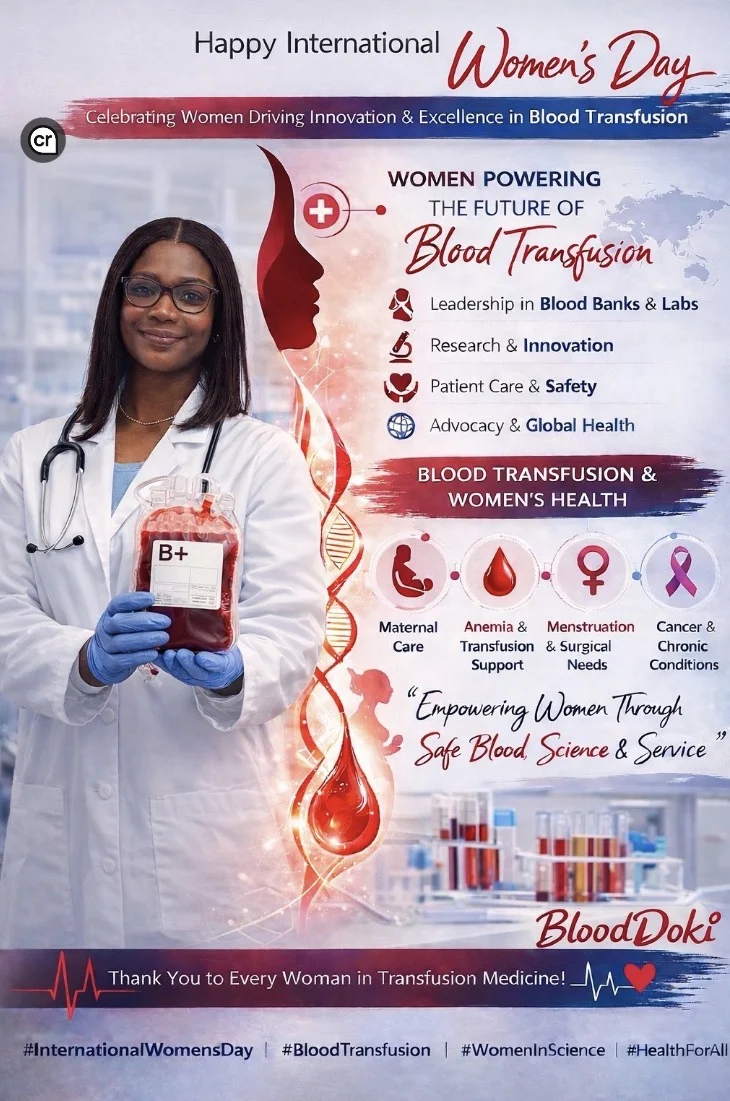
“Women Powering the Future of Blood Transfusion
On this International Women’s Day, we celebrate the incredible women working behind the scenes to make safe blood possible.
From blood banks and laboratories to research, patient care, and global health leadership, women continue to drive innovation and strengthen transfusion systems worldwide.
But the connection goes even deeper.
Safe blood is critical for women’s health — saving mothers during childbirth, treating anemia, supporting cancer care, and managing many life-threatening conditions.
Every day, women in transfusion medicine ensure that every unit of blood is safe, tested, and ready to save lives.
Empowering women through safe blood, science, and service.
Happy International Women’s Day to every woman advancing healthcare and saving lives.
Every drop counts. Every woman makes a difference.”
Stay updated with Hemostasis Today.
-
Sep 23, 2026, 16:04Monia Ezzalfani: Advancing Patient-Centered Care in Hemophilia A and B
-
Sep 23, 2026, 15:49Bilge Başak: How Activated PRP Modulates Osteoarthritic Chondrocyte Function
-
Sep 23, 2026, 14:50Mbonjo Bitsie Dora: Strengthening Sickle Cell Care Through Education, Awareness and Innovation
-
Sep 23, 2026, 13:58The New B12 Diagnostic Algorithm: From Serum Cobalamin to Functional Deficiency
-
Sep 23, 2026, 13:56Noha Soror: Preparing for Hematology and Medical Oncology Board Certification
-
Sep 23, 2026, 13:46Ugochi Ogu: What Can Platelet Proteomics Reveal about Pain and Neurocognitive Vulnerability in Sickle Cell Disease?
-
Sep 23, 2026, 13:42Melissa Hollo: Connecting Obesity and Anemia for Earlier Maternal Risk Intervention
-
Sep 23, 2026, 13:16Beverley Hunt: Advances in Haemostatic Management of Postpartum Haemorrhage
-
Sep 23, 2026, 13:13Ioanna Mela: Recruiting a Research Associate on DNA nanotechnology