


Augustina Isioma Ikusemoro: Kell vs RhD Sensitization – The Difference in RBC Destruction
Augustina Isioma Ikusemoro, Hematology and Transfusion Medicine Specialist at Sharjah Blood Transfusion and Research Center, shared a post on LinkedIn:
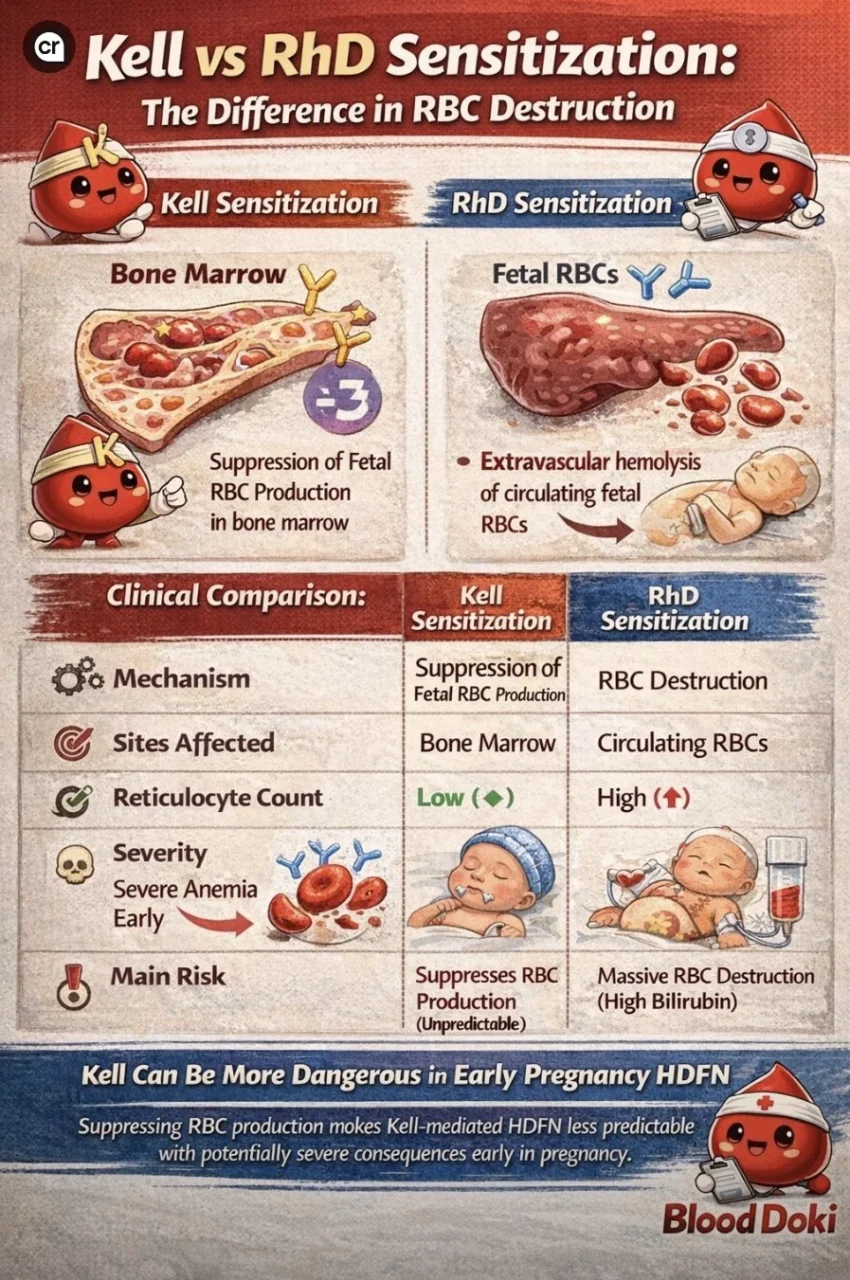
“Anti-D destroys red cells.
Anti-K stops them from being made.
That difference can change everything in fetal survival.
Most clinicians are trained to recognize RhD sensitization as a major cause of Hemolytic Disease of the Fetus and Newborn (HDFN).
But fewer appreciate that Kell sensitization can be equally — and sometimes more — dangerous.
Here’s why this matters
While RhD antibodies destroy circulating fetal red blood cells, Anti-K antibodies suppress fetal red cell production at the bone marrow level.
This means:
- RhD sensitization leads to hemolysis
- Kell sensitization leads to erythropoiesis suppression
And clinically, that distinction is critical.
In RhD HDFN, anemia develops because red cells are destroyed in the fetal spleen.
In Kell-mediated HDFN, anemia develops because red cells are never produced in adequate numbers in the first place.
The result?
- Earlier onset anemia
- Lower reticulocyte counts
- Less predictable disease progression
- Severe fetal compromise even with low antibody titers
Unlike RhD disease — where bilirubin levels often reflect severity — Kell disease can progress silently until fetal anemia becomes critical.
This is why Anti-K detection during pregnancy must always trigger enhanced fetal surveillance.
And why transfusion services must prioritize:
- K- antigen matching for sensitized patients
- Prevention of alloimmunization in women of child-bearing age
- Extended phenotype awareness beyond ABO and RhD
Because transfusion safety doesn’t stop at compatibility.
It continues with anticipation.
Blood Doki
Advancing transfusion safety through education, systems awareness, and clinical insight.”
Stay updated with Hemostasis Today.
-
Oct 4, 2026, 15:06Vasiliki Gkalea: Journal of Clinical Medicine Launches Special Issue on Hematologic Thrombosis and Bleeding
-
Oct 4, 2026, 14:55Quentin Brebant: What Defines a High-Quality Red Blood Cell Concentrate?
-
Oct 4, 2026, 14:47Rana Al-Hrout: Recognizing Non-Anemic Iron Deficiency – Why Iron Matters Beyond Hemoglobin
-
Oct 4, 2026, 14:41David McIntosh: International Plasma Awareness Week 2026 – Closing the Global Plasma Gap
-
Oct 4, 2026, 14:33Pete Stibbs: CleanerVac Real-World Study Presented at VIVA and The VEINS 2026
-
Oct 4, 2026, 13:56Maria Elisa Mancuso: EHC 2026 Highlights the Unmet Needs of Women with Bleeding Disorders
-
Oct 4, 2026, 13:53Nirmal Shaji George: Individualizing Anticoagulation in Complex APS and Thrombocytopenia
-
Oct 4, 2026, 13:5210 Posts Not to Miss This Week
-
Oct 4, 2026, 13:45Suswapna Singh Rawat: The Clinical Significance of Coronary Plaque Stability