


David McIntosh: Egypt Leading the Way in Plasma Self-Sufficiency and Rare Disease Care
David McIntosh, Founder and Chair at United Plasma Action, shared Reza Shojaei‘s post on LinkedIn:
“The Egyptian ‘Lighthouse’ for the Low and Middle Income world.
Reza Shojaei’s fascinatig article on the Grifols/Egyptian Government Plasma Initiative is well worth re-reading – repeatedly – until many more countries are achieving similar progress.
Of course, huge obstacles remain to be overcome, both in terms of full medicines availability and the need for more, and more widespread, diagnostic success.
However, two irreversible and enormous encouraging steps have been taken:
- A national commitment has been established to ensure proper diagnosis and treatment for all rare disease sufferers in the nation; and
- Concrete steps have been taken to ensure reliable delivery of adequate volumes of safe local plasma raw material.
If a hundred or so other countries in the World would do the same thing, many millions of lives could be saved and improved – to the benefit of all Humankind.”
Reza Shojaei, Chief Operating Officer at Canadian Plasma Resources shared a post on LinkedIn:
“What if your country could stop depending on imported plasma medicines, permanently?
For decades, most nations accepted plasma dependency as inevitable. Today, one country has proven that assumption wrong.
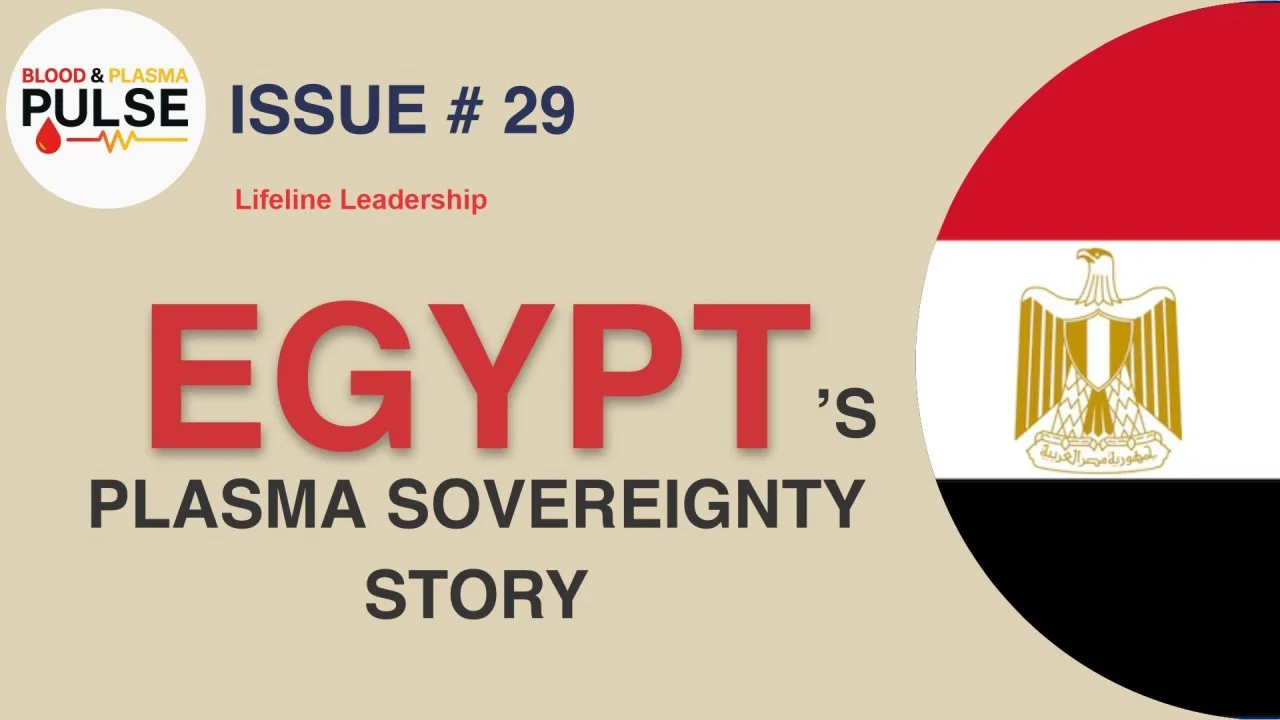
Egypt is now one of only a few countries in the world to achieve full national self-sufficiency in essential plasma-derived medicines, including IVIG, albumin, and hemophilia clotting factors. And it didn’t take 50 years to execute once the strategy was right; it took just five.
This transformation was not accidental. It was built through:
- Presidential-level political commitment
- A first-of-its-kind public–private joint venture
- FDA-aligned regulation
- Compensated, medically monitored donors
- And full vein-to-vial industrial integration
In this edition of Blood and Plasma Pulse, we unpack Egypt’s 50-year journey from early failed fractionation attempts to becoming Africa’s first plasma manufacturing hub, and what policymakers, regulators, and health system leaders around the world can learn from it, right now.
If your country is facing:
- IVIG shortages
- Rising plasma medicine costs
- Import dependency
- Or national biologics insecurity
This is not a story you can afford to ignore.”
Read the full paper here.
Stay updated with Hemostasis Today.
-
Sep 16, 2026, 16:06Katrina Louise Manalaysay: In Your 20s, You Might be Given the Opportunity to Donate Blood for the First Time
-
Sep 16, 2026, 15:45Matthew Hazell: A Brilliant Explanation of Phenotype vs Genotype Using a LEGO House
-
Sep 16, 2026, 15:23Ahmad Al-Ramahi: Presenting the Military Pharmacists Blood Training Course at the FIP World Congress
-
Sep 16, 2026, 15:21HIT Reimagined: Can 12-Lipoxygenase Inhibition Stop Immune Thrombosis?
-
Sep 16, 2026, 14:42Ruchi Punamia: Beyond the Blood Bank and The Clinical Impact of Apheresis
-
Sep 16, 2026, 14:06Kalyan Roy: Celebrating Apheresis, Advancing Care, Saving Lives
-
Sep 16, 2026, 13:38Andrew Zapfel: Advancing Sickle Cell Disease Care and Research
-
Sep 16, 2026, 13:30Thirunavukkarasu Angappan: Why Plasma-Derived Factor VIII Still Matters for Inhibitor Patients
-
Sep 16, 2026, 13:22Matthew Hazell: New BSH Guidance for Fetal, Neonatal and Paediatric Transfusion