

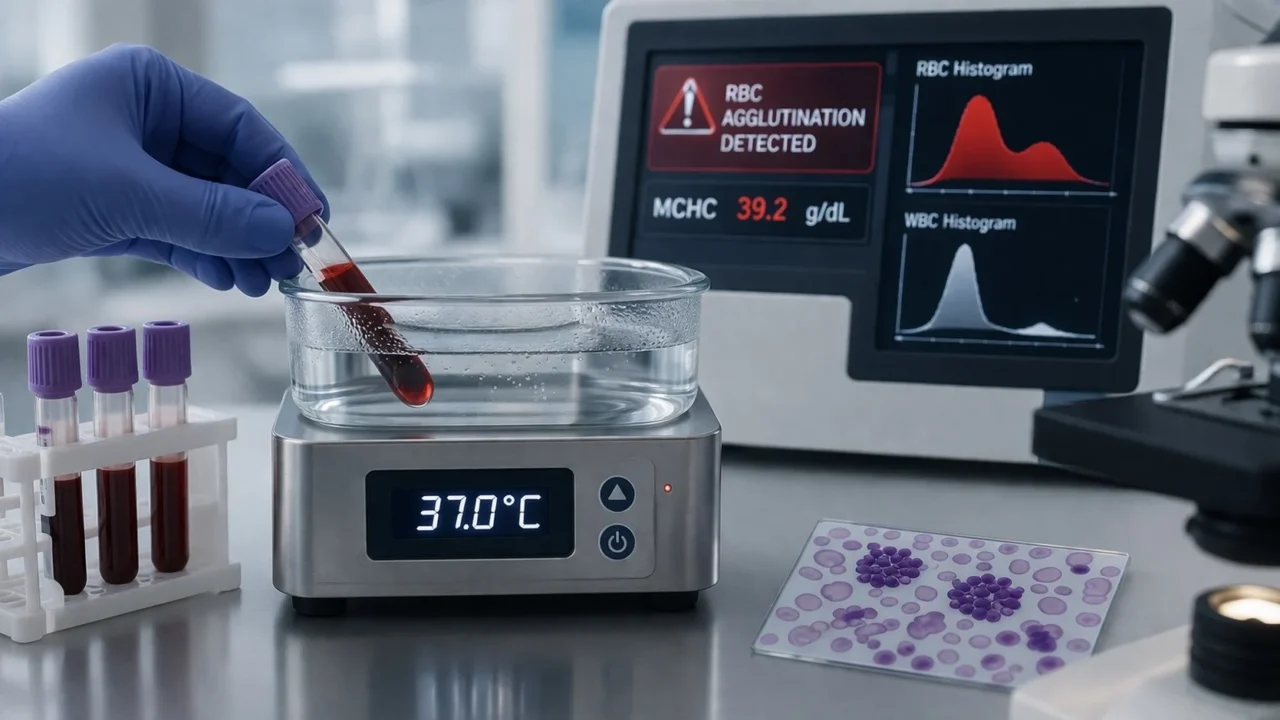
Faizan Khan: Cold Agglutinins and Their Effects on CBC Results
Faizan Khan, Certified Laboratory Technician (PGDMLT) at Manipal TRUtest, shared a post on LinkedIn:
“Cold Agglutinins and Their Effects on CBC Results
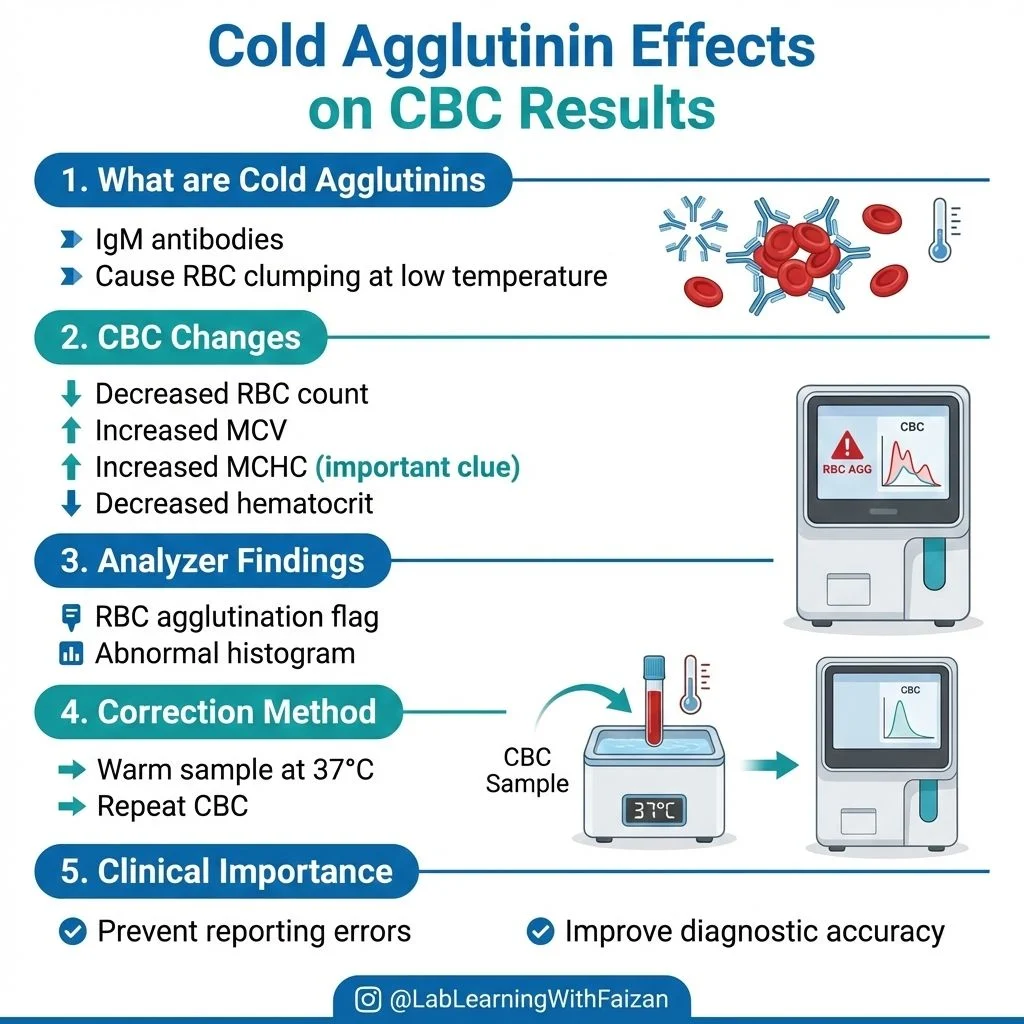
Cold agglutinins are antibodies (usually IgM) that cause red blood cells (RBCs) to agglutinate (clump) at low temperatures, typically below 37 degrees Celsius.
This can significantly interfere with CBC results and produce misleading values.
Understanding this phenomenon is critical for accurate laboratory reporting
What are Cold Agglutinins?
- Autoantibodies that bind RBCs at low temperature
- Cause RBC agglutination (clumping)
- Usually react at temperatures below 30–37 degrees Celsius
- Associated with autoimmune disorders and infections
Effects on CBC Parameters
Cold agglutinins cause characteristic CBC abnormalities:
- RBC Count causes Falsely Decreased
Clumped RBCs are counted as single cells by analyzer - RBC Count causes Falsely Decreased
Clumped RBCs are counted as single cells by analyzer - MCV causes Falsely Increased
Analyzer interprets RBC clumps as large cells - MCH causes Falsely Increased
Calculated parameter affected by low RBC count - MCHC causes Markedly Increased (Key Indicator)
This is the most important clue for cold agglutinin interference
WBC and Platelets usually normal
But severe agglutination may affect counts
Analyzer Flags and Findings
- RBC agglutination flag
- Abnormal RBC histogram
- MCHC greater than 36 grams per deciliter (strong clue)
- Visible RBC clumping on peripheral smear
How to Correct Cold Agglutinin Effect
- Warm sample at 37 degrees Celsius for 15 to 30 minutes
- Repeat CBC analysis
- RBC parameters usually normalize
Key Laboratory Clue
Suspect cold agglutinins if:
- High MCHC (greater than 36 grams per deciliter)
- High MCV with low RBC count
- Analyzer flag for agglutination
Clinical Associations
- Cold agglutinin disease
- Mycoplasma pneumonia infection
- Infectious mononucleosis
- Autoimmune hemolytic anemia
- Lymphoproliferative disorders
Key Message for Lab Professionals
Always correlate CBC results with:
- Peripheral smear
- Analyzer flags
- Clinical findings
Warming the sample can prevent reporting errors. ”
Stay updated with Hemostasis Today.
-
Sep 27, 2026, 15:49Rana Al-Hrout: Iron Deficency – Is Ferritin 15ng/mL or Less Still the Cutoff?
-
Sep 27, 2026, 15:49Ayushi Sharma: What I Thought Transfusion Medicine Would Be vs What It Actually Is
-
Sep 27, 2026, 15:48William Wallace: How Much Human Research Is Behind the Supplements We Take?
-
Sep 27, 2026, 15:46Franck Perraudin: Lp(a) Lowering Alone May Not Be Enough
-
Sep 27, 2026, 15:41Ahmed Hamandi: Sharing Real-World HSCT Experience at the Iraqi Society of Haematology Conference
-
Sep 27, 2026, 15:39Co-creating Digital Support With Young Stroke Survivors – European Stroke Organisation
-
Sep 27, 2026, 15:39Eleri Schiavone: Celebrating 80 Years of the Welsh Blood Service
-
Sep 27, 2026, 15:38Jessica Garcia: Standing Where VWD Was First Recognized 100 Years Later
-
Sep 27, 2026, 15:37Heghine Khachatryan: A Meaningful Step Forward for Inherited Blood Disorders in Africa