

Heghine Khachatryan: PFO, Cryptogenic Stroke, and Factor V Leiden – Closure or Lifelong Anticoagulation?
Heghine Khachatryan, Editor-in-Chief of Hemostasis Today, Head of Hemophilia and Thrombosis Center at Yeolyan Hematology and Oncology Center, shared a post on LinkedIn:
”PFO, Cryptogenic Stroke, and Factor V Leiden: Closure or Lifelong Anticoagulation?
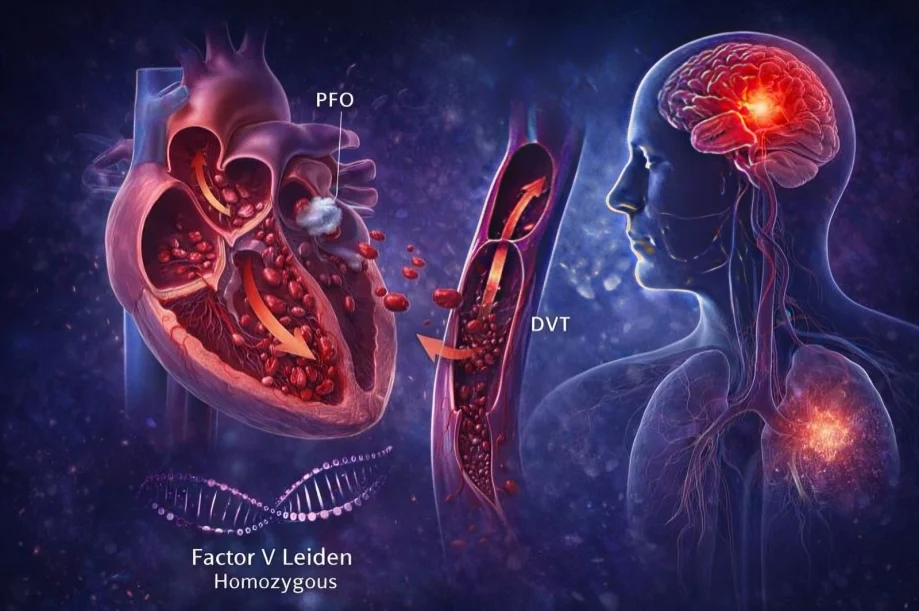
Clinical decision-making becomes particularly complex when a patient presents with cryptogenic stroke, patent foramen ovale (PFO), and homozygous Factor V Leiden thrombophilia.
The key question often raised in practice is:
Should the PFO be closed, or should the patient remain on long-term anticoagulation alone?
Current evidence suggests that the answer is not straightforward and requires careful patient selection.
Several elements must be evaluated before making a decision:
- Age of the patient (particularly <60 years)
- Whether the stroke is truly PFO-associated after a complete diagnostic work-up
- Presence of venous thromboembolism or paradoxical embolism
- High-risk PFO anatomy (large shunt, atrial septal aneurysm)
- Underlying prothrombotic conditions such as Factor V Leiden mutation
In patients with strong evidence suggesting paradoxical embolism, many experts increasingly favor PFO closure combined with antithrombotic therapy, rather than relying on medical therapy alone.
However, Factor V Leiden thrombophilia alone does not necessarily prove that the stroke mechanism is arterial or PFO-mediated, and decisions should always be individualized.
In my view, the optimal strategy often involves multidisciplinary discussion between neurologists, cardiologists, and hematologists.
Personally, in a young patient with cryptogenic stroke, PFO, and homozygous Factor V Leiden, I tend to consider PFO closure plus long-term antithrombotic strategy, rather than leaving the defect open.
But this remains an area where clinical judgment and shared decision-making are critical.
I would be very interested to hear the perspectives of colleagues.
How do you approach patients with PFO, cryptogenic stroke, and inherited thrombophilia?
Do you favor:
- PFO closure
- Lifelong anticoagulation
- A combined strategy?
Your experience and insights would be highly valuable for this discussion.”
Other posts featuring Heghine Khachatryan on Hemostasis Today.
-
Sep 24, 2026, 08:55Andres Gudino: Clot Characterization Through Hounsfield Units in Ischemic Stroke
-
Sep 24, 2026, 06:52Gina Sado: Screening-Detected Atrial Fibrillation Carries High Risk of Heart Failure
-
Sep 24, 2026, 06:33Benjamin Vipler: Optimal Oral Anticoagulation Choice in Atrial Fibrillation and Advanced CKD
-
Sep 24, 2026, 06:08Christopher Salerno: AI-Powered At-Home Anemia Screening Advances Telehealth Access
-
Sep 24, 2026, 05:38Aya Qattan: When a Normal CBC Does Not Mean Normal Iron Status
-
Sep 24, 2026, 05:11Mastering Warm Autoimmune Hemolytic Anemia Diagnosis and Practice – ASH Education
-
Sep 23, 2026, 16:04Monia Ezzalfani: Advancing Patient-Centered Care in Hemophilia A and B
-
Sep 23, 2026, 15:49Bilge Başak: How Activated PRP Modulates Osteoarthritic Chondrocyte Function
-
Sep 23, 2026, 14:50Mbonjo Bitsie Dora: Strengthening Sickle Cell Care Through Education, Awareness and Innovation