


Ifeanyichukwu Ifechidere: Advancing Education, Research, and Laboratory Excellence in APS
Ifeanyichukwu Ifechidere, Specialist Biomedical Scientist at Sheffield Teaching Hospitals NHS Foundation Trust, shared a post on LinkedIn:
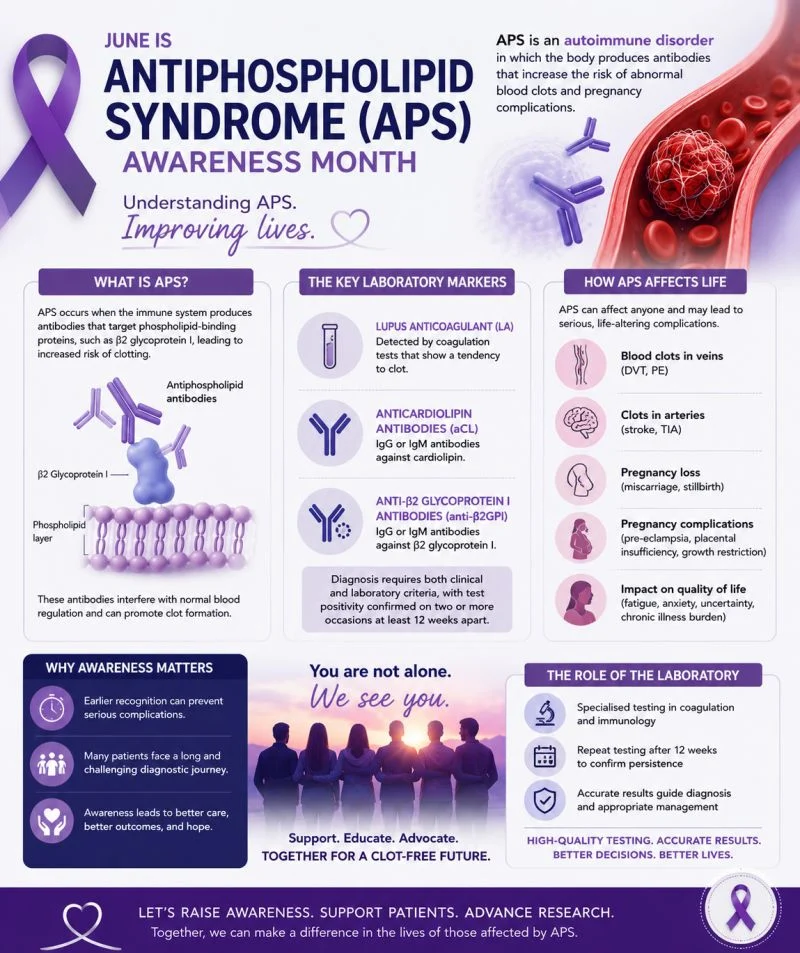
“June is Antiphospholipid Syndrome (APS) Awareness Month – an opportunity to shine a light on a complex and often misunderstood autoimmune disorder that can have life-changing consequences.
As a biomedical scientist working in coagulation, I regularly see how critical accurate laboratory testing is in identifying patients at risk of APS.
What is Antiphospholipid Syndrome (APS)?
APS is an autoimmune condition in which the body’s immune system produces antibodies that mistakenly target phospholipid-binding proteins in the blood. These antibodies increase the risk of abnormal blood clot formation in both veins and arteries.
The condition is associated with three key laboratory markers:
- Lupus anticoagulant (LA)
- Anticardiolipin antibodies (aCL)
- Anti-β2 glycoprotein I antibodies (anti-β2GPI)
A diagnosis requires both clinical and laboratory criteria, highlighting the essential role of collaboration between clinicians and laboratory professionals.
How does APS affect someone’s life?
For many individuals, APS can be life-altering.
It may lead to:
- Deep vein thrombosis (DVT)
- Pulmonary embolism (PE)
- Stroke or transient ischaemic attack (TIA)
- Recurrent pregnancy loss
- Pregnancy complications such as pre-eclampsia and placental insufficiency
Beyond the physical risks, APS can significantly impact mental wellbeing, family planning, employment, and quality of life. Many patients face long diagnostic journeys before receiving answers.
Why laboratory testing matters
Detecting APS requires specialised coagulation and immunology testing, often repeated after 12 weeks to confirm persistent antibody positivity. Accurate testing, interpretation, and adherence to guidelines are essential to avoid misdiagnosis and ensure appropriate patient management.
Raising awareness matters
Earlier recognition of APS can prevent serious thrombotic events and improve pregnancy outcomes. Increased awareness among healthcare professionals, patients, and the public is vital to reducing delays in diagnosis and treatment.
This APS Awareness Month, let’s recognise the patients living with this condition every day and continue advancing education, research, and laboratory excellence to support better outcomes.”
Find more posts featuring Ifeanyichukwu Ifechidere on Hemostasis Today.
-
Sep 21, 2026, 15:56Anita Zaidi: Why Only 2% of Health Research and Development Goes to Women’s Conditions
-
Sep 21, 2026, 15:49Omid Khalafi: Gating Strategy and How Do We Decide Which Cells to Analyze
-
Sep 21, 2026, 15:44Levacetylleucine: A New Therapeutic Approach to Ataxia Telangiectasia
-
Sep 21, 2026, 15:40Andreas Tridimas: The Diagnostic Traps of Lipaemic Blood – Why a Normal Amylase Can Mislead You
-
Sep 21, 2026, 15:33Arsene Mekinian: Exploring Cardiac Involvement in Behçet’s Disease
-
Sep 21, 2026, 15:23Anis Mahjoubi: MRI Findings of Krukenberg Tumors
-
Sep 21, 2026, 15:08Fikreab Tesfaye Tefera: 10 Practical Take-Home Points for Diagnosing Iron Deficiency Anemia
-
Sep 21, 2026, 14:10Aswin K Mohan: Lessons from TRANSCON 2026 – Building Resilient Blood Supply Systems Before Crisis Hits
-
Sep 21, 2026, 14:00Vincent Lu: Beyond PT and aPTT – How Hemostasis Evolves Across a Lifetime