


Jeff June: When Safety Warnings Outlive the Evidence – What Statins Teach Us About Stroke Prevention and Biology
Jeff June, Innovation and Ecosystem Leader at University Lab Partners, MedTech Innovator, Founding CEO and Board Member at Ischemia Care, shared a post on LinkedIn:
“More than 30 years after the Scandinavian Simvastatin Survival Study, statins remain one of the most effective tools we have for preventing cardiovascular events. And yet, they remain underused worldwide.
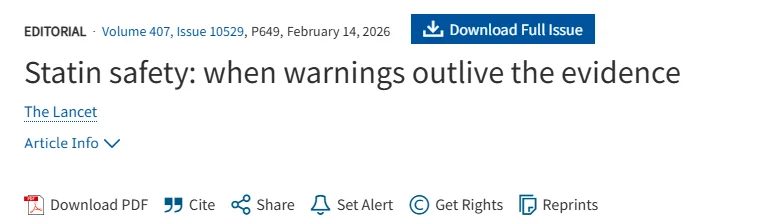
A recent editorial in The Lancet revisits an uncomfortable truth: concerns about statin safety have often outpaced the evidence.
Large-scale randomized data do not support the routine attribution of common symptoms to statins, aside from well-characterized risks such as myopathy and a modest increase in diabetes risk in susceptible individuals.
Yet long lists of potential harms persist in labeling and public perception.
The result?
Underuse. Avoidable strokes. Avoidable disability. Avoidable cost.
But this is not just a statin story.
It is a story about how risk communication shapes medical behavior. It is a story about how perception can distort evidence. And it is a story about how uncertainty propagates through clinical systems.
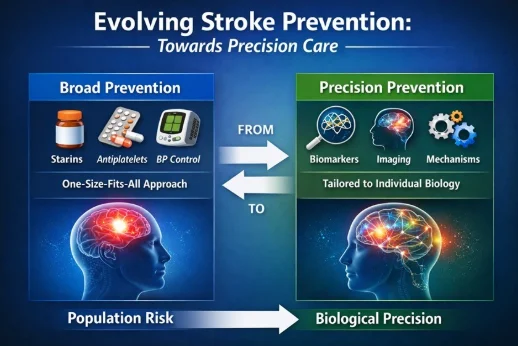
Secondary Prevention Has Improved. But It Is Still Broad.
In ischemic stroke care, statins are foundational in secondary prevention. Alongside antiplatelets, blood pressure control, and lifestyle modification, they form the backbone of vascular risk reduction.
This is not controversial.
What is more subtle is this:
Most secondary prevention remains mechanism-agnostic.
We treat broadly because we know vascular risk exists. We treat broadly because recurrence is dangerous. We treat broadly because we cannot always define the underlying biology with precision.
And in many cases, that strategy works.
But it is not the end of the story.
The Real Frontier Is Biological Stratification
A large number of ischemic strokes remain cryptogenic. Depending on the cohort and depth of evaluation, one-third to one-half of strokes are classified without a clearly identified cause.
That does not mean there was no cause. It means we could not find it.
When mechanism remains unclear, prevention defaults to generalized therapy, not specific to cause. High-intensity statins. Antiplatelets. Monitoring. Risk-factor modification.
Those interventions reduce population-level risk. But they do not resolve biological heterogeneity.
Stroke recurrence is not a single pathway event.
It reflects the following in varying degrees:
- Atherosclerotic inflammation
- Cardioembolic mechanisms
- Atrial fibrillation
- Cancer-associated hypercoagulability
- Sex-specific immune responses
- Transient vascular perturbations that do not fit traditional categories
Statins address one axis of vascular biology exceptionally well. But stroke recurrence does not live on one axis.
What the Statin Debate Reveals
The Lancet editorial highlights an important asymmetry in medicine:
Benefit claims require strong evidence. Harm signals can persist on far weaker data.
That imbalance distorts perception.
In stroke prevention, we face a parallel imbalance:
We are confident in broad therapy. We are less confident in biological precision.
And when we lack precision, uncertainty drives practice patterns.
The next evolution in secondary prevention is not abandoning proven therapies.
It is reducing uncertainty at the individual level.
From Population Risk to Mechanism-Aware Decisions
If the first era of stroke prevention was about risk factors, and the second era was about evidence-based pharmacology.
I believe the third era is about biological stratification.
Advanced imaging and blood-based biology are converging on the same truth:
Early stroke decisions are made under uncertainty. Precision medicine’s job is to make that uncertainty actionable.
The goal is not to replace statins. The goal is to understand which patients carry which biology.
Which pathways are active. Which mechanisms drive recurrence. Which patients need intensified therapy. Which patients need different surveillance.
Population tools reduce risk at scale. Stratification tools reduce uncertainty at the bedside.
Both matter.
The Real Harm of Incomplete Precision
When therapies are underused because of distorted risk perception, harm follows.
When biological heterogeneity is ignored because we lack tools to measure it, harm follows too.
Stroke care has improved dramatically over the past three decades.
The next gains will not come from louder debates about safety labels.
They will come from better biological clarity.
And that is where the future of secondary prevention lives.”
Title: Statin safety: when warnings outlive the evidence
Author: Jeff June
Read the Full Article on The Lancet.
Find more posts featuring Jeff June on Hemostasis Today.
-
Oct 16, 2026, 16:22Shannon Farmer: Driving Patient Blood Management Forward in Australia and New Zealand
-
Oct 16, 2026, 16:01Obi Light Ogbonnia: The Greatest Reward Is Changing Lives, Not Winning Awards
-
Oct 16, 2026, 15:18Carmine Liberatore: Limited Accuracy of VTE Risk Scores in Multiple Myeloma
-
Oct 16, 2026, 14:55Alex Borstein and the Bleeding Phenotype of Hemophilia A Carriers
-
Oct 16, 2026, 13:59Aya Akmal Amin: Antiphospholipid Syndrome Management and Risk Stratification
-
Oct 16, 2026, 13:10Emanuel Sueldo: CAHT 2026 Celebrates Scientific Progress and Team Achievements
-
Oct 16, 2026, 13:05Maha Othman: Queen’s Health Sciences Advances CAT Risk Models and Pediatric ISTH-BAT Cut-Offs
-
Oct 16, 2026, 13:03Thrombosis Awareness Must Lead to Timely Action – Roche
-
Oct 16, 2026, 12:49Wolfgang Miesbach: 5-Year CBDR Data Confirms Emicizumab Safety and Efficacy in Hemophilia A