

Karim Ahmed: Why The Right DOAC Choice Still Depends on The Patient
Karim Ahmed, Clinical Pharmacist at Palm Beach Accountable Care Organization, shared a post on LinkedIn:
“One thing pharmacy continues to reinforce for me is that even when two medications are in the same class, the best choice is rarely automatic.
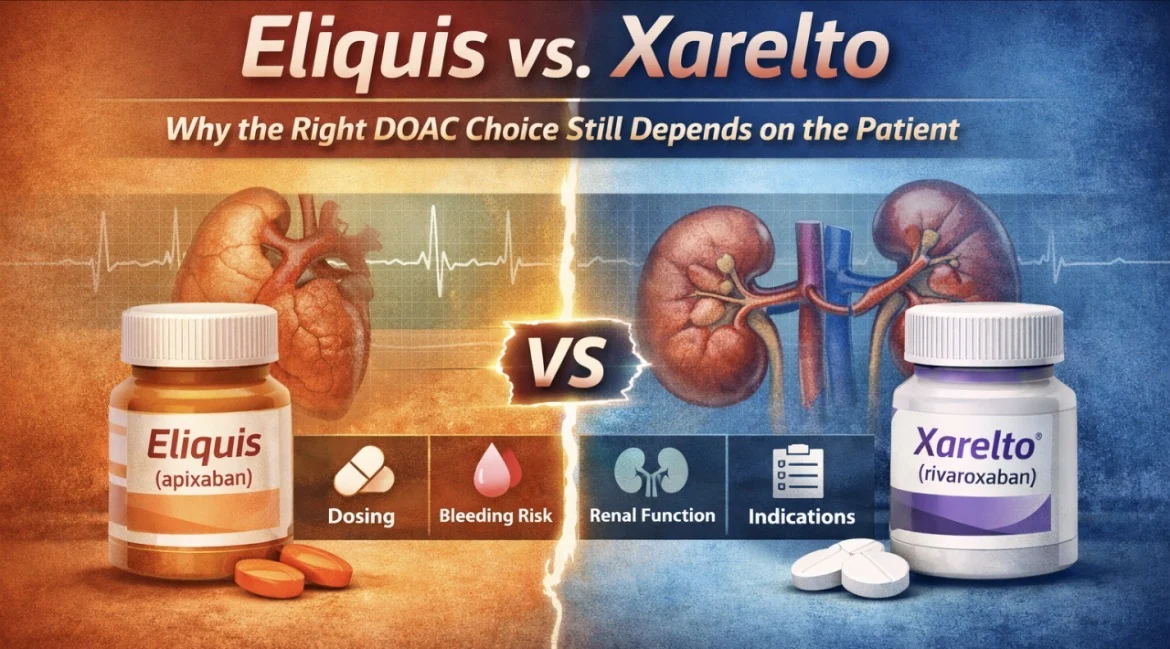
I was recently reviewing a comparison of Eliquis (apixaban) and Xarelto (rivaroxaban), and it served as a great reminder of how much patient-specific decision-making still matters in anticoagulation.
Both are important DOAC options for AFib and VTE, but the differences in dosing, bleeding profile, renal considerations, and overall indication breadth can meaningfully shape the right choice in practice.
A few points stood out to me.
Xarelto offers the convenience of once-daily dosing and also has additional CAD/PAD indications.
Eliquis, on the other hand, is taken twice daily and appears to have a more favorable bleeding profile in some populations, including the newer evidence referenced in the article for VTE patients.
The renal piece is also important.
The article notes that Eliquis is generally preferred over Xarelto in stage 4-5 renal impairment because of its lower renal clearance, which is one of those practical distinctions that can make a real difference when evaluating therapy options.
My biggest takeaway is this: the better anticoagulant is often the one that best fits the patient’s full clinical picture – not just the diagnosis.
Adherence, renal function, bleeding risk, comorbidities, and drug interactions all matter.
That is where clinical judgment continues to make the biggest impact.
These kinds of comparisons are always a good reminder that individualized medication management remains at the center of good patient care.”
Stay updated with Hemostasis Today.
-
Oct 7, 2026, 10:42Nasir K.: The Global Healthcare Community Comes Together for IPAW 2026
-
Oct 7, 2026, 09:20Maurizio Bertaina: Optimizing Anticoagulation in Temporary Mechanical Circulatory Support
-
Oct 7, 2026, 08:55Ifeanyichukwu Ifechidere: Cancer, Clotting and Bleeding – The Critical Role of Haemostasis in Oncology
-
Oct 7, 2026, 08:39Pediatric Hematology – Careers in Thrombosis and Blood Disorders – ASH Education
-
Oct 7, 2026, 07:57Edward Lee Carter: When Should Apixaban Become the Default for Acute VTE?
-
Oct 7, 2026, 07:40Annette Bowyer: Exploring New Developments in Thrombin Generation
-
Oct 7, 2026, 07:06Omid Seidizadeh: When Acquired von Willebrand Syndrome Takes Different Paths
-
Oct 7, 2026, 06:49Neeraj Songara: Can a Negative Antibody Screen Be Misleading?
-
Oct 7, 2026, 04:09James P. Crowley: Could the Microbiome Protect Us From Severe EBV Infection?