


Maxime Dely: Did You Know That A Single Platelet Donation Can Help Two Patients?
Maxime Dely, Therapeutic Solutions Sales Consultant at Terumo Blood and Cell Technologies, shared a post on LinkedIn:
“Platelet donation: One donation, greater impact than you think!
We often hear that a whole blood donation can help save up to three lives, while many people assume that a platelet donation benefits only one patient.
However, one of the key advantages of platelet apheresis is the ability to frequently collect what is known as a double dose.
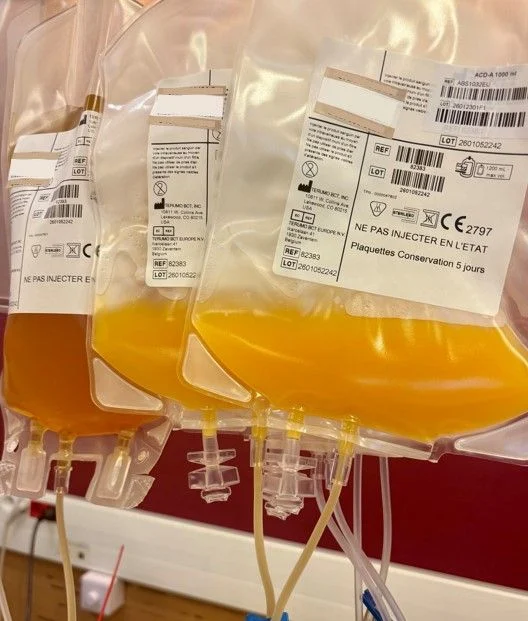
Thanks to the donor’s naturally occurring platelet count and the efficiency of the collection process, a single donation can yield enough platelets to produce two transfusion-ready units, each intended for a different patient.
This capability depends on several factors, including the donor’s baseline platelet concentration and the time spent connected to the apheresis machine.
When conditions are optimal, one donation can therefore support multiple patients.
Using cell separation technology, only the platelets are collected, while the vast majority of red blood cells are returned to the donor.
In addition, a unit of plasma can also be collected during the procedure.
Platelets play a critical role in hemostasis, helping to stop bleeding by rapidly forming the first cellular plug at sites of vascular injury.
Because platelet products can only be stored for a few days, the need for donors remains constant throughout the year.
Did you know that a single platelet donation can sometimes provide enough platelets for two different patients?”
Stay updated with Hemostasis Today.
-
Nov 15, 2026, 20:56Victoria Adedoyin Adisa-Thomas: What I Learned About SCD During My Genetic Counselling Rotation
-
Nov 15, 2026, 20:55Martin Holst Lange: One Step Closer to a Potential New Treatment for Sickle Cell Disease
-
Nov 15, 2026, 20:53Bontha Babu: Health-Related Quality of Life Among Adults with Sickle Cell Disease in India
-
Nov 15, 2026, 20:52Miguel Ángel Herrera Rojas: A First-Line ITP Approach Presented at ASH in 2013 Now Reflected in the 2026 Guidelines
-
Nov 15, 2026, 20:50Asmaa Beltagy: Efficacy and Safety of Eltrombopag in SLE-Associated Immune Thrombocytopenia
-
Nov 15, 2026, 16:29Jean-Jacques Kiladjian: 20 Years of Interferon-Alpha Research in Myeloproliferative Neoplasms
-
Nov 15, 2026, 16:21Sukanto Paul: Why Platelet Transfusion Is Generally Avoided in TTP
-
Nov 15, 2026, 16:14Ahmad G. Alzahrani: Major Bleeding and Anticoagulant Reversal
-
Nov 15, 2026, 16:05Sabine Eichinger: Is Recurrence Risk After Provoked VTE Really Low?