


Prince Alfred Singh։ Understanding Antithrombin III Deficiency as a High-Risk Thrombophilia
Prince Alfred Singh, Medical Officer at Addu Equatorial Hospital (AEH), shared a post on LinkedIn:
“Understanding Antithrombin III Deficiency: A High-Risk Thrombophilia
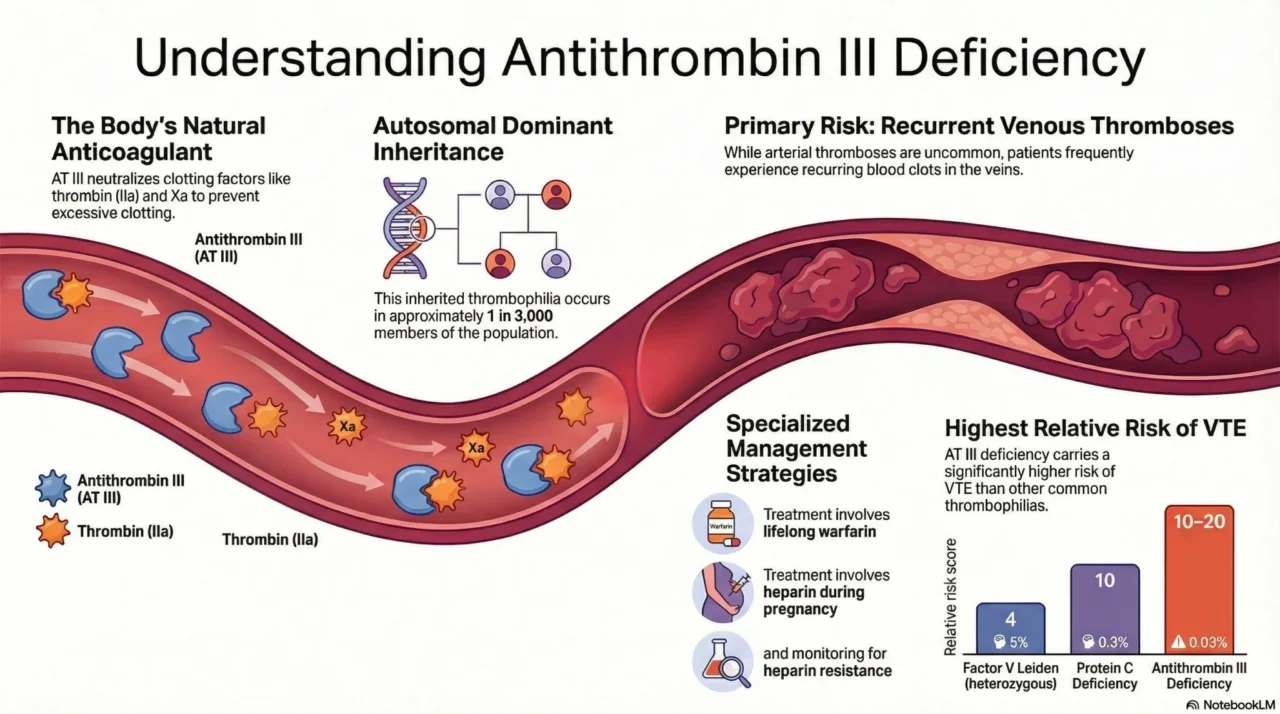
Antithrombin III (AT III) plays a critical role as the body’s natural anticoagulant – primarily inhibiting thrombin (IIa) and factor Xa to prevent excessive clot formation.
What happens in AT III deficiency?
A reduction in this key inhibitor shifts the hemostatic balance toward thrombosis, making it one of the most clinically significant inherited thrombophilias.
Key Facts:
- Inherited in an autosomal dominant pattern
- Prevalence: approximately 1 in 3,000 individuals
- Strongly associated with recurrent venous thromboembolism (VTE)
- Arterial events are less common but can occur
Risk Perspective:
Compared to other thrombophilias such as Factor V Leiden or Protein C deficiency, AT III deficiency carries one of the highest relative risks for VTE.
Clinical Management Insights:
- Many patients require long-term anticoagulation (e.g., warfarin)
- Heparin resistance can occur due to low AT levels
- In pregnancy: heparin-based therapy is preferred
- Consider AT concentrate in selected high-risk scenarios
Clinical Takeaway:
- Early recognition is essential—especially in patients with:
- Recurrent unexplained VTE
- Strong family history of thrombosis
- Thrombosis at a young age
A tailored, lifelong management strategy can significantly reduce morbidity and prevent life-threatening complications.”
Stay updated with Hemostasis Today.
-
Oct 18, 2026, 02:43Priya Sriskandarajah: Diagnosis and Management of PV and JAK2-Unmutated Erythrocytosis
-
Oct 18, 2026, 02:41C. Michael Gibson: A Meta-Analysis of DOACs and DAPT After Left Atrial Appendage Closure
-
Oct 18, 2026, 02:27What Hematologists Should Remember About the Person Behind the Platelet Count – ASH
-
Oct 18, 2026, 01:44Marta Velia Antonini: How to Deliver CRRT during ECMO?
-
Oct 18, 2026, 01:19Aamir Saeed: Anticoagulation, Cirrhosis, and Other Risk Factors for Post-ERCP Bleeding
-
Oct 18, 2026, 00:33Elad Asher: Does Opening the Clot Change How a Patient Feels Three Months Later?
-
Oct 18, 2026, 00:22Richa Sharma: Evaluating Heterogeneity in Anticoagulation Treatment Effects in Cryptogenic Stroke
-
Oct 18, 2026, 00:07Irem Karaman Sebin: The Evidence Favoring Warfarin in High-Risk Antiphospholipid Syndrome
-
Oct 18, 2026, 00:07Emma Stevens: Lighting Up Buildings in Red and Blue for World Thrombosis Day