


Does ITI Actually Work in Hemophilia B – RPTH Journal
RPTH Journal shared a post on LinkedIn about a recent article by Shaoyu Yin et al, adding:
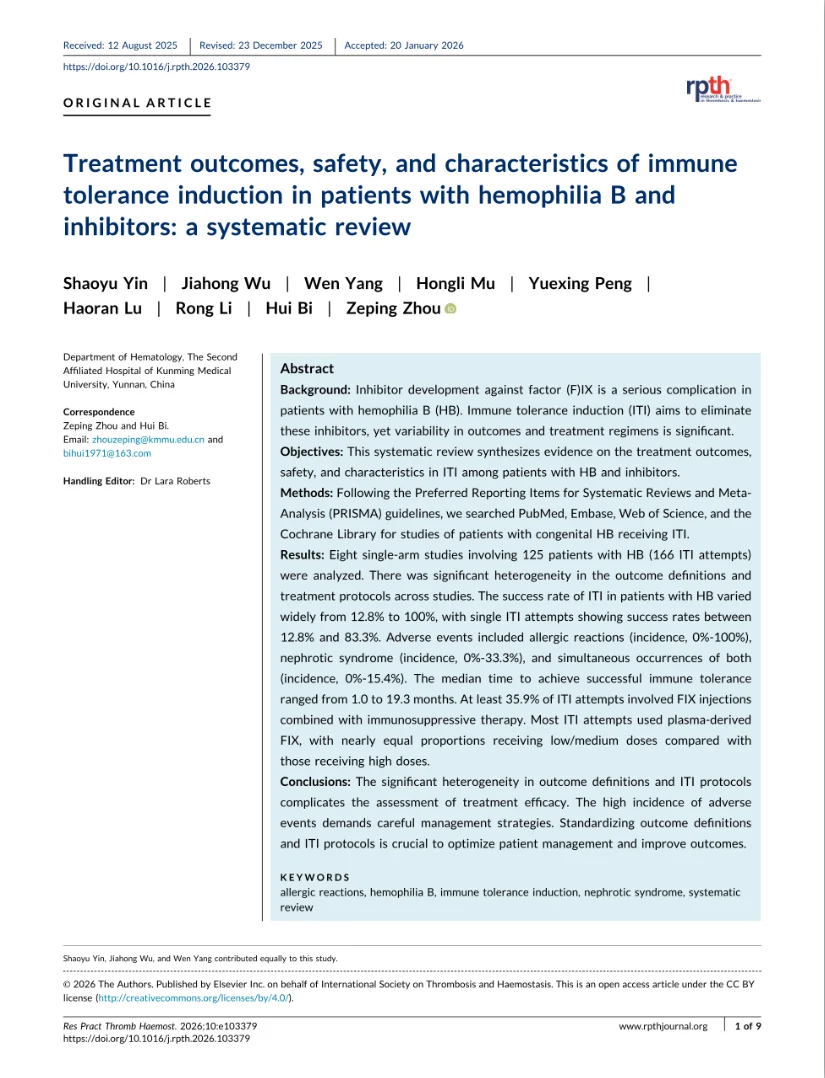
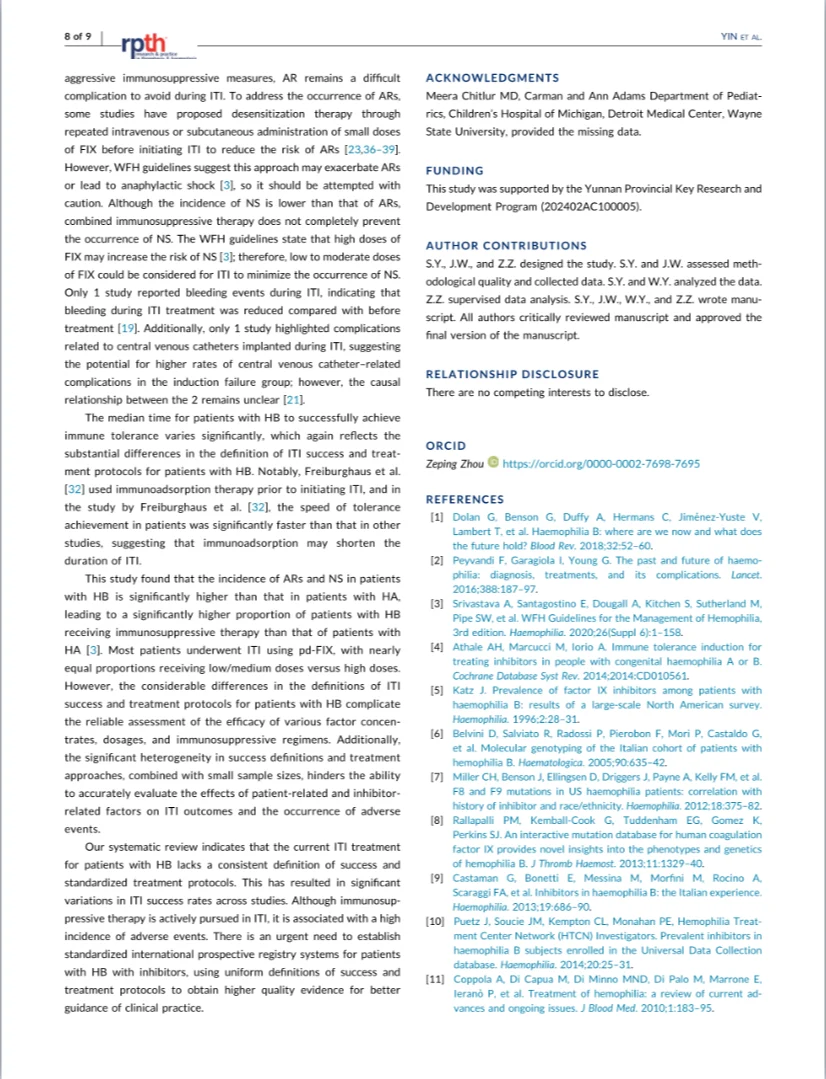
“Immune tolerance induction (ITI) in hemophilia B: does it actually work?
This systematic review makes one thing clear: ITI in hemophilia B is unpredictable and risky.
What the data show:
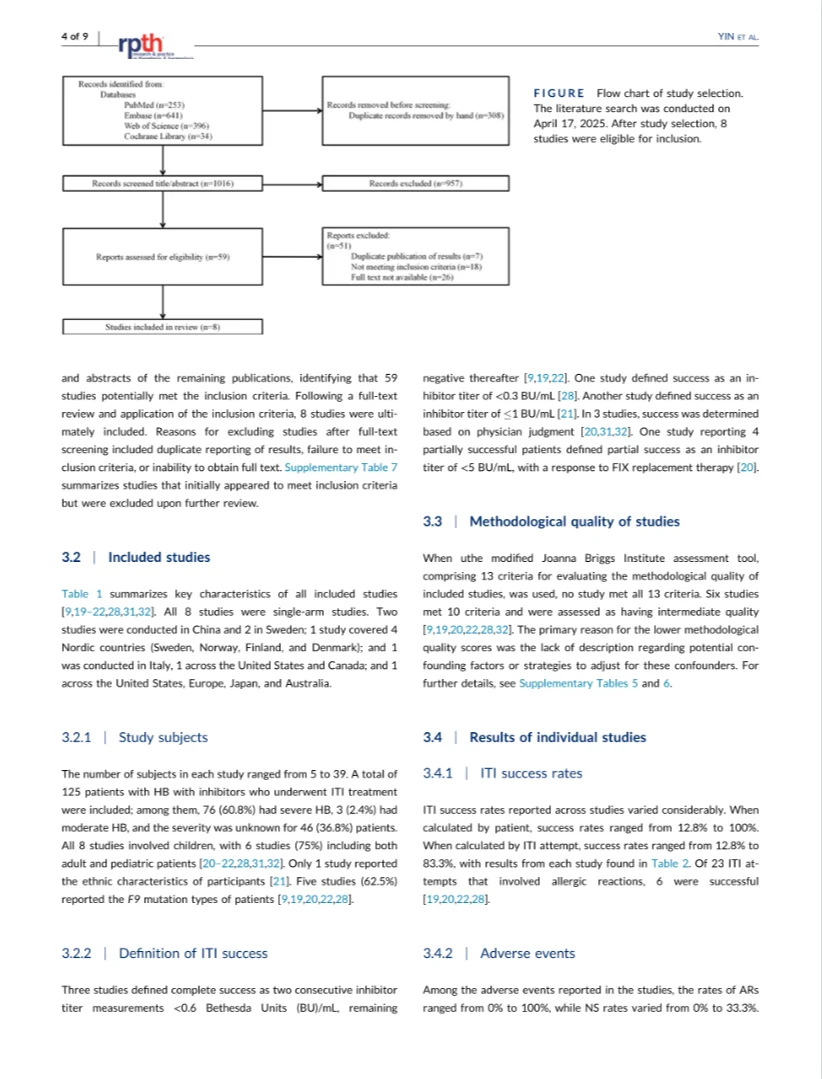
Across 125 patients:
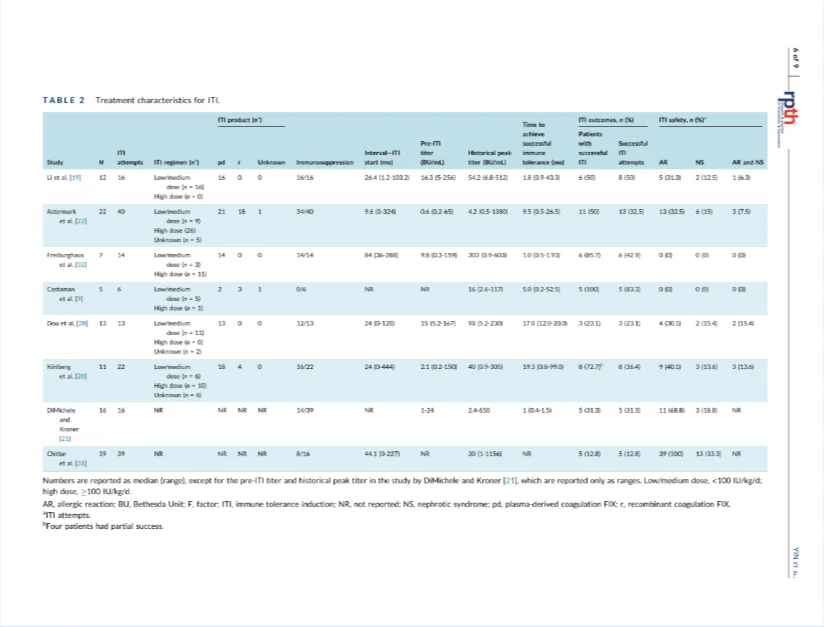
- Success rates vary wildly (from 12.8 pecent to 100 percent)
- Time to tolerance: approximately 1 to 19 months
- Multiple attempts often needed
The real challenge: safety
Adverse events are not rare, they’re defining:
- Allergic reactions: from 0 to 100 percent
- Nephrotic syndrome: from 0 to 33 percent
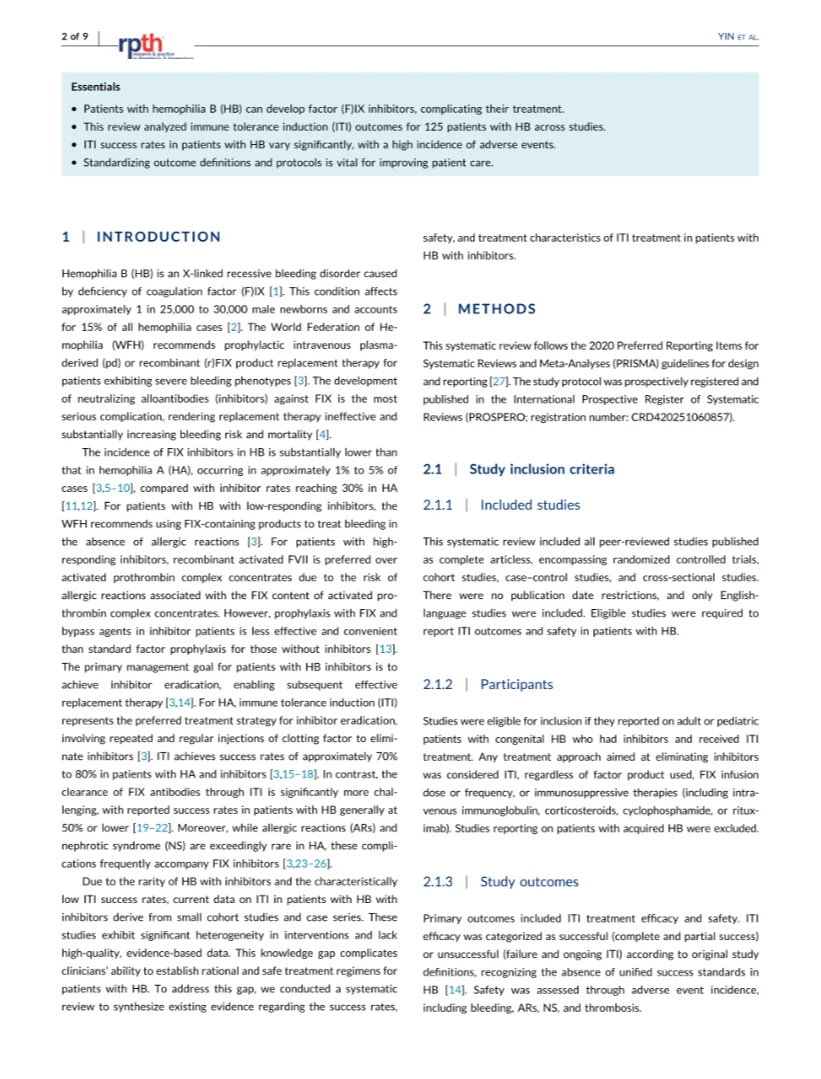
These complications are far more common than in hemophilia A.
This is the key issue:
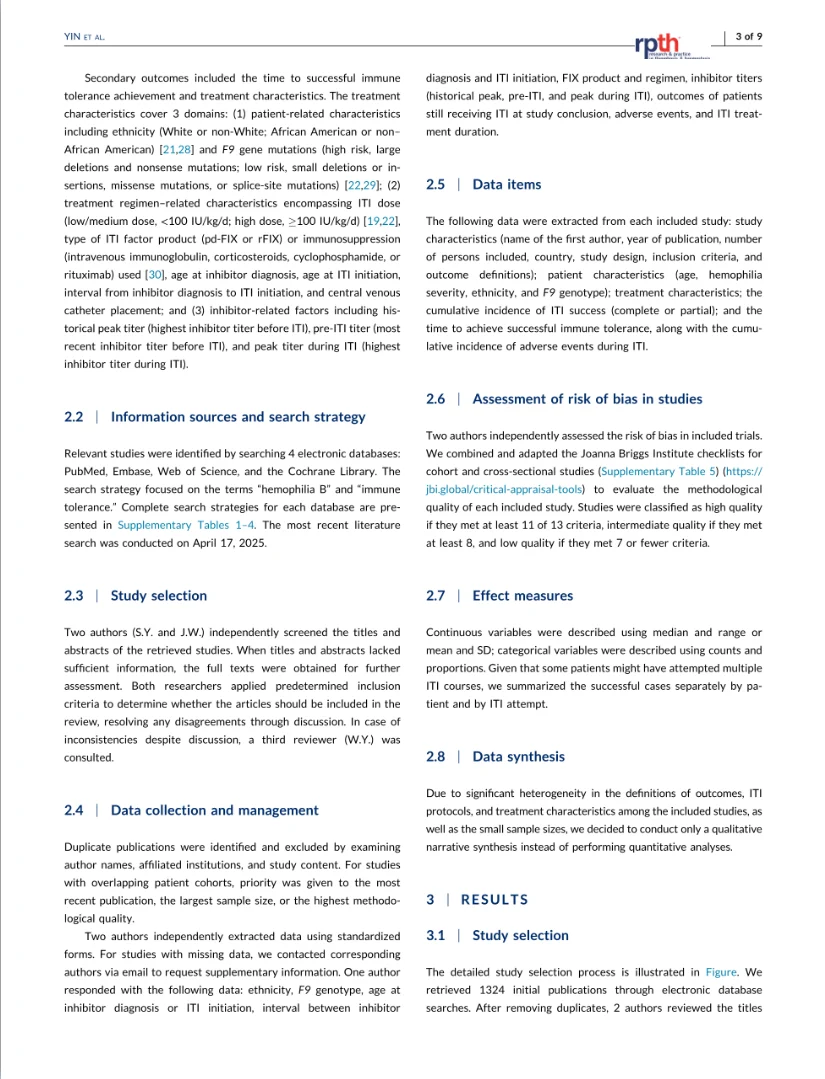
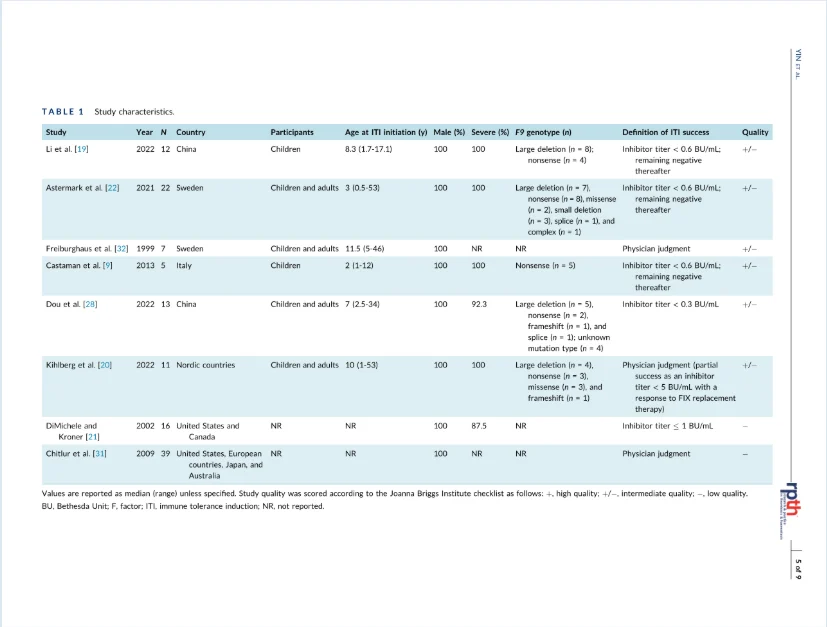
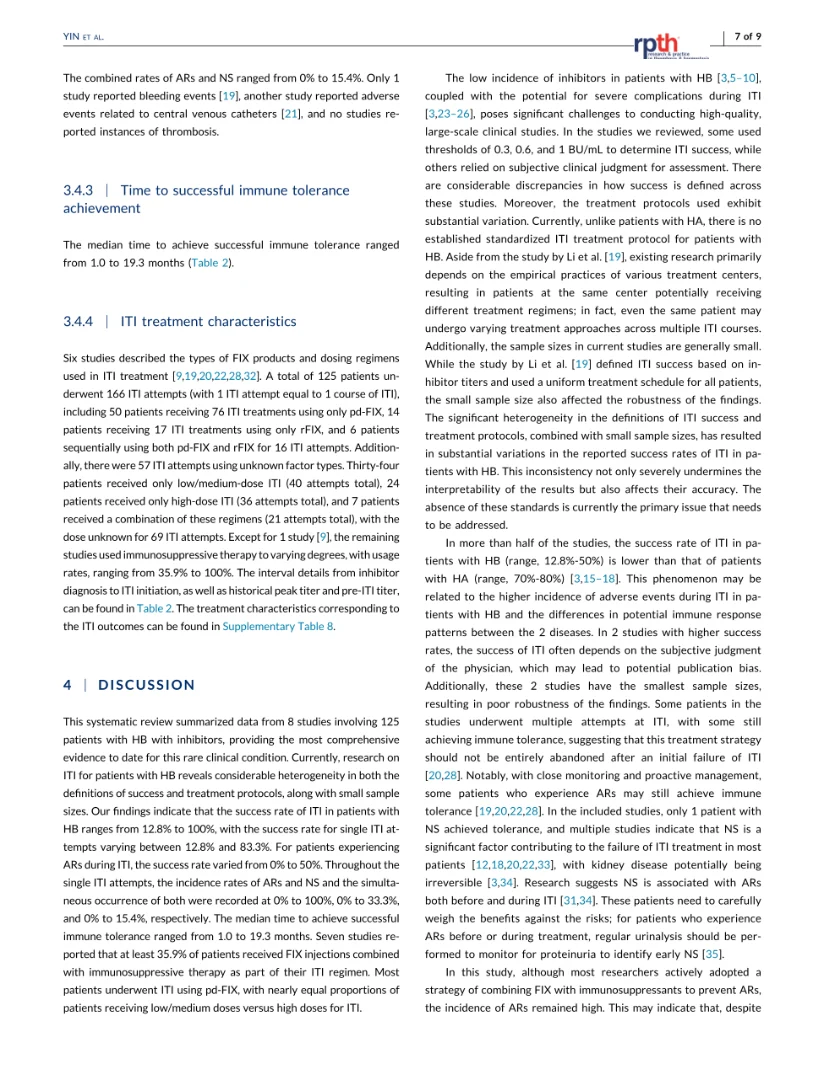
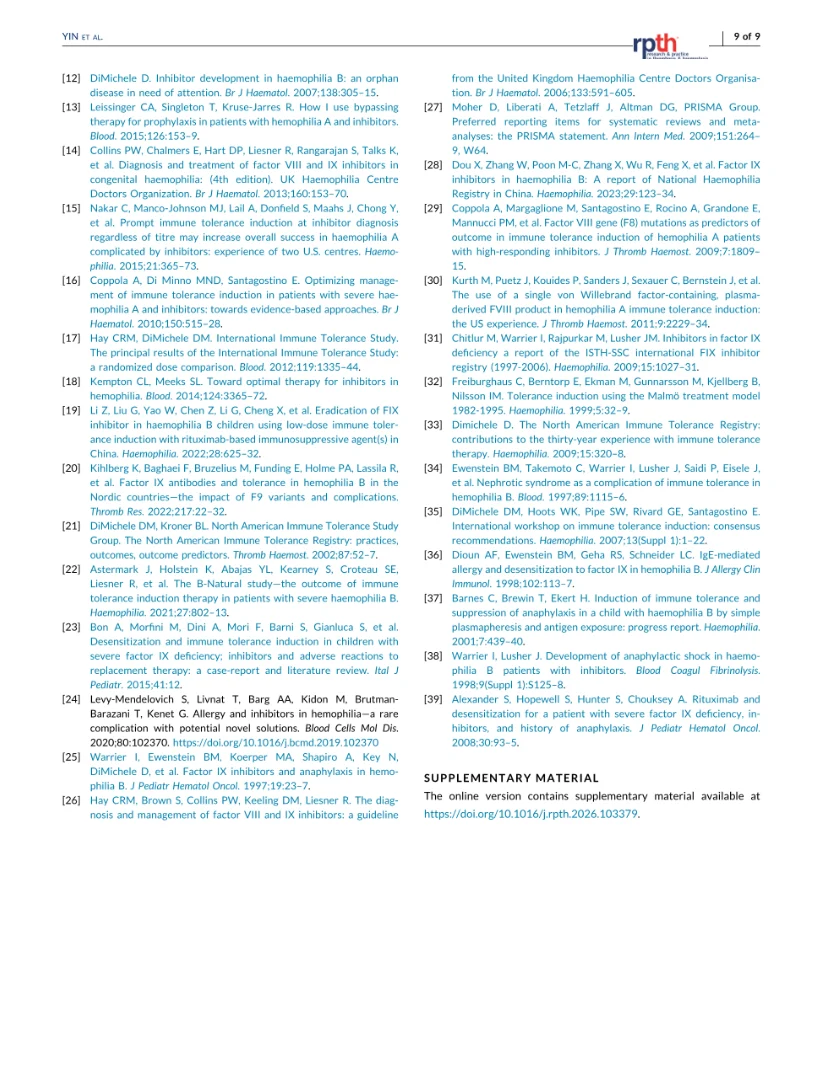
- No standardized definition of ‘success.’
- No uniform ITI protocol
- Small, heterogeneous cohorts
We’re comparing apples to oranges across studies.
Clinical insight
- ITI can still work, even after failure or allergic reactions
- But nephrotic syndrome is a major red flag (often treatment-limiting)
- Immunosuppression is widely used but doesn’t eliminate risk
Big picture
Unlike hemophilia A, where ITI is established: Hemophilia B remains a high-risk, low-predictability space
And until we standardize protocols: We’re optimizing therapy without a common playbook.”
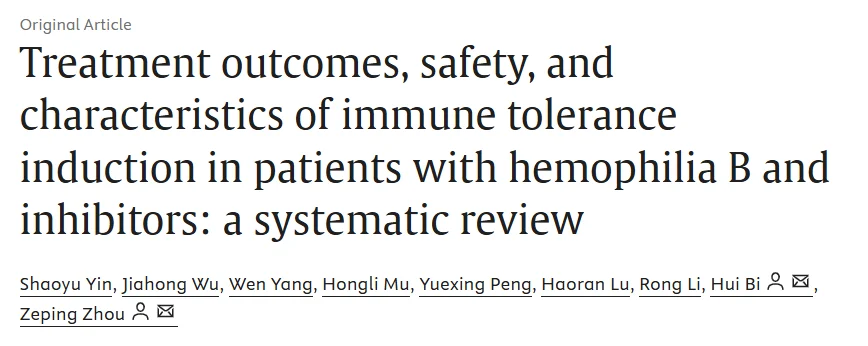
Title: Treatment outcomes, safety, and characteristics of immune tolerance induction in patients with hemophilia B and inhibitors: a systematic review
Authors: Shaoyu Yin, Jiahong Wu, Wen Yang, Hongli Mu, Yuexing Peng, Haoran Lu, Rong Li, Hui Bi, Zeping Zhou
Read the Full Article on Research and Practice in Thrombosis and Haemostasis
See more in the gallery.
Stay updated on all scientific advances with Hemostasis Today.
-
Sep 21, 2026, 14:10Aswin K Mohan: Lessons from TRANSCON 2026: Building Resilient Blood Supply Systems Before Crisis Hits
-
Sep 21, 2026, 14:00Vincent Lu: Beyond PT and aPTT – How Hemostasis Evolves Across a Lifetime
-
Sep 21, 2026, 13:56Alex Knapp: Emerging Tech, Space Tow Trucks, and New Advances in Hemophilia Treatment
-
Sep 21, 2026, 13:51Abdalhakim Shubietah: pLAAO Fails Noninferiority to OAC in Landmark Meta-Analysis of 7 RCTs
-
Sep 21, 2026, 13:21In His Last UNGA, António Guterres Delivers a Urgent Call for Global Unity
-
Sep 21, 2026, 13:14Fatih Mehmet Gul: Are We Moving Faster Than Our Ability to Ask ‘Should We?’
-
Sep 21, 2026, 13:08Sangita Reddy: How Does Our Own Healthcare Journey in India Look Through the Same Lens?
-
Sep 21, 2026, 12:53Conan McIlwrath: Strengthening Haemophilia Care Through International Collaboration
-
Sep 21, 2026, 12:41Tinatin Muradashvili: Advancing Hemophilia Care Through Education and Collaboration