

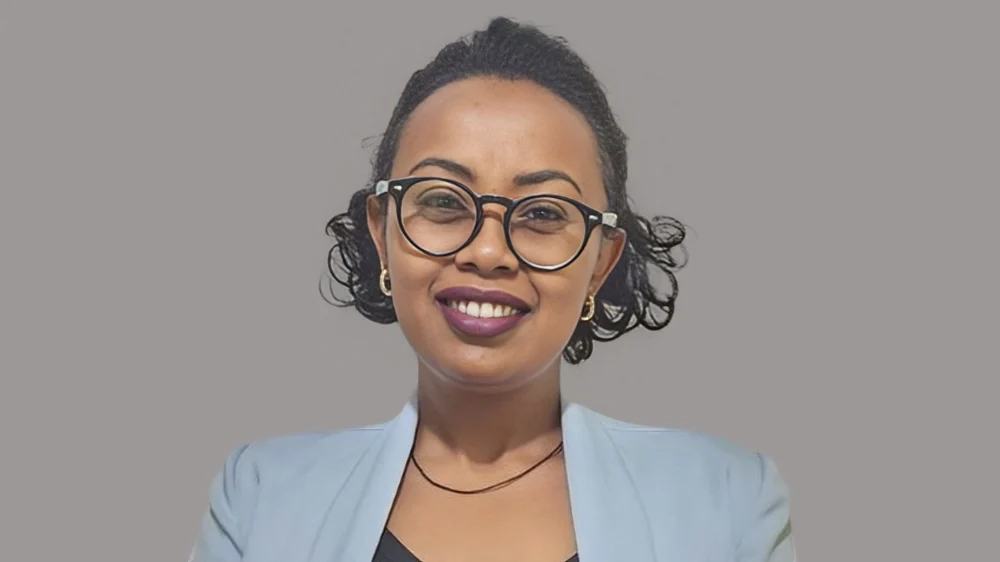
Samrawit Terefe: O Negative Blood Is the Universal Donor With Extreme Scarcity
Samrawit Terefe, Pediatrician at Motite Fura Hospital, shared a post on LinkedIn:
“A notification from a Telegram group for O-negative blood donors in Hawassa popped up on my phone.
A woman with severe anemia urgently needed more than two units of blood to undergo a surgery.
Her blood type: O-negative.
At that time, the blood bank – serving a catchment population of more than 10 million – had only one unit available.
Despite ongoing campaigns and tirelesseffortof the blood banks, blood shortages remain a constant challenge.
And moments like this highlight a deeper issue: our culture of voluntary blood donation is still far from where it needs to be.
The O-negative Telegram group was created out of necessity.
O-negative blood can be given to anyone, yet it can only be received from O-negative donors – making it incredibly scarce.
What’s striking, and at times disheartening, is that even individuals who have previously benefited from blood donations – either personally or through loved ones – are sometimes reluctant to give back or even join such initiatives.
And yet, there is hope.
Thanks to the swift and selfless response of donors in these groups – both in Addis Ababa and Hawassa – many lives have been saved.
This patient, too, underwent surgery after my self and another group member donated and she is now stable.
This experience leaves me with an important question:
How can we strengthen a culture of regular, voluntary blood donation in our communities?
One practical step could be scaling similar donor networks across cities.
These small, coordinated efforts are already making a life-saving difference.
Because in the end, blood is not manufactured – it is given.
Let us give blood
Let us save lives!!!”
Stay updated with Hemostasis Today.
-
Oct 21, 2026, 00:58Anees Ur Rahman: Completing a Two-Week Clinical Rotation at Haemophilia Treatment Centre Rawalpindi
-
Oct 21, 2026, 00:56Caitlyn Mooney: Pulmonary Embolism in Athletes, Recognition and Return to Sport
-
Oct 21, 2026, 00:54Hani Karrar: Pleased to Share Our Review on Emicizumab in Hemophilia A Management
-
Oct 21, 2026, 00:53Akshay Sharma: HSCT Leads to Sustained Improvements in Sickle Cell Cardiomyopathy for Up to 3 Years
-
Oct 21, 2026, 00:51Prateek Meena: The F. A. T. R. N. Mnemonic for Recognizing TTP
-
Oct 20, 2026, 23:51Registration Is Open for WFH CCS 2027 – World Federation of Hemophilia
-
Oct 20, 2026, 23:44Edward Lee Carter: AF in Nursing Homes – When Stroke Risk Scores Tell Only Part of the Story
-
Oct 20, 2026, 22:59Building Effective Patient Advocacy Through Collaboration Between Patients and Clinicians – EHC
-
Oct 20, 2026, 21:22Intezar Mehdi: When Prolonged Bleeding May Indicate an Underlying Bleeding Disorder