

Samson Kraikue-Quaicoe: The Role of Minor Fractions in Advanced Medical Care Beyond Whole Blood and Primary Components
Samson Kraikue-Quaicoe, Consultant, Researcher and Tutor at Kraspect Institute of Professional Studies, shared a post on LinkedIn:
“The Role of Minor Fractions in Advanced Medical Care: Beyond Whole Blood and Primary Components – Where Does Transfusion Medicine Sit?
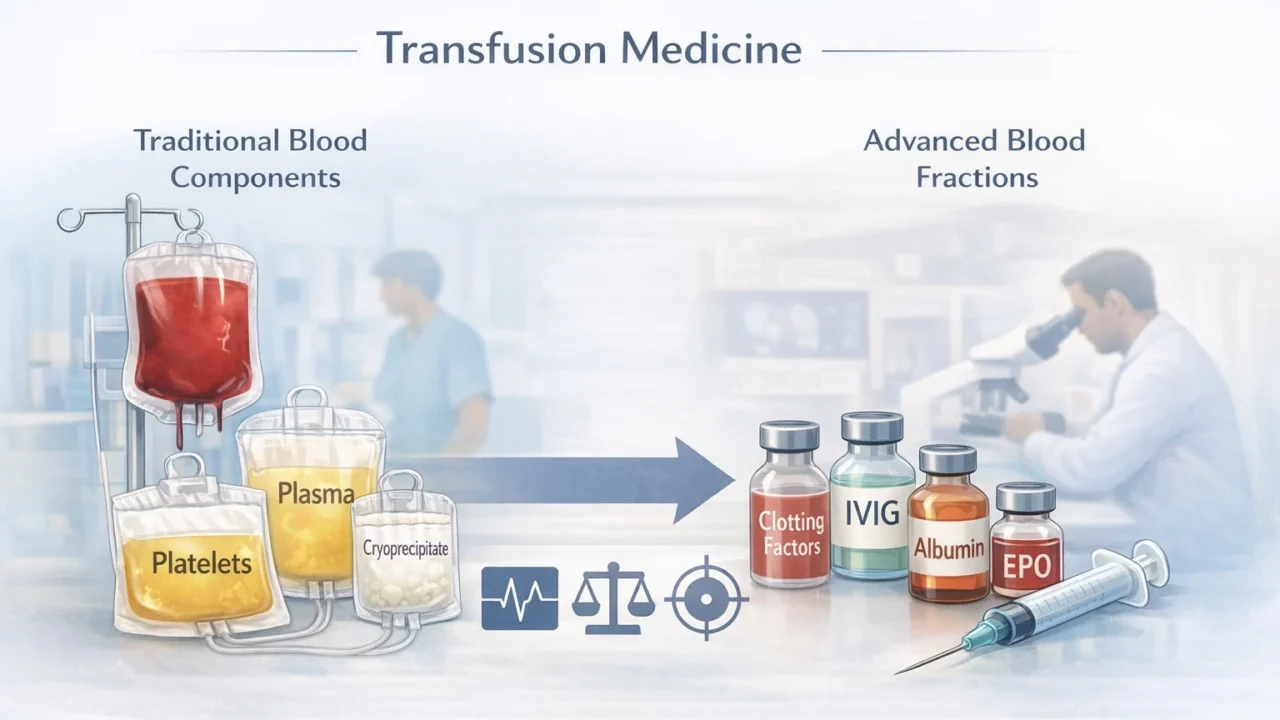
Modern medicine is steadily moving away from the traditional reliance on whole blood and its four primary components – red cells, platelets, plasma, and cryoprecipitate – toward a more precise, patient-centered approach.
At the heart of this evolution lies the use of minor blood fractions: purified, targeted derivatives that deliver specific therapeutic benefits without the broader risks associated with conventional transfusion.
Minor fractions such as albumin, immunoglobulins, clotting factor concentrates, fibrinogen concentrates, and recombinant products have redefined how clinicians manage complex conditions.
In critical care, nephrology, oncology, surgery, and hematology, these products offer precision therapy – addressing exact deficiencies rather than exposing patients to unnecessary volume, immunologic burden, or transfusion-related complications.
For example, clotting factor concentrates provide rapid correction in coagulopathies without the risks of plasma overload, while erythropoiesis-stimulating agents reduce dependence on red cell transfusions altogether.
This shift is not merely technological – it is philosophical.
It reflects a transition from ‘replacement medicine‘ to targeted, physiology-driven care.
Minor fractions align with principles of bloodless medicine and patient blood management (PBM), minimizing exposure to allogeneic blood, reducing risks such as transfusion reactions, alloimmunization, infections, and circulatory overload, and improving outcomes in vulnerable populations like patients with chronic kidney disease, heart failure, or critical illness.
So where does transfusion medicine sit in this new paradigm?
Transfusion medicine is not becoming obsolete – it is being redefined.
Its role is evolving from a system centered on blood collection and component therapy to one that emphasizes:
- Integration of pharmacologic alternatives and minor fractions
- Leadership in patient blood management programs
- Supporting multidisciplinary care with precision therapies
In this context, transfusion medicine becomes the bridge between traditional blood use and advanced biologic therapeutics.
It must expand its scope to include expertise in fractionated products, recombinant therapies, and individualized care pathways.
The future of advanced medical care is not about more transfusion – it is about smarter, safer, and more targeted intervention. Minor fractions represent that future.
The challenge – and opportunity – for clinicians, pharmacists, and transfusion specialists is to embrace this shift, ensuring that every intervention is not only effective but also necessary, appropriate, and aligned with the patient’s values and physiology.
Ultimately, the question is no longer whether we can transfuse – but whether we should, when better, more precise options exist.”
Stay updated with Hemostasis Today.
-
Oct 10, 2026, 11:32Thrombus Age Assessment Through Advanced Imaging and Biomarkers
-
Oct 10, 2026, 10:55Tzu-Fei Wang: How Should We Approach Anticoagulation for Cancer-Associated Gonadal and Renal Vein Thrombosis?
-
Oct 10, 2026, 10:50Robert Sidonio Joins ATHN Advanced Clinical Research Fellowship Program
-
Oct 10, 2026, 10:45Federica Fogacci: Co-Moderating at CA Meet 2026 in Padua – Elevating Lifestyle Interventions in Cardiology
-
Oct 10, 2026, 10:40Juan Cristóbal Morales Muñoz: Pharmacokinetic Profiling of Factor VIII Concentrates in Chilean Patients
-
Oct 10, 2026, 10:32Randall Schaefer: What Do Blood Product Wastage Rates Really Tell Us in Prehospital Care?
-
Oct 10, 2026, 10:26Simone Strasser: ROTEM-Guided Transfusion Cuts Blood Product Use in Patients with Cirrhosis
-
Oct 10, 2026, 10:18Jérôme S.: WHO Launches Global Roadmap to Combat Hypertensive Disorders of Pregnancy
-
Oct 10, 2026, 10:07Maha Othman: Look Forward to an Amazing ISTH 2027 in Vancouver!