


Seema Dawood: EDTA-Induced Platelet Satellitism
Seema Dawood, Medical Laboratory Technologist at The Aga Khan University Hospital, shared a post on LinkedIn:
“Platelet Satellitism
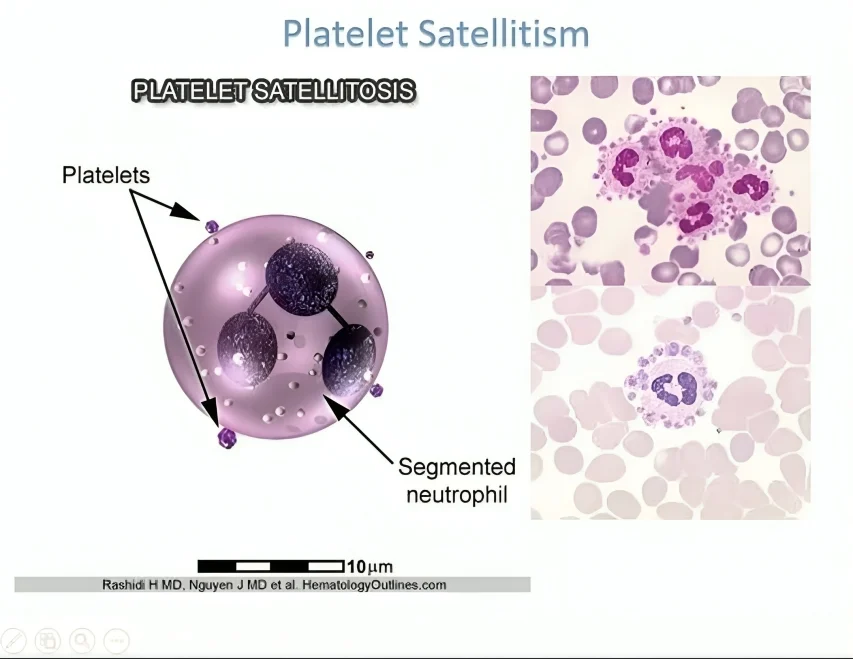
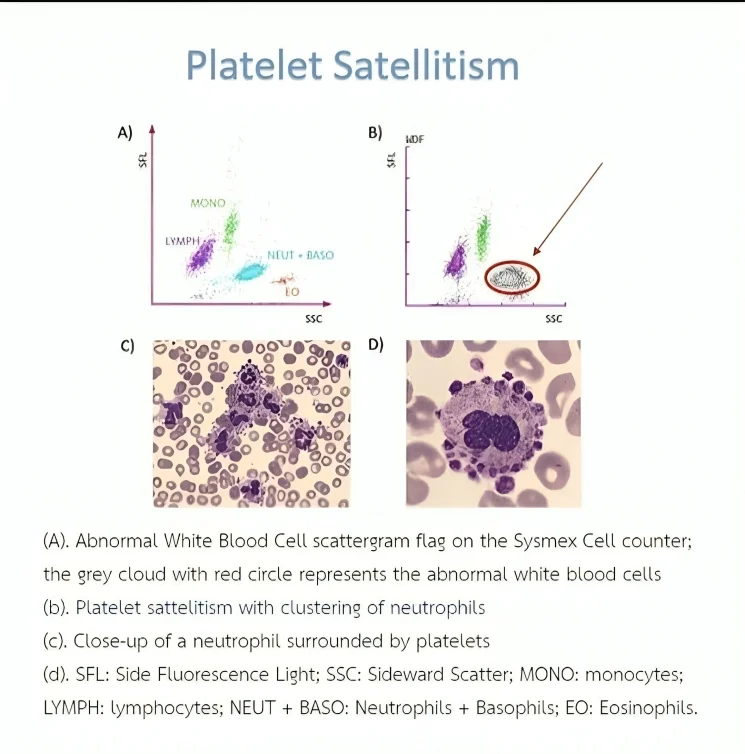
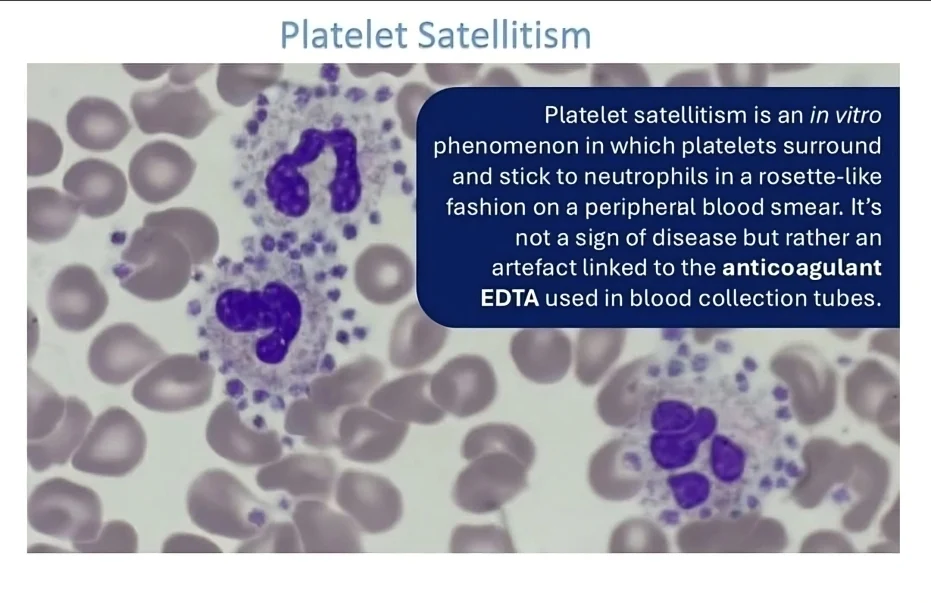
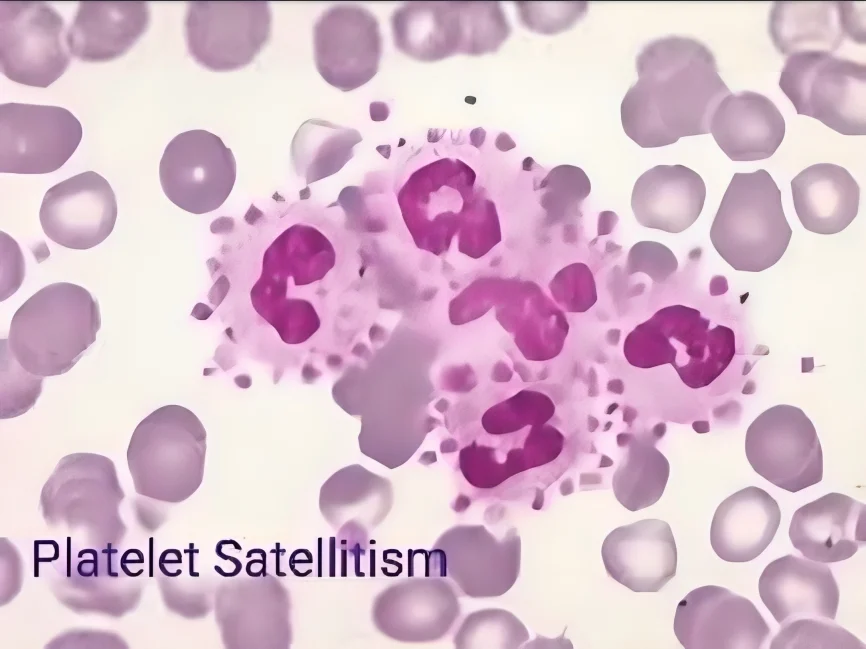
Platelet Satellitism is a phenomenon in which Platelets surround and adhere to neutrophils in blood samples collected with EDTA as an anticoagulant, leading to pseudothrombocytopenia (a falsely low platelet count).
EDTA induces changes on the surface of Platelets and Neutrophils, and the presence of specific antibodies or plasma proteins can trigger Platelet adherence to Neutrophils.
This condition causes falsely decreased platelet counts in automated analyzers.
A peripheral blood smear should be reviewed, and blood should be recollected using another anticoagulant, such as Heparin or Sodium Citrate, for confirmation.
Platelet Satellitism may be associated with:
- Autoimmune diseases (e.g., SLE) – presence of autoantibodies against platelets
- Chronic infections or inflammation – immune system activation
- Hematologic malignancies – such as lymphoma or leukemia
- Production of antiplatelet antibodies – promotes platelet adherence to neutrophils in the presence of EDTA
In summary, Platelet Satellitism is an EDTA-dependent phenomenon where Platelets cluster around Neutrophils, leading to a false impression of Thrombocytopenia.
Careful examination of a blood smear and the use of alternative anticoagulants (Heparin or Citrate) help prevent misinterpretation.”
Stay updated with Hemostasis Today.
-
Sep 11, 2026, 12:20When Thrombosis Affects the Kidneys – World Thrombosis Day
-
Sep 11, 2026, 11:24Haroun Gajraj: Polidocanol or STS – Choosing the Right Sclerosant
-
Sep 11, 2026, 10:53A Patient-Centred Approach to Haemophilia B Care – EAHAD
-
Sep 11, 2026, 09:51Alfredo Lozada: Pelacarsen Lowers Lp(a), But Does It Lower CV Risk?
-
Sep 11, 2026, 09:35Yasir Khan: Travel Related Blood Clots – What Are the Chances?
-
Sep 11, 2026, 08:02Mud Alvi: Restarting Antithrombotic Therapy After Hemorrhagic Transformation of Ischemic Stroke
-
Sep 11, 2026, 08:01Chaza Alaji: Factor X From Inherited Deficiency to Acquired Deficiency in AL Amyloidosis
-
Sep 11, 2026, 08:01Mariusz Kowalewski: Risk Stratification of Surgical Ablation During Minimally Invasive Mitral Valve Surgery for AFib
-
Sep 11, 2026, 08:00Noor Gajraj: MTHFR Helps Turn Folate, Vitamin B9, Into The Form The Body Uses