

Stan Karbowiak: ‘The Man With the Golden Arm’ Changed the Fate of Millions of Babies
Stan Karbowiak, CEO and Founder – Medical and Wellness Information Specialist at MyHealthCRM, shared a post on LinkedIn:
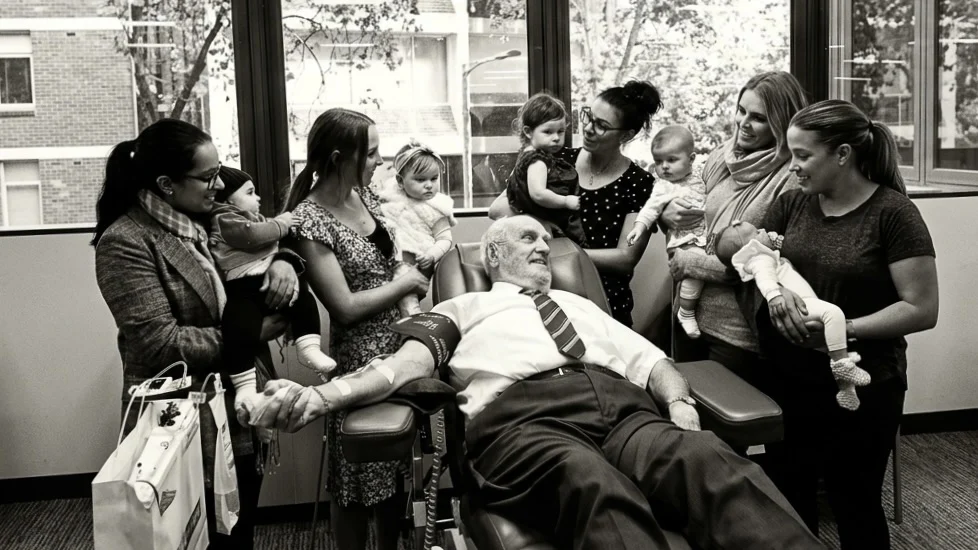
“James Harrison’s story begins when he was a teenager recovering from major chest surgery in the 1950s, during which he received large amounts of donated blood to survive.
That experience left him determined to ‘give back’ once he was old enough to donate himself.
When he finally did, doctors discovered something extraordinary in his plasma: a rare antibody known as anti‑D, likely formed because of the transfusions he received as a boy.
This antibody turned out to be the key to preventing Rhesus disease, a condition that once caused thousands of newborn deaths each year.
Throughout the next six decades, Harrison donated plasma as often as Australian guidelines allowed, every two weeks, ultimately reaching 1,173 donations before mandatory age limits forced him to stop at 81.
His plasma was used to create ‘RhoGAM‑type injections’, which protect Rh‑negative mothers from developing antibodies that could attack their unborn babies.
Before this treatment existed, many women lost multiple pregnancies; after it became widespread, infant mortality from Rhesus disease plummeted across Australia.
Because his antibodies were so uniquely effective, Harrison became known nationwide as ‘The Man with the Golden Arm,’ and his donations are credited with saving over 2.5 million babies, a number so large that entire generations owe their lives to him.
Despite the fame, he remained humble, treating each donation like a simple errand rather than a heroic act. His legacy continues today through other anti‑D donors and ongoing research into lab‑made monoclonal antibodies that may one day replace the need for rare individuals like him.”
Stay updated with Hemostasis Today.
-
Sep 20, 2026, 09:51Ceasovschih Alexandr: A Closer Look at Lipid Disorders in CKM Syndrome
-
Sep 20, 2026, 09:05World Stroke Academy: Can Adjunct IAT Improve Tissue Reperfusion?
-
Sep 20, 2026, 06:46Neeraj Songara: From Donated Blood to Engineered Therapeutics
-
Sep 20, 2026, 06:24Louise St. Germain Bannon: Improving Awareness and Care for Women Across the Lifespan
-
Sep 20, 2026, 05:17Maxime Dely: When ABO Compatibility Isn’t Enough for Safe Transfusion
-
Sep 20, 2026, 04:54William Aird: What Does a Complete History and Physical Really Mean?
-
Sep 20, 2026, 04:34Hons Saurabh Kaushik: Why Uncontrolled LDL Can Be Harmful
-
Sep 20, 2026, 03:58Salih Ehsan: The Complexities of HbF and HbA2
-
Sep 20, 2026, 03:22The Voices of People Living With Bleeding Disorders – EHC