

Tagreed Alkaltham: Apheresis – Precision in Blood Component Collection
Tagreed Alkaltham, Transfusion Medicine Lab Supervisor at KSMC, shared a post on LinkedIn:
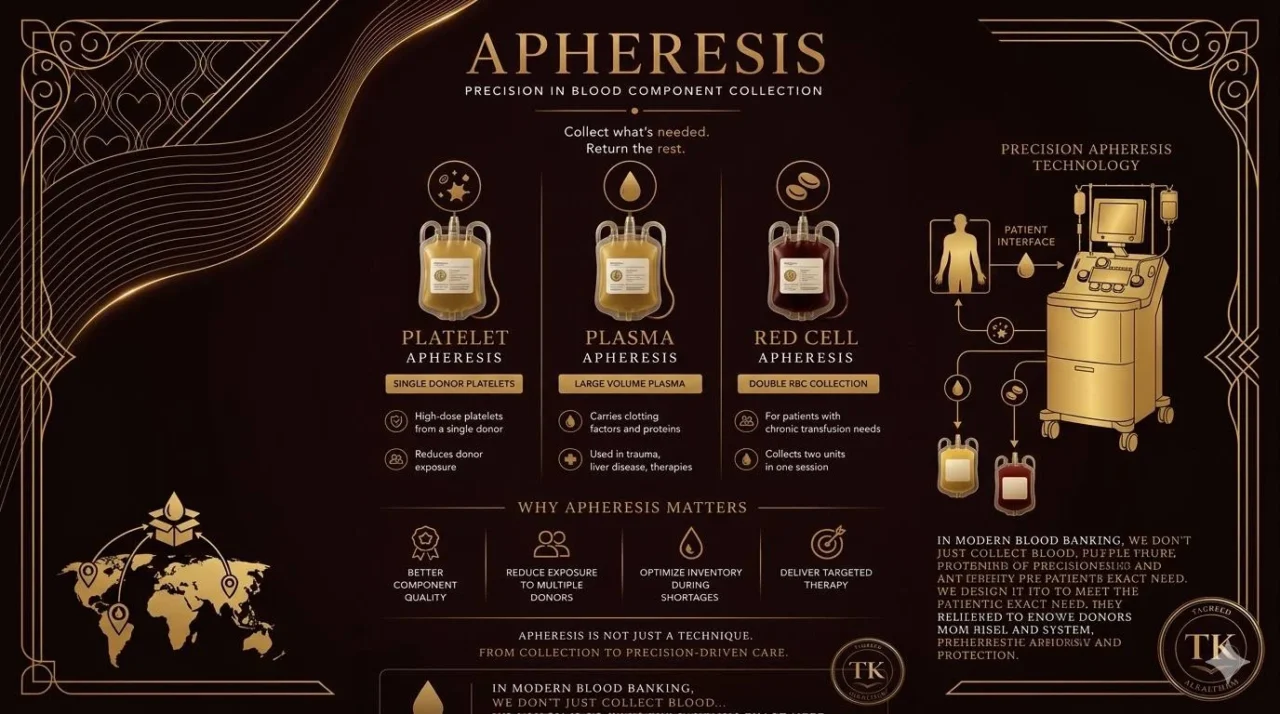
”Apheresis: Precision in Blood Component Collection
Not all blood donations are the same.
Some are designed… with precision.
Apheresis is a specialized donation process that allows us to collect specific blood components while safely returning the rest to the donor.
Because in transfusion medicine, efficiency is not a luxury… it’s a necessity.
Platelet Apheresis (Single Donor Platelets):
Platelets are critical for patients with:
- Cancer
- Bone marrow failure
- Massive bleeding
With apheresis:
- We collect a high dose platelet unit from a single donor
- Reducing donor exposure for the patient
- Enhancing transfusion safety and compatibility
One donor. One therapeutic dose. One controlled outcome.
Plasma Apheresis:
Plasma carries:
- Clotting factors
- Proteins essential for survival
Used in:
- Trauma and massive transfusion
- Liver disease
- Plasma exchange therapies
With apheresis:
- We collect larger plasma volumes efficiently
- While maintaining donor safety
Supporting critical care… with targeted collection.
Red Cell Apheresis (Double RBC Collection):
Designed for:
- Patients with chronic transfusion needs
- Situations requiring specific blood types
With this method:
- We collect two units of red cells in one session
- From a single, eligible donor
Maximizing impact… without increasing donor burden.
Why Apheresis Matters?
Because it allows us to:
- Improve component quality
- Reduce patient exposure to multiple donors
- Optimize inventory during shortages
- Deliver targeted therapy, not just transfusion
Apheresis is not just a technique.
It is a reflection of how far transfusion medicine has evolved
- From collection…
- to precision driven care.
In modern blood banking, we don’t just collect blood… we design it to meet the patient’s exact need.”
Other posts featuring Tagreed Alkaltham on Hemostasis Today.
-
Sep 25, 2026, 10:49Shefina S: From Presenting to Hosting at TRANSCON 2026
-
Sep 25, 2026, 10:37Michelle Leona Cecil: Hemophilia Advocacy and the Power of Community
-
Sep 25, 2026, 10:13Michael Baria: Platelet Concentration and PRP Outcomes in Partial Rotator Cuff Tears
-
Sep 25, 2026, 09:49Haley Coleman: Volunteering to Support Hemophilia Awareness
-
Sep 25, 2026, 08:55Hitarth Mehta: BHMS Students Gain Practical Exposure to Haemophilia Diagnosis
-
Sep 25, 2026, 07:25Varun Capoor: How Therapeutic Apheresis and Transfusion Medicine Can Complement Clinical Management in SCD
-
Sep 25, 2026, 07:14Manshi Kesharwani: SAK-GQDs Modulate Thrombus Burden and Endothelial Function in Deep Vein Thrombosis
-
Sep 25, 2026, 06:20Farjah Hassan Algahtani: How Can We Better Identify Patients at Risk of Blood Clots after Metabolic and Bariatric Surgery?
-
Sep 25, 2026, 05:59Carla Lewis: Kids Conquering Sickle Disease Joins Nemours Children’s Hospital for 2nd Annual Awareness Event