


Tareq Abadl: How the Immune System Turns Against the Body in Autoimmune Diseases
Tareq Abadl, Medical Laboratory Specialist and Director of the Blood Bank at Dr. Abdelkader Al-Mutawakkil Hospital, shared a post on LinkedIn:
“The immune system is the body’s ‘defense army.’
Its job is to distinguish between ‘enemies’ like bacteria and viruses, and ‘self,’ meaning the body’s own cells and tissues.
But sometimes this recognition goes wrong, and the army starts attacking the body’s own cells as if they were foreign!
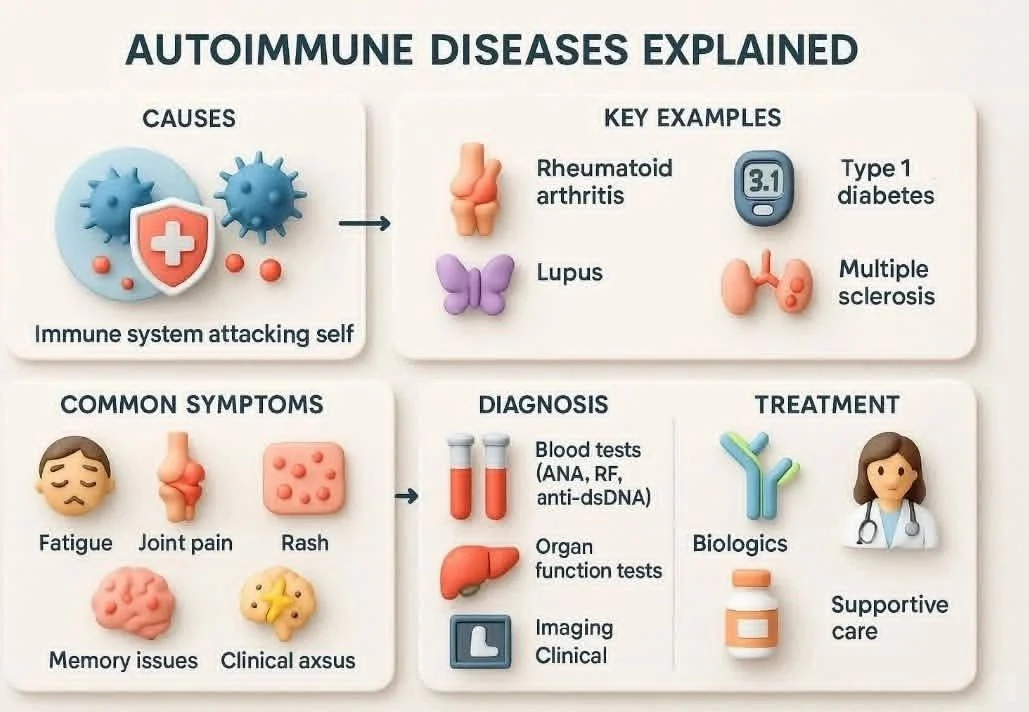
This is what we call: Autoimmune diseases.
What exactly happens?
- Immune cells (T-cells and B-cells) get confused and treat body tissues as ‘enemies.’
- The body produces autoantibodies against itself.
- Result: chronic inflammation, organ damage, and symptoms depending on the site affected.
Common examples:
Rheumatoid arthritis:
- attacks joints – pain, swelling, stiffness.
Lupus:
- can affect skin, joints, kidneys, and other organs.
Type 1 diabetes:
- immune system attacks pancreatic cells that produce insulin.
Hashimoto’s thyroiditis:
- affects the thyroid gland – chronic hypothyroidism.
Multiple sclerosis:
- attacks nerves – weakness or movement problems.
Shared symptoms:
- Persistent fatigue without clear cause
- Joint or muscle pain and stiffness
- Recurrent rashes or inflammation
- Memory or concentration problems
- Sometimes organ dysfunction depending on the disease
How is it diagnosed?
- Blood tests to detect autoantibodies (ANA, RF, Anti-dsDNA).
- Organ function tests (thyroid, kidney, pancreas).
- Imaging (X-ray, MRI) if joint or nerve damage is suspected.
- Clinical exam and medical history to connect symptoms with lab results.
Possible causes:
Genetics:
- family history increases risk.
Environment:
- exposure to certain infections or chemicals.
Hormones:
- some autoimmune diseases are more common in women.
Chronic stress:
- may disrupt immune balance.
Treatment options:
Immunosuppressants:
- reduce immune system activity.
Biologics:
- precisely target specific immune pathways.
Corticosteroids:
- reduce inflammation in active disease.
Supportive care:
- balanced diet, adequate sleep, stress reduction, regular follow-up.
Organ-specific therapy:
- insulin for type 1 diabetes, thyroid medication for Hashimoto’s.
Why is this important?
Autoimmune diseases are not ‘simple symptoms.’
They are chronic conditions that can seriously affect quality of life if not diagnosed and treated early.”
Other posts featuring Tareq Abadl on Hemostasis Today.
-
Oct 13, 2026, 21:05Francisco Chacón-Lozsán: Heparin-Induced Thrombocytopenia – When an Anticoagulant Triggers Thrombosis
-
Oct 13, 2026, 21:04Aref Zribi: Isolated Tumor Thrombus and the Role of Prophylactic Anticoagulation
-
Oct 13, 2026, 21:01Alex Larson: Why Normal Bloodwork Does Not Always Tell the Whole Story
-
Oct 13, 2026, 20:58Juan Jauregui-Lozano: How Replication Stress Impairs Red Blood Cell Maturation
-
Oct 13, 2026, 20:55Caitlin Raymond: Understanding Platelet Refractoriness Before Ordering More Platelets
-
Oct 13, 2026, 20:54Sanja Seratlic: How Cow Feeding Systems Influence the Anti-Platelet Properties of Cheddar Cheese
-
Oct 13, 2026, 20:50Ruchika Goel: Cord Blood Red Blood Cells as a Physiologically Aligned Transfusion Strategy
-
Oct 13, 2026, 20:47Sophia Delicou: Strengthening Transfusion Safety Through Advanced Screening and Haemovigilance
-
Oct 13, 2026, 20:45Lydia Pecker: Alloimmunization and Transfusion Indications in Sickle Cell Disease Pregnancy