

Tareq Abadl: Understanding Thalassemia – Breaking the ‘Ordinary Anemia’ Myth
Tareq Abadl, Medical Laboratory Specialist and Director of the Blood Bank at Dr. Abdelkader Al-Mutawakkil Hospital, shared a post on LinkedIn:
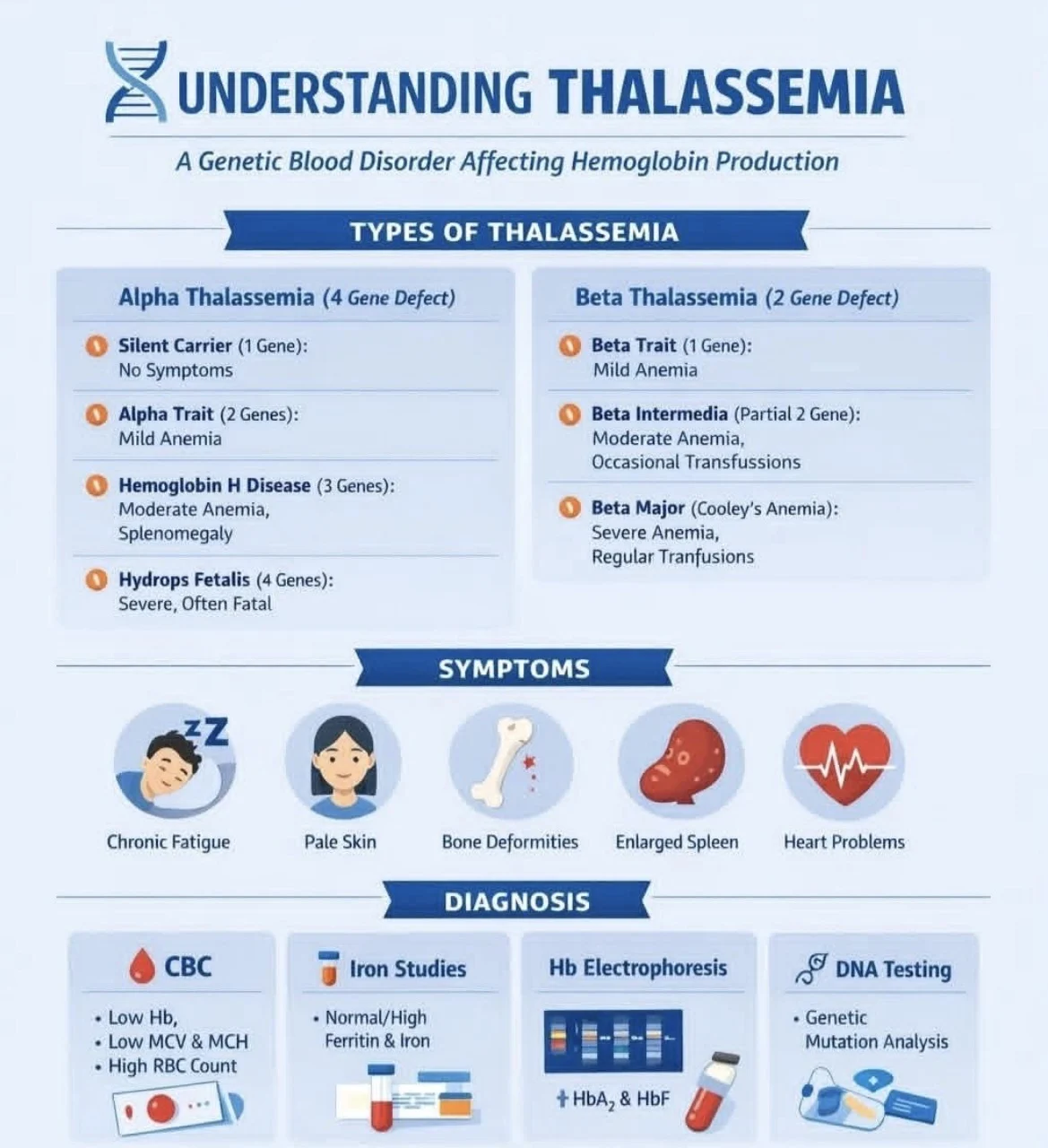
“Many people think Thalassemia is just ‘ordinary anemia’… but in fact, it’s a complex genetic disorder that affects hemoglobin formation. Let’s break it down
Detailed Types
Alpha Thalassemia
- One gene missing leads to Silent carrier (no symptoms).
- Two genes missing leads to Trait (mild anemia).
- Three genes missing leads to Hemoglobin H disease (moderate anemia with splenomegaly and bone deformities).
- Four genes missing leads to Hydrops Fetalis (severe, often fatal during pregnancy).
Beta Thalassemia
- One gene missing leads to Beta trait (mild anemia).
- Partial defect in both genes leads to Beta intermedia (moderate anemia, may need occasional transfusions).
- Complete defect in both genes leads to Beta major (Cooley’s anemia) (severe anemia requiring lifelong transfusions).
Classification by Transfusion Need
- NTDT (Non-transfusion-dependent): mild or moderate cases.
- TDT (Transfusion-dependent): severe cases needing regular blood transfusions to survive.
Symptoms and Signs
- Chronic anemia with persistent fatigue
- Pale skin and poor appetite
- Bone deformities and facial changes
- Enlarged spleen and liver
- Heart problems due to iron overload
- Growth delay in children
Diagnosis – Basic and Advanced Tests
CBC (Complete Blood Count):
- Low Hb.
- Low MCV and MCH (microcytic, hypochromic).
- Paradoxically high RBC count despite anemia.
- Normal RDW (helps differentiate from iron deficiency anemia).
- Presence of target cells under the microscope
Iron Studies:
- Serum iron: normal or high.
- Ferritin: normal or high.
- TIBC: normal or low.
This distinguishes Thalassemia from iron deficiency anemia, where iron and ferritin are very low.
Hemoglobin Electrophoresis / HPLC:
- Beta trait: High HbA2 (>3.5%), slight High HbF.
- Beta major: markedly High HbF, low or absent HbA.
- Alpha Thalassemia: presence of HbH (3-gene deletion) or Ho Bart’s (4-gene deletion in newborns).
DNA Analysis:
The most accurate method to identify the mutation and number of affected genes.
Role of Society
Spread awareness that genetic screening isn’t a luxury
it’s a necessity for protecting future generations.
Break the stigma around hereditary diseases and treat them as a shared health responsibility.
Support awareness programs in schools and universities to educate youth about the importance of premarital testing.”
Other posts featuring Tareq Abadl on Hemostasis Today.
-
Oct 17, 2026, 04:07Weihao Li: Global HEPATIC Registry Findings on Post-Transplant Arterial Thrombosis
-
Oct 17, 2026, 03:56Ghaith Abu-Zeinah: ASH Publishes 2026 Guidelines for Myelofibrosis Management in Blood Advances
-
Oct 17, 2026, 03:48Tristan Siokos: Why Vascular Occlusion Is More Than Just Clots – Breakdown of the 8 Pathways
-
Oct 17, 2026, 02:36Archil Jaliashvili: Oxygen Transport in Capillaries
-
Oct 17, 2026, 02:35Carly Newton: Understanding Access to Red Blood Cell Exchange for People Living With SCD
-
Oct 17, 2026, 02:34Raising Awareness of Blood Clots During and After Pregnancy – Thrombosis UK
-
Oct 17, 2026, 02:33Alaa Salamat: Our Research Accepted for Publication at ASH 2026
-
Oct 17, 2026, 02:32Mohammed Al Sharif: Discussing Factor XIII Testing and Its Clinical Significance
-
Oct 17, 2026, 02:31Joanna Popiolek-Kalisz: Talking about Novel Pharmacotherapy for Hypertension at CV Prevention and Intervention