


Arno Nierich: How Caffeine Affects Red Blood Cells and Blood Storage
Arno Nierich, Anaesthesiologist and Intensivist specializing in cardiac surgery at Isala Hospital, shared a post on LinkedIn:
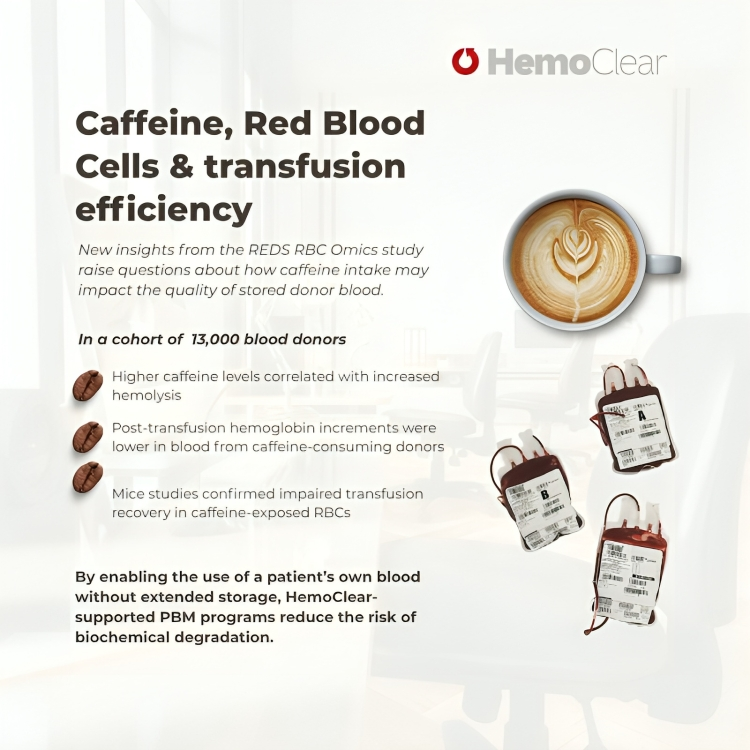
”Caffeine, a non-selective antagonist of the ADORA2B receptor found on red blood cells (RBCs), appears to interfere with key metabolic and hypoxic responses, including glycolysis and 2,3-BPG synthesis, both essential for oxygen delivery under stress.
These findings suggest that caffeine may compromise ATP production and increase hemolysis during storage.
Why This Matters for Innovation in Blood Transfusion
By enabling autologous blood recovery and bedside reinfusion, HemoClear supports PBM strategies that eliminate the need for extended storage, thereby avoiding biochemical degradation risks linked to factors like caffeine exposure.
As we deepen our understanding of how lifestyle and genetics influence transfusion outcomes, it’s also time to rethink how we approach blood safety, quality, and innovation.”
Find more information here.
Stay updated with Hemostasis Today.
-
Oct 3, 2026, 17:26Karel Kostev։ When First Anticoagulant Prescriptions Are Not Dispensed
-
Oct 3, 2026, 17:11Nabila Hasan: Thalassemia Awareness And Prevention
-
Oct 3, 2026, 17:03Pasinee Sangsiwarit: Neutrophil Dysfunction In β-Thalassemia
-
Oct 3, 2026, 16:18Mira Kassouf: Reactivating An Embryonic Gene To Treat α-Thalassemia
-
Oct 3, 2026, 15:49Behnood Bikdeli: COATED_AIR Trial Design Published as Enrollment Reaches 3,000 Patients
-
Oct 3, 2026, 15:25Vanrose Panashe Nyamangodo: A Multi-Task Deep Learning Model For Malaria And Anemia
-
Oct 3, 2026, 14:52Benny Sorensen: Glanzmann’s Thrombasthenia Finally Assigned Dedicated ICD-10 Code
-
Oct 3, 2026, 14:52The Real-World Burden Of DVT In Traumatic Fractures – ISTH
-
Oct 3, 2026, 14:41How Much Do We Really Know About The Global Burden Of Venous Thromboembolism? – World Thrombosis Day