


Abdul Mannan: When Gender Bias Becomes a Diagnostic Error – Inherited Bleeding Disorders are Still Being Missed
Dr Abdul Mannan, Consultant Haematologist at Betsi Cadwaladr University Health Board, shared a post on LinkedIn:
“When Gender Bias Becomes a Diagnostic Error
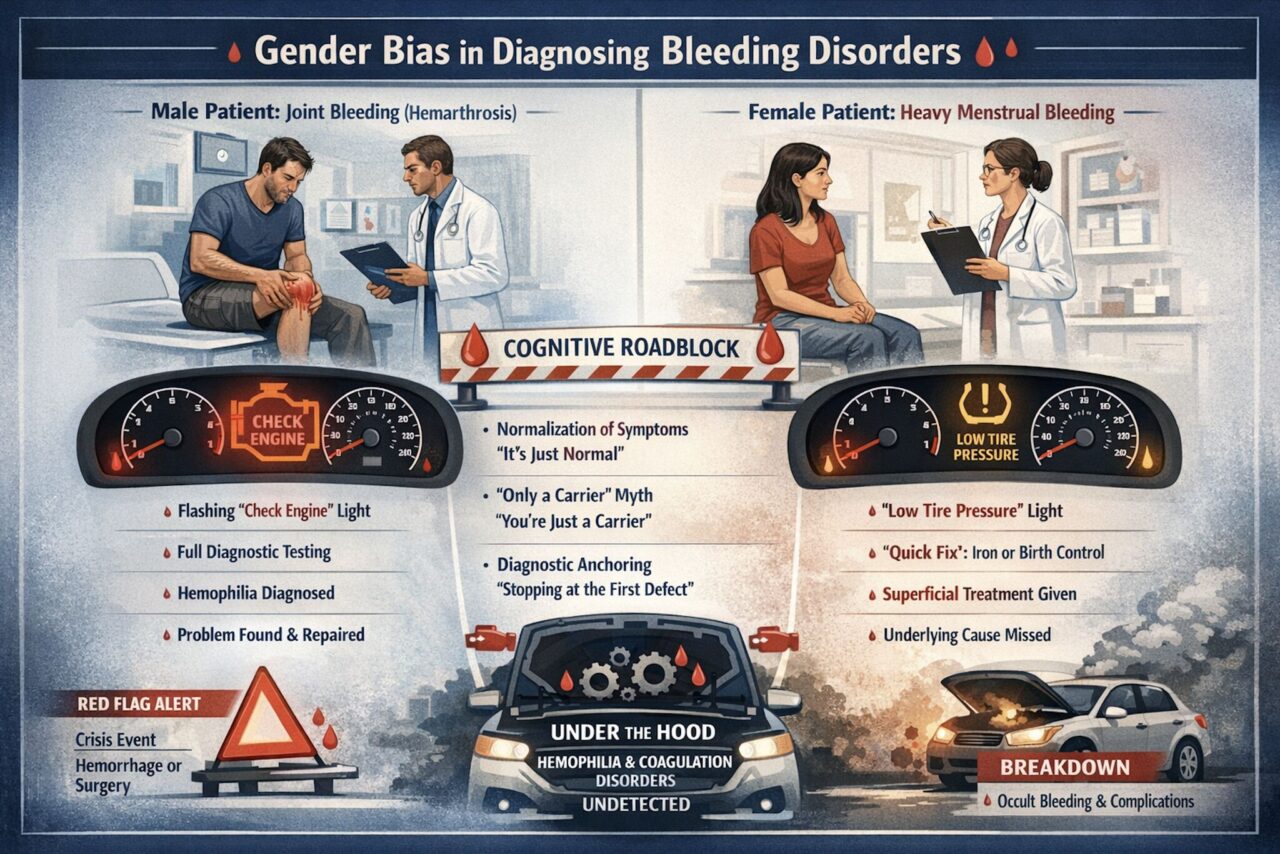
Inherited Bleeding Disorders are still being missed. Not because tests don’t exist. But because thinking stops too early.
In bleeding disorders, biology is not the only barrier.
Cognitive bias is.
Same system. Same disease risk. Very different responses.
When a man presents with joint bleeding, alarms go off.
Full coagulation work-up. Factor levels. Genetics. Diagnosis.
When a woman or girl presents with heavy menstrual bleeding, the response is often very different:
“It’s normal.”
“It runs in the family.”
“It’s gynaecological.”
“Try iron. Try hormones.”
And the hood never gets opened.
These are not knowledge gaps. They are cognitive roadblocks:
- Normalization of symptoms
Generational bleeding is mistaken for “family traits” rather than inherited disease. - The ‘only a carrier’ myth
Women with hemophilia genes are still assumed to be asymptomatic, despite clear evidence to the contrary. - Satisfied search error
Find mild vWD → stop investigating
Miss the second defect → label as “treatment-resistant”
- Physiological masking
Pregnancy normalizes factor levels → false reassurance → delayed postpartum hemorrhage. - Menstrual stigma
If bleeding isn’t quantified, it isn’t taken seriously.
A pad every 30 minutes becomes “just a heavy period”.
Think of it like this:
A man with hemarthrosis gets a flashing check engine light.
A woman with HMB gets a low tyre pressure warning.
One triggers diagnostics.
The other gets a quick fix.
Until the breakdown happens — surgery, childbirth, hemorrhage.
Key message:
Treatment failure in women is not “difficult anatomy”.
It is a red flag.
What changes outcomes?
- Structured bleeding assessment tools
- Factor levels in symptomatic “carriers”
- Looking for combined defects
- Testing outside pregnancy
- Taking menstrual bleeding seriously — clinically, not culturally
This infographic isn’t about blame.
It’s about where our thinking stops too soon.
If we don’t challenge these cognitive shortcuts, women with inherited bleeding disorders will continue to be diagnosed late, during crises, or not at all.
Blood Doctor
Because bleeding disorders don’t respect gender — but bias still does.”
Get more insights from Abdul Mannan with Hemostasis Today.
-
Sep 30, 2026, 22:28Recent Mechanical Risk Factors and Young-Onset Cryptogenic Ischemic Stroke – American Heart Association International
-
Sep 30, 2026, 22:22Expert Consensus on Inferior Vena Cava Thrombosis – Thrombosis and Haemostasis Journal
-
Sep 30, 2026, 22:21Markus Abeln: How Platelets and Complement Shape Placental Blood Flow
-
Sep 30, 2026, 22:19Fatma Al Arbawi: Studying Blood Clot Mechanics to Understand Aspirin Resistance and Thrombosis
-
Sep 30, 2026, 22:17Sudhir Kumar: Stroke is a Medical Emergency – and Every Minute Matters
-
Sep 30, 2026, 22:15Luisa Medeiros Visentini: Our Research on Cognitive Impairment After CVT Cited in the International Journal of Stroke
-
Sep 30, 2026, 21:50Jagat Narula: Connecting Cardiovascular Health and Sickle Cell Disease on World Heart Day 2026
-
Sep 30, 2026, 21:38John Kastelein: Exploring the Biology of Cardiovascular Disease at BioCentury Grand Rounds Europe
-
Sep 30, 2026, 21:36Mark Murphy: Irish Heart Foundation Meets With Senator Teresa Costello on World Heart Day