

Dr. Tareq Abadl: How to Tell When a Transfusion Suddenly Goes Wrong
Dr. Tareq Abadl, Medical Laboratory Specialist and Director of the Blood Bank at Dr. Abdelkader Al-Mutawakkil Hospital, shared a post on LinkedIn:
“TACO or TRALI?
How to tell when a transfusion suddenly goes wrong
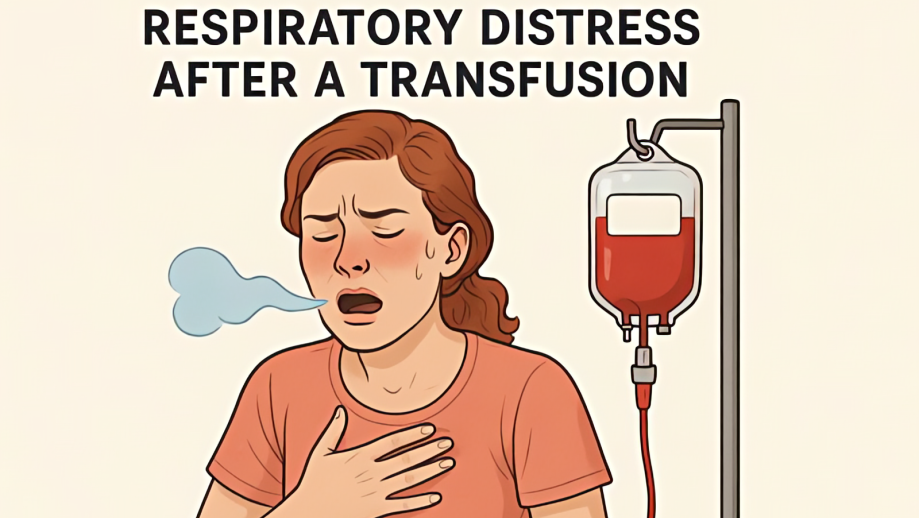
Respiratory distress during or after a transfusion is an emergency.
Correctly distinguishing TACO from TRALI is critical because management is different.
Timing Is a Key Clue
- TRALI (Transfusion-Related Acute Lung Injury)
- Onset: During transfusion or within 6 hours
- Acute hypoxemia with no prior volume overload
- TACO (Transfusion-Associated Circulatory Overload)
- Onset: During transfusion or up to ~12 hours after
- Strongly linked to fluid/volume overload
Mechanism and Bedside Clues
TACO = Circulatory/Hydrostatic Edema
Pathophysiology:
- Excess intravascular volume → ↑ hydrostatic pressure
Clinical clues:
- Hypertension
- Raised JVP
- Positive fluid balance
- Peripheral edema
- Cardiomegaly on CXR
Response:
- Improves with diuretics (key differentiator)
TRALI = Noncardiogenic Lung Injury
Pathophysiology:
- Increased capillary permeability
- Often antibody- or biologic-mediated immune reaction
Clinical clues:
- Hypoxemia
- Hypotension or normotension
- Fever may be present
- Bilateral pulmonary infiltrates
- No signs of volume overload
Response:
- No improvement with diuretics
- Requires respiratory support
Helpful Investigations
- BNP / NT-proBNP
Elevated levels support TACO
- NT-proBNP post/pre ratio > 1.5 → suggestive of TACO
Not definitive alone — interpret with clinical context
Chest X-ray
- TACO: cardiomegaly + pulmonary edema
- TRALI: bilateral infiltrates, normal heart size
ECG / Echo
- Helpful if cardiac cause suspected
Prevention and System-Based Safety
TACO Prevention
- Identify high-risk patients (elderly, renal/cardiac disease)
- Slow infusion rates
- Limit transfusion volume
- Consider prophylactic diuretics
TRALI Prevention
- Donor mitigation strategies
- Plasma donor policies
- Investigation of implicated donors
- Strong hemovigilance systems
Early notification of the transfusion service is essential for BOTH
Actionable Checklist for Clinicians
- Stop the transfusion immediately
- Call for help
- Check vitals, oxygenation, fluid balance
- Order chest X-ray
- Measure BNP / NT-proBNP if available
- Get ECG / echo if cardiac cause suspected
If TACO likely
- Diuretics
- Oxygen
- Consider CPAP / ventilatory support
If TRALI likely
- Oxygen and respiratory support
- Avoid diuretics as primary therapy
- Notify transfusion service for donor follow-up
Document timing, blood products, and submit hemovigilance report
Bottom line:
- Same symptom — very different mechanisms.
- Correct identification of TACO vs TRALI saves lives.”
Find more posts featuring Dr. Tareq Abadl on Hemostasis Today.
-
Sep 30, 2026, 15:58Bernhard Merget: New Frontiers in Thrombosis and Stroke Research
-
Sep 30, 2026, 15:39Ifeanyichukwu Ifechidere: The Molecular Orchestra of Primary Hemostasis
-
Sep 30, 2026, 15:28Reassessing the Benefit–Risk Balance of Extended Anticoagulation in Cancer Patients – ESC Working Group on Cardiovascular Pharmacotherapy
-
Sep 30, 2026, 15:07Chiranjeev Sharma: Targeting Factor XIa with the Synthetic Inhibitor SB-01
-
Sep 30, 2026, 14:41Bruna Gigante: Balancing Thrombosis and Bleeding in Cardiovascular Care
-
Sep 30, 2026, 14:13Ashok Choudhury: Portal Vein Thrombosis and Outcomes in Cirrhosis
-
Sep 30, 2026, 13:57Leslye Conde Bazán: When Conventional Imaging Is Not Enough – The Role of IVUS
-
Sep 30, 2026, 13:41Huda Salah Eldin: The Challenge of Balancing Antithrombotic Therapy After PCI
-
Sep 30, 2026, 13:29Abdus Salam: What Can CT Venography Reveal About the Veins?