


Cold-Stored Platelets: A Safer, Faster Option for Managing Active Bleeding and Trauma
Tareq Abadl, Medical Laboratory Specialist and Director of the Blood Bank at Dr. Abdelkader Al-Mutawakkil Hospital, posted on LinkedIn:
”Cold-Stored Platelets (CSPs): A Practical Tool for Treating Active Bleeding
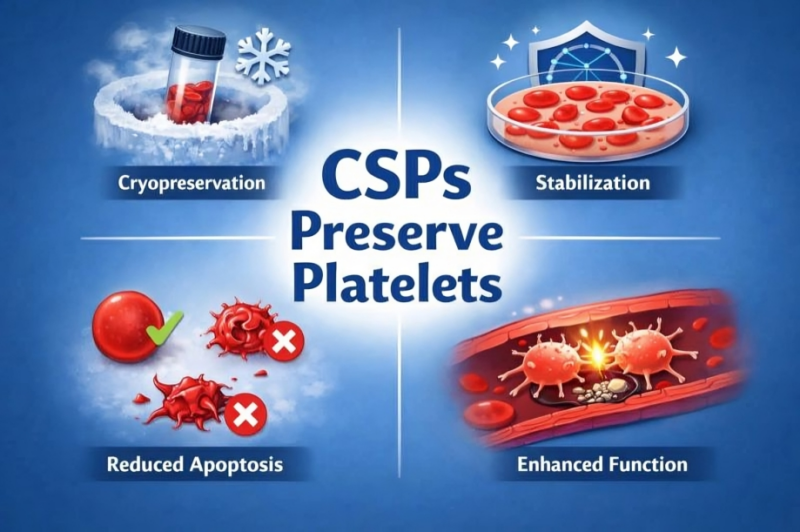
Cold-stored platelets (CSPs) are platelets stored at 1-6°C instead of the conventional room temperature (20-24°C). Growing evidence shows that CSPs better preserve immediate hemostatic function, reduce bacterial contamination risk, and offer practical advantages in hemorrhage and trauma settings when standard platelets are limited or unavailable.
Why Transfusion Services Should Pay Attention
Improved Early Hemostatic Effect
- CSPs demonstrate enhanced clot formation and stronger platelet function in vitro.
- Clinical data suggest benefit in active bleeding, especially in trauma and surgical patients.
Lower Bacterial Risk and Extended Usable Life
- Cold storage significantly limits bacterial proliferation compared to room-temperature platelets.
- Under validated protocols, CSPs may be stored for up to 14 days for specific therapeutic indications.
Targeted Clinical Use
Current evidence and guidance support CSPs mainly for treatment of active bleeding,
not for routine prophylactic platelet transfusion.
Use should align with regulatory approval, institutional policy, and transfusion-committee guidance.
Operational Notes for Blood Banks and Transfusion Laboratories
Validated SOPs Are Essential
CSPs must be stored strictly at 1-6°C.
Visual inspection for platelet aggregates or clumping is required before issue.
Dual Inventory Strategy
- Maintain both cold-stored and room-temperature platelets.
- Clearly define clinical indications for each product type.
Ongoing Monitoring and Quality Review
- Track clinical outcomes, utilization patterns, and adverse events.
- Stay updated with ongoing clinical trials and evolving regulatory recommendations.
Bottom Line
Cold-stored platelets are an evidence-based, complementary option for managing active bleeding, offering:
- Faster hemostatic response
- Reduced bacterial risk
- Operational advantages in emergency settings
However, successful use depends on careful implementation, validated procedures, and clearly defined clinical indications.”
Stay updated with Hemostasis Today.
-
Oct 5, 2026, 13:09Rick Matthews: Balancing Established VTE Partnerships with Innovative Interventional Technologies
-
Oct 5, 2026, 13:01Nawsherwan Mohammad: Recognizing TTP Before the ADAMTS13 Result Arrives
-
Oct 5, 2026, 12:51Bruno Pougault: The Hidden Challenges Behind Anti Xa Testing
-
Oct 5, 2026, 12:41Syed Huzaifa Khan: Rethinking CTRP12 as a Biomarker for In Stent Restenosis
-
Oct 5, 2026, 12:29Mirvat Alasnag: Creating a Space for Women in Cardiovascular Medicine
-
Oct 5, 2026, 11:59Khaoula Mazouzi: The Potential of Haemoglobin Vesicles as an Oxygen Carrier
-
Oct 5, 2026, 11:56Muhammet Özbilen: What Does New Evidence Tell Us About IV Iron in Pregnancy?
-
Oct 5, 2026, 11:42Fonkou Steve: A Moment to Celebrate the Journey Ahead
-
Oct 5, 2026, 11:33Abeeha Faisal: Beyond the Textbooks – A Day With Children Living With Thalassemia