

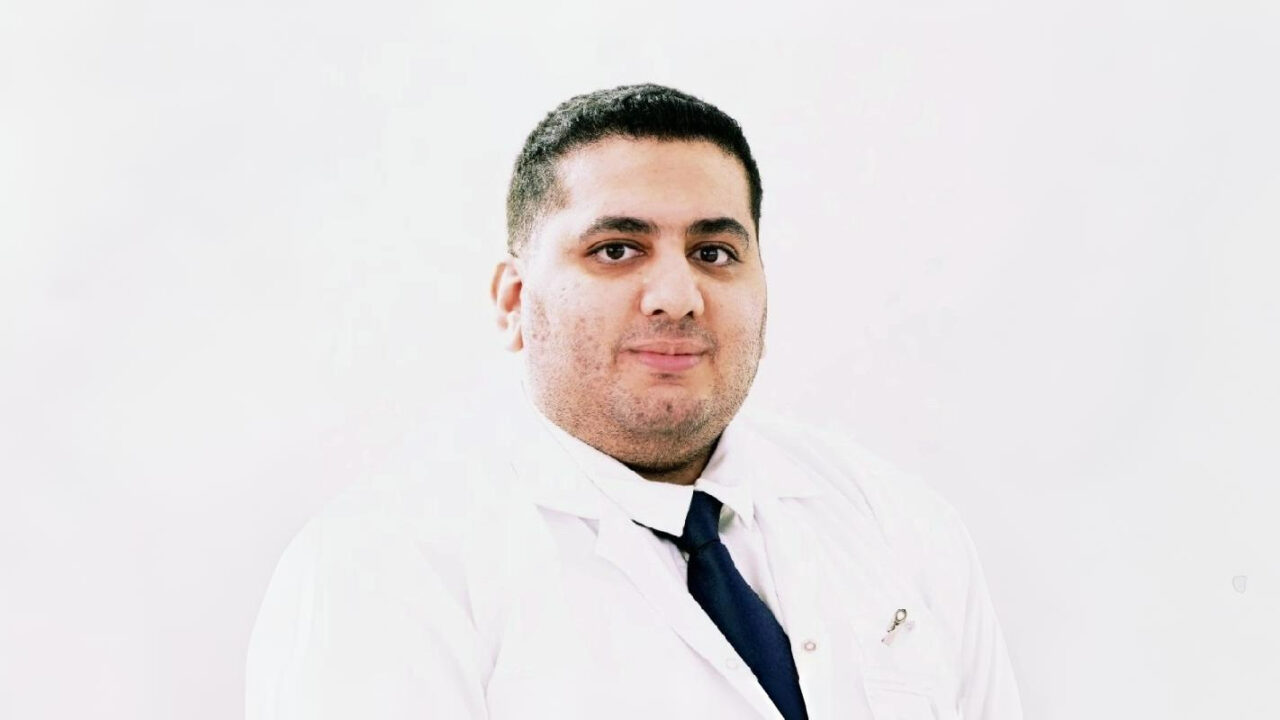
Abdulrahman Nasiri: A Clinical Guide to Ramadan Fasting for Hematology Patients
Abdulrahman Nasiri, Assistant Professor of Medicine and Hematology at Imam Mohammad Ibn Saud Islamic University, shared on LinkedIn:
”Just Published: A Clinical Guide to Ramadan Fasting for Hematology Patients
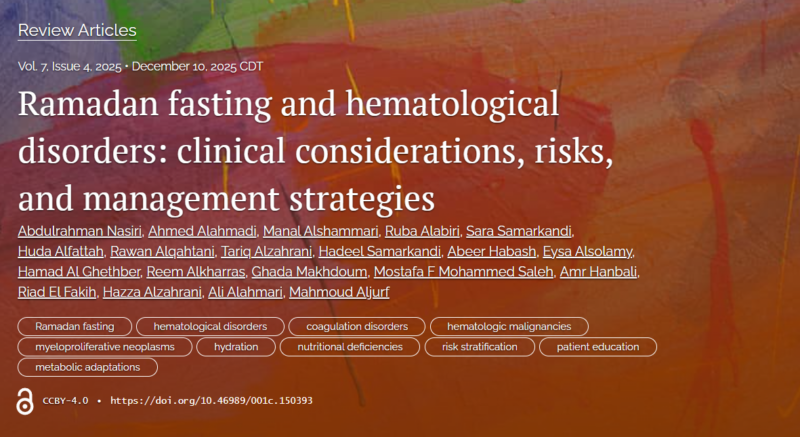
I am pleased to share that our latest review article, “Ramadan Fasting and Hematological Disorders: Clinical Considerations, Risks, and Management Strategies,” has just been published in Clinical Hematology International, the official journal of the International Academy for Clinical Hematology (IACH).
- As healthcare providers, we frequently face the delicate challenge of supporting patients who wish to observe religious practices while managing chronic conditions.
- Despite millions of Muslim patients with blood disorders worldwide, robust clinical guidelines have been historically lacking.
- Our work aims to bridge this gap, moving beyond anecdotal approaches to lay the foundation for evidence-based care.
Key Takeaways from Our Review:
- Risk Stratification: We propose a traffic-light framework (High/Moderate/Low Risk) to guide safety decisions, identifying who can safely fast and who should abstain (e.g., active chemotherapy or severe anemia).
- Practical Management: We outline strategies for medication timing (switching to Iftar/Suhur dosing) and emphasize strict hydration protocols (2–3L nightly) to mitigate thrombosis and sickle cell risks.
- Shared Decision-Making: Islamic teachings prioritize health preservation. Our goal is to empower clinicians to counsel patients with confidence using evidence-based strategies.
Moving Forward
This review is a starting point. We acknowledge the limited data and call for prospective clinical trials and larger patient cohorts to establish definitive protocols.
The foundation of care lies in shared decision-making. Islamic teachings explicitly permit breaking the fast due to illness, prioritizing health preservation.
Until we have definitive evidence, individualized risk assessment and compassionate counseling remain our cornerstone approach.
Thank you to my co-authors for this collaborative work.
Read the full open-access review.”
Article: Ramadan fasting and hematological disorders: clinical considerations, risks, and management strategies
Authors: Abdulrahman Nasiri, Ahmed Alahmadi, Manal Alshammari, Ruba Alabiri, Sara Samarkandi, Huda Alfattah, Rawan Alqahtani, Tariq Alzahrani, Hadeel Samarkandi, Abeer Habash, Eysa Alsolamy, Hamad Al Ghethber, Reem Alkharras, Ghada Makhdoum, Mostafa F Mohammed Saleh, Amr Hanbali, Riad El Fakih, Hazza Alzahrani, Ali Alahmari, Mahmoud Aljurf
Stay updated on all scientific advances with Hemostasis Today.
-
Sep 22, 2026, 09:18Shamee Shastry: How Transfusion Medicine Research Is Evolving in India
-
Sep 22, 2026, 09:11Tarique Shahzad Chachar: Why Warfarin Remains the Gold Standard for Mechanical Heart Valves
-
Sep 22, 2026, 09:04Bianca Rocca: Thromboinflammatory Injury in Ischemic Limb Necrosis During Severe Shock
-
Sep 22, 2026, 09:01Ash Paul: Comparing Left Atrial Appendage Occlusion and Oral Anticoagulation
-
Sep 22, 2026, 08:50Emily Horner: Lipoprotein(a) Links Oxidized Phospholipids to Platelet Hyperactivity
-
Sep 22, 2026, 08:42Sally Mandour: Bone Marrow Needle Gauge Explained
-
Sep 22, 2026, 08:39Alessandro Sionis: Navigating Anticoagulation in Mechanical Circulatory Support
-
Sep 22, 2026, 08:28Raghavendra Rao: The Latest Research on Varicose Veins
-
Sep 22, 2026, 08:23Aravind Palraj: Three Essential Tests in Antiphospholipid Syndrome