

Claudio Laudani: Not All ”Bi-Risk” PCI Patients Are Equal
Claudio Laudani, Cardiologist at Autonomo, Former Postdoctoral Researcher at UF Health Jacksonville, shared on LinkedIn about a recent article he and his colleagues co-authored, published in Thrombosis and Haemostasis, adding:
”Not all ‘bi-risk’ PCI patients are equal.
Patients undergoing PCI are often categorized according to their ischemic or bleeding risk to guide antiplatelet therapy.
However, a substantial proportion of patients simultaneously carry a high risk of both ischemic and bleeding events—the so-called bi-risk population—making treatment decisions particularly challenging.
Current guidelines provide recommendations for patients at high bleeding risk (HBR) and high ischemic risk (HIR), but evidence remains limited on how to further stratify patients who are at risk for both.
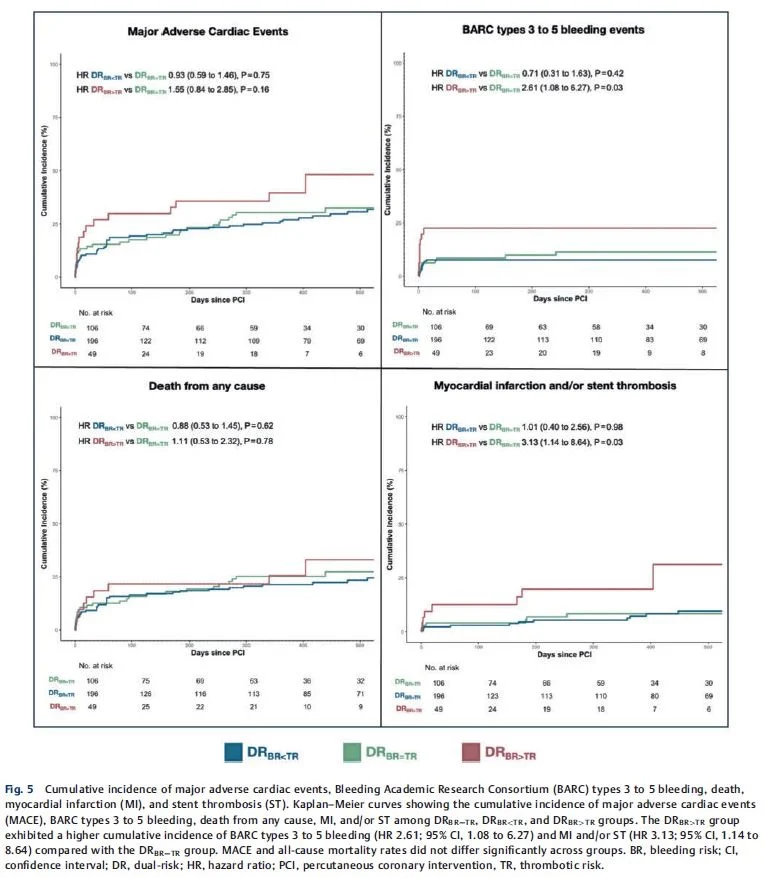
In our latest study, we externally validated the Academic Research Consortium (ARC) Trade-Off Model in a large cohort of bi-risk patients undergoing PCI.
Key findings:
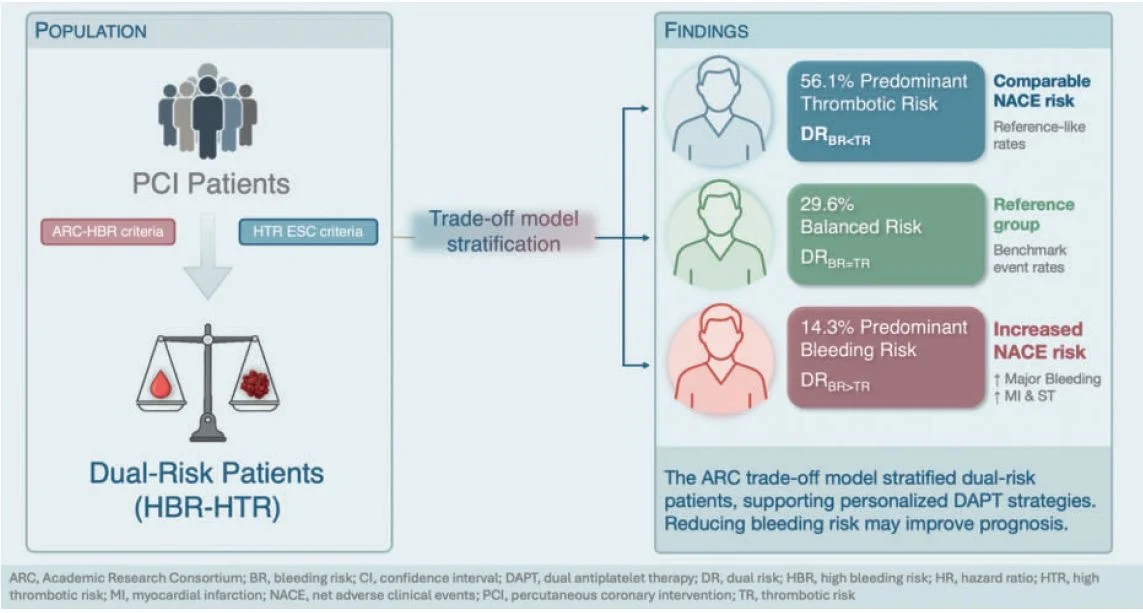
- Bi-risk patients represented nearly 12% of the overall PCI population.
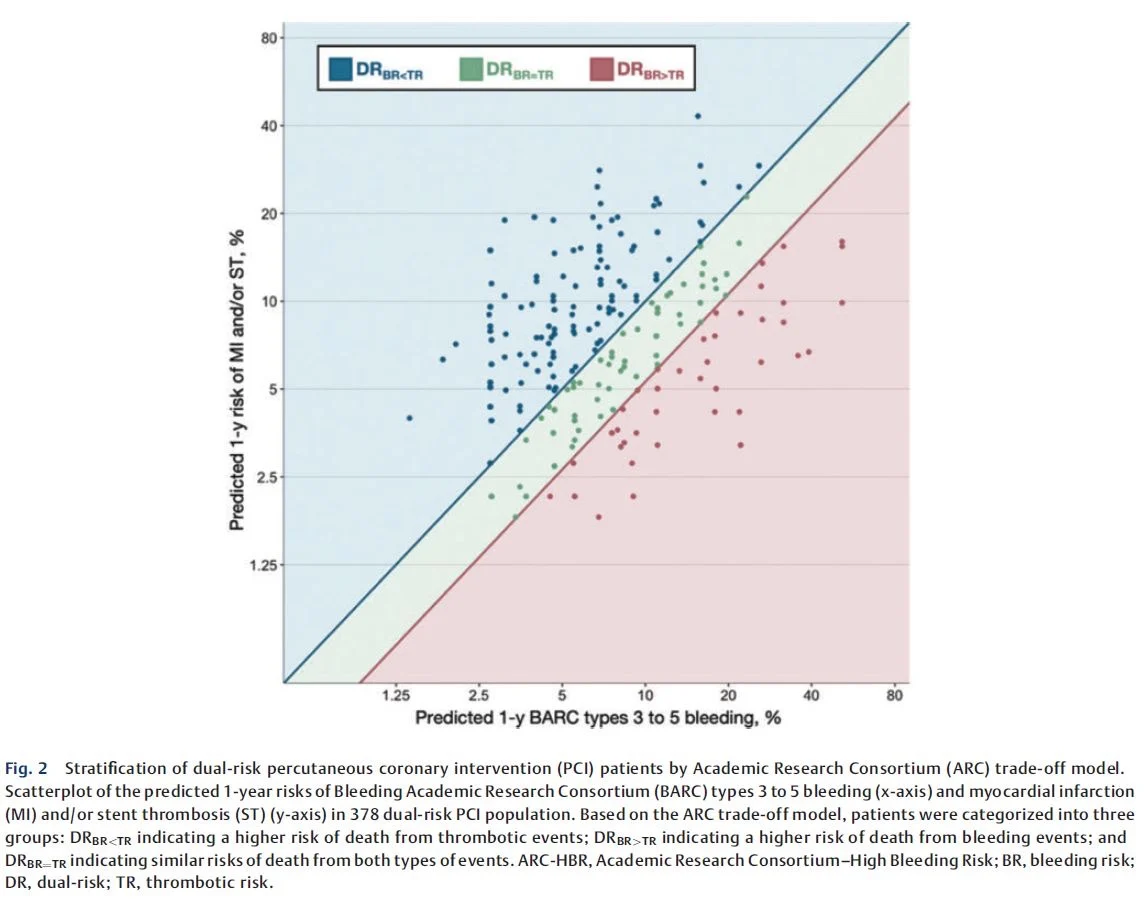
- Among bi-risk patients, 56.1% had a predominance of ischemic risk, whereas 14.3% had a predominance of bleeding risk. The remainder exhibited a balanced trade-off between the two.
- Compared with patients with balanced ischemic and bleeding risk, those classified as bleeding-predominant experienced an almost two-fold higher risk of net adverse clinical events (NACE), driven by increases in both myocardial infarction and major bleeding.
Complex PCI, age >65 years, and presentation with myocardial infarction emerged as the strongest predictors of long-term mortality.
These findings highlight an important concept: not all bi-risk patients are the same.
Further risk stratification may help identify patients who could benefit from more personalized antiplatelet strategies, ultimately improving long-term outcomes after PCI.”
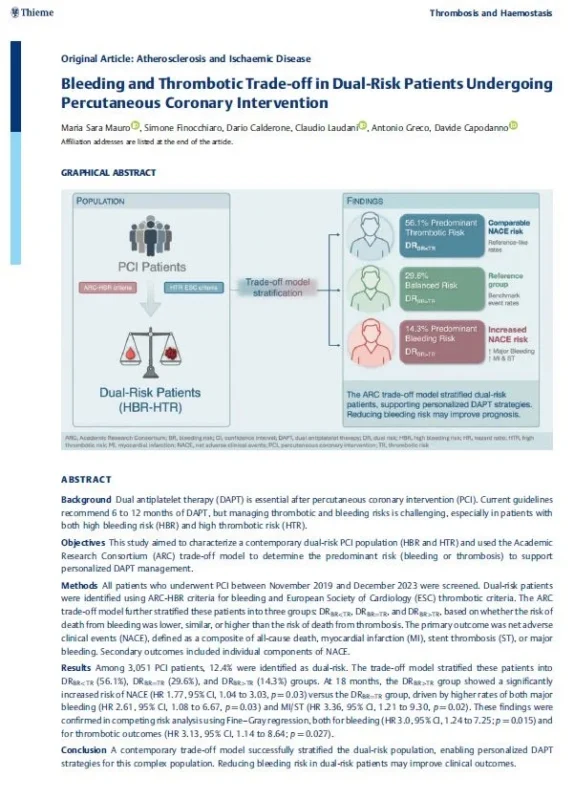
Title: Bleeding and Thrombotic Trade-off in Dual-Risk Patients Undergoing Percutaneous Coronary Intervention
Authors: Maria Sara Mauro, Simone Finocchiaro, Dario Calderone, Claudio Laudani, Antonio Greco, Davide Capodanno
Stay updated on all scientific advances with Hemostasis Today.
-
Oct 20, 2026, 16:51Suzan Nakasendwa: A Growing Stroke Challenge in Uganda
-
Oct 20, 2026, 16:38Steve Moon: How Does Smoking Cessation Duration Affect Ischemic Stroke Risk
-
Oct 20, 2026, 16:25Cedrice Mentor: Reducing Platelet Wastage Through Cold Storage
-
Oct 20, 2026, 16:09Thirunavukkarasu Angappan: Can a Purified Fibrinogen Concentrate Replace Cryoprecipitate
-
Oct 20, 2026, 16:01Kalyan Roy: Platelet Conservation Through Evidence-Based Transfusion Practice
-
Oct 20, 2026, 15:28Stacy E. Croteau: 33 Countries, One Mission – Better Bleeding Disorder Care
-
Oct 20, 2026, 15:19Teresa Barnes: What Does a Pulmonary Embolism Mean for Jalen Hurts?
-
Oct 20, 2026, 15:04Laura S.: Could Speaking Up Prevent Maternal Deaths from Thrombosis?
-
Oct 20, 2026, 14:44Pete Stibbs: VTE in Professional Athletes – When Fitness Is Not Enough