


Soumya Sayujya: A Routine Lab, An Incidental Finding, And a Lesson I Won’t Forget
Soumya Sayujya, Internal Medicine Physician, East Point College of Medical Sciences and Research Centre, shared on LinkedIn:
”A Routine Lab. An Incidental Finding. And a Lesson I Won’t Forget.
A 53-year-old man came in for a simple arm cut while removing drywall.
His lab showed: Hb 20 g/dL, Hct 59%.
At first, I thought it was a lab error. My senior said, “Let’s think this through.”
Step 1: Relative vs Absolute Erythrocytosis
Elevated hematocrit can be:
• Relative: from dehydration or diuretics
• Absolute: due to a primary marrow disorder (Polycythemia Vera) or secondary causes (hypoxia, renal disease, tumors, drugs).
He wasn’t dehydrated, didn’t take medications, had normal BMI, SpO₂ 95%, but had a palpable spleen.
Step 2: The CBC Clues
• WBC: 15,400 (normal diff)
• Platelets: 445,000
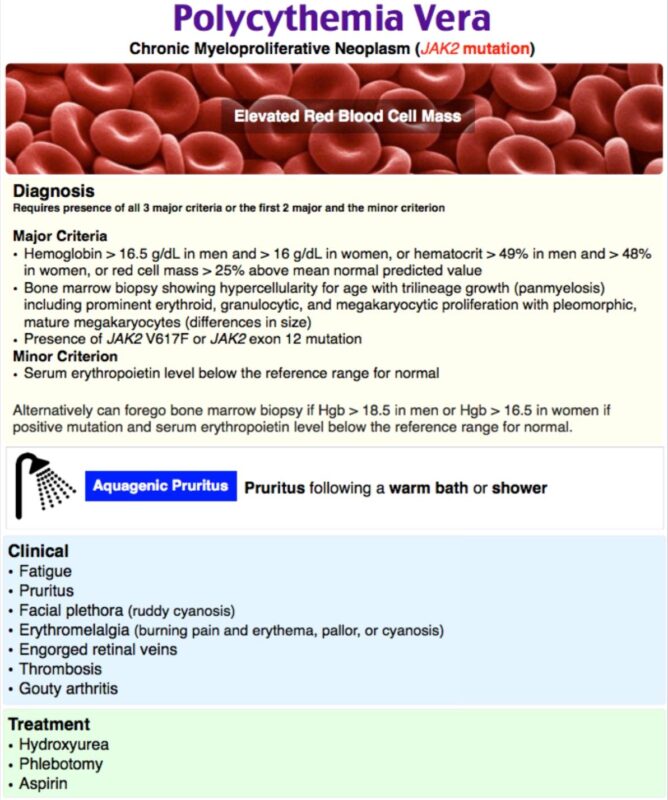
Erythrocytosis + leukocytosis + thrombocytosis + splenomegaly → Polycythemia Vera (PV) — a clonal myeloproliferative disorder where the marrow overproduces all three lines.
Step 3: JAK2 Mutation
95% of PV cases have the JAK2 V617F mutation,
causing constitutive tyrosine kinase activation.
It’s also seen (less often) in essential thrombocytosis and primary myelofibrosis.
Step 4: Work-up
• RBC mass → confirms absolute erythrocytosis
• EPO levels → low in PV, high in secondary causes
• ABG/PFTs → for hypoxia
• Renal USG → for EPO-secreting tumors
All findings pointed to a primary marrow process.
Step 5: Symptoms and Risks
Pruritus after hot showers, headaches, dizziness, splenic fullness — classic PV.
The danger lies in thrombosis — TIAs, strokes, visual symptoms, gout.
Step 6: Management
Risk stratification:
• Low risk: <60 yrs, no thrombosis
• High risk: ≥60 or past thrombosis
He was low risk → Phlebotomy (to reduce viscosity) + low-dose aspirin (to prevent clots).
Hydroxyurea and Ruxolitinib are for high-risk or refractory cases.
Warfarin isn’t used prophylactically.
Reflection
A trivial injury led to a myeloproliferative neoplasm with a molecular signature.
From Hct 59% → splenomegaly → JAK2 mutation → PV,
every clue unfolded like a clinical mystery.
Sometimes, the most important diagnoses hide in “routine” labs.
Because in medicine, every number tells a story — if you take the time to listen.”
Stay updated with Hemostasis Today.
-
Oct 21, 2026, 18:13Wolfgang Miesbach: Hereditary Hemorrhagic Telangiectasia An Overlooked Bleeding Disorder
-
Oct 21, 2026, 17:55Gayatri Kotwal։ New Review on Anemia, Pain, and Nutritional Deficiencies in Cancer Patients
-
Oct 21, 2026, 17:40Tetsuzan Ron: Iron Deficiency Without Anemia Clinical Impact and Management
-
Oct 21, 2026, 17:29Amir Hossien Esfandiari։ The Association Between Viral Infections and Aplastic Anemia
-
Oct 21, 2026, 17:16Melissa Hollo: A Meaningful Step Forward for Women’s Health
-
Oct 21, 2026, 17:09Chipili Ng’onga: Have You Ever Seen a Result That Just Didn’t Make Sense?
-
Oct 21, 2026, 16:57Fabrice Cognasse: Celebrating the Next Generation of Platelet Research and Transfusion Medicine
-
Oct 21, 2026, 16:47Christabel Odeta: Treating Pediatric Cancer in Children With Sickle Cell Disease
-
Oct 21, 2026, 16:36Sharlene Haywood: Bringing Multidisciplinary Learning Into Nursing Practice