


Wilfried Dinh: Female CVD Risks Measurement – Why It’s not Smaller Than We Used to Think
Wilfried Dinh, Senior Clinical Program Leader at Boehringer Ingelheim, posted on LinkedIn:
“Women’s cardiovascular risk is not “smaller”
It is often just missed, because we measure the wrong milestones.
Scale and blind spot
In the US, about 47% of CVD deaths occur in women. Many women and clinicians still under-recognize CVD as the leading threat.
Traditional risk factors behave differently in women
Type 2 diabetes confers about 25–50% higher CVD risk in women vs men.
Blood pressure rises faster with age in women; oral contraceptives increase hypertension risk by 13% per 5 years of use.
Obesity patterns differ: visceral and ectopic fat can drive higher risk in women even when BMI looks “acceptable”.
Female-specific risk enhancers are common and actionable
Autoimmune disease increases incident CVD risk: HR 1.56.
Endometriosis: 23% higher CVD risk.
Uterine leiomyomas: 32% higher MI risk, attenuated after surgical treatment.
Hypertensive disorders of pregnancy: 2 to 7.7× higher IHD risk; severe preeclampsia: 41.5% have elevated BP at 1 year postpartum.
PCOS: cardiometabolic clustering and 41% higher non-fatal cerebrovascular risk signal.
Clinical takeaway
Treat pregnancy and reproductive history as a cardiovascular stress test and a risk label.
Move beyond BMI: add waist metrics and consider subclinical atherosclerosis imaging when risk remains uncertain.
Build multidisciplinary pathways: OB-GYN, endocrinology, rheumatology, and cardiology should share a unified prevention pathway for women across the lifespan.
Disclaimer
The views and opinions expressed in my posts are solely my own, made in my capacity as a private individual, medical doctor, and researcher. They do not represent or reflect the views, policies, or positions of my employer, colleagues, or any affiliated organizations. My posts are intended for informational and discussion purposes only.”
Title: Cardiovascular disease in women: traditional and sex-specific risk factors
Authors: Yolande Appelman, Martha Gulati, Jeanine E Roeters van Lennep, Leslee J Shaw, C Noel Bairey Merz
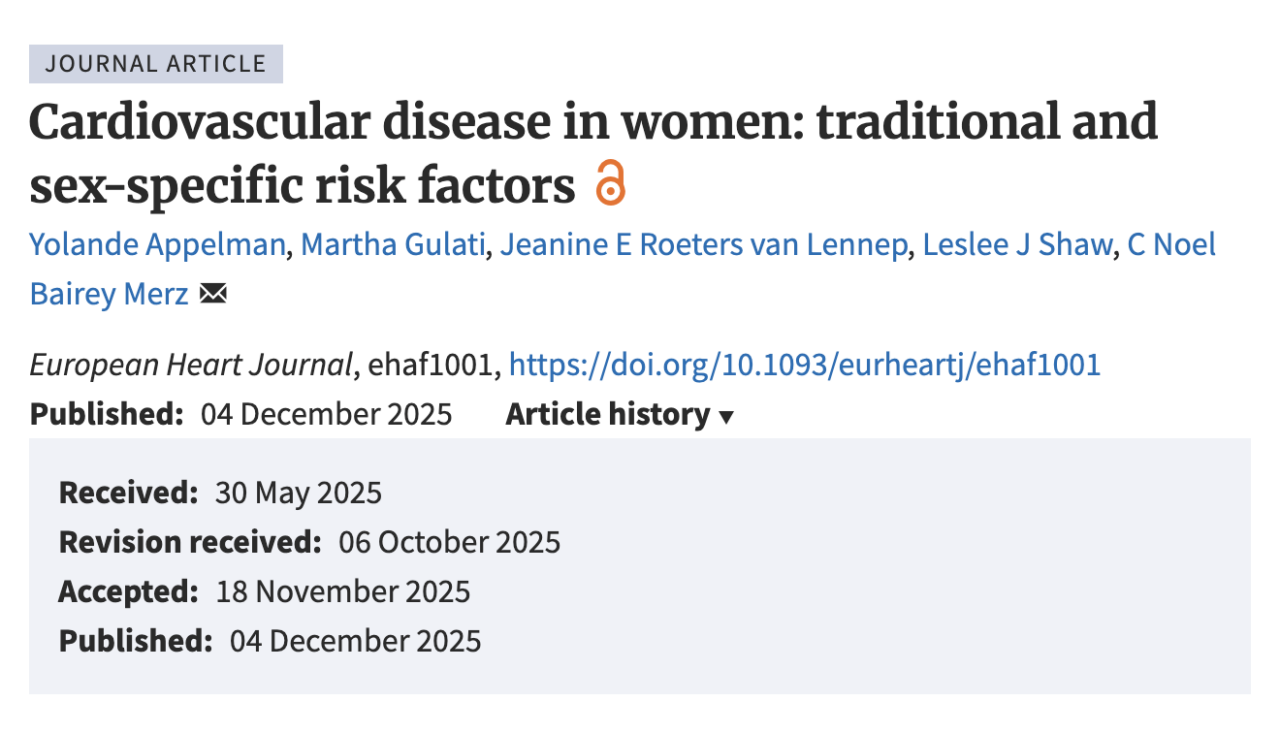
Read full article here.
Get insights from Hemostasis Today.
-
Oct 10, 2026, 17:58Archo Farzana Batool: Exploring Medical Writing Through an Article on Iron Deficiency Anemia
-
Oct 10, 2026, 17:53Assessing Frailty in Adults With Hemophilia – JTH
-
Oct 10, 2026, 17:52Fatma Sadeghi: Reducing Maternal Health Inequalities Through Nursing Advocacy
-
Oct 10, 2026, 17:50Grzegorz Hensler: How Apheresis Transformed Blood Cell Separation and Collection
-
Oct 10, 2026, 17:47Hemant K Sharma: Japan’s Universal Artificial Blood Research – A Potential Breakthrough in Transfusion Medicine
-
Oct 10, 2026, 17:40John Strouse: Learning About Bleeding Disorders and Sickle Cell Disease at FWGBD
-
Oct 10, 2026, 17:34Mae Caime: Speaking at the Annual Women’s Retreat for the Hemophilia Community in Florida
-
Oct 10, 2026, 17:30Chokri Ben Lamine: PNH beyond the Textbook Triad
-
Oct 10, 2026, 17:29Ruah Alyamany: Thrombosis and Anticoagulation in Hematological Malignancies at SOHO KSA 2026