


Tareq Abadl: Persistent Anti-β2GPI IgG Is Not a Coincidence – It’s Pathology
Tareq Abadl, Medical Laboratory Specialist and Director of the Blood Bank at Dr. Abdelkader Al-Mutawakkil Hospital, shared a post on LinkedIn:
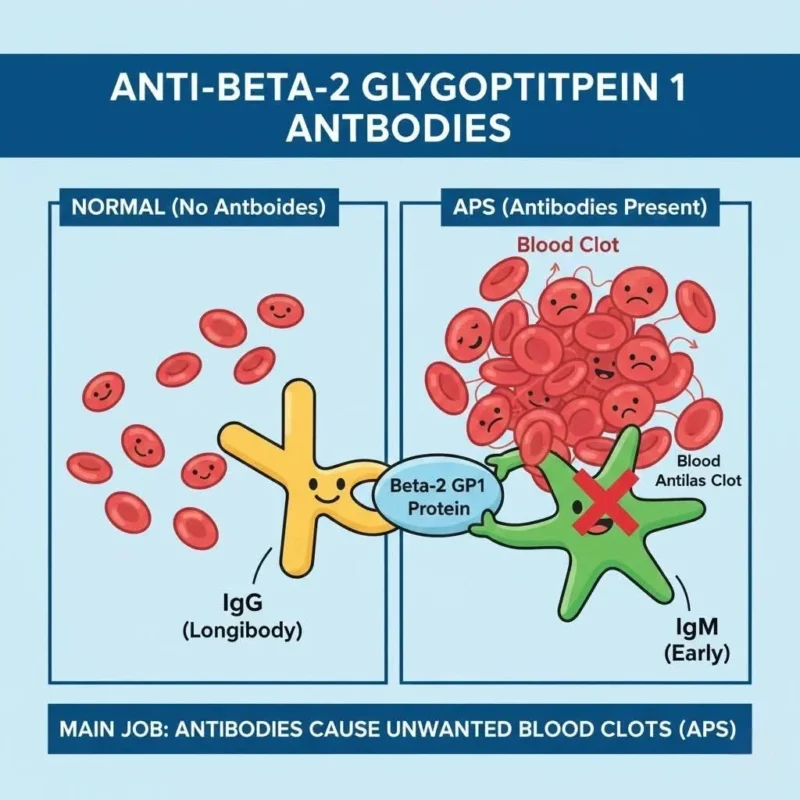
“β2 Glycoprotein I Antibodies — Made Simple
Many people hear the name β2 Glycoprotein I antibodies and get confused. Let’s break it down clearly
What is β2 Glycoprotein I?
β2 Glycoprotein I (β2GPI) is a normal plasma protein that binds to phospholipids and plays a role in regulating coagulation.
What does the test measure?
It detects autoantibodies against β2GPI, which are a core laboratory criterion for diagnosing Antiphospholipid Syndrome (APS).
IgG vs IgM — What’s the difference?
β2GPI – IgM
- Often rises in early or transient immune responses
- May be associated with infections, inflammation, or immune stress
- Can be temporary and disappear on repeat testing
- Lower diagnostic weight for APS
β2GPI – IgG
- Clinically more significant
- Persistent elevation strongly supports APS diagnosis
- More clearly associated with:
- Thrombosis
- Recurrent pregnancy loss
- Placental insufficiency
Bottom line: IgG is more reliable and more dangerous than IgM in terms of complications.
Important Laboratory Points
The test must be repeated after ≥12 weeks to confirm persistence
- Never interpret it alone
- APS diagnosis requires a panel, including:
- Lupus Anticoagulant (LA)
- Anticardiolipin antibodies (aCL)
- Anti-β2 Glycoprotein I antibodies
- Medium to high titers are required — low positives may be clinically irrelevant
Advanced lab note (important):
- IgG antibodies targeting Domain I of β2GPI are the most pathogenic and most strongly linked to thrombosis
- Solid-phase assays (ELISA/CLIA) must follow international APS cut-offs, not manufacturer-only ranges
Simple analogy Anti-β2GPI antibodies are like someone sabotaging traffic control
Blood flow loses balance to congestion to clots
If IgG is present and persistent, this is not coincidence — it’s pathology.”
Find more posts featuring Tareq Abadl on Hemostasis Today.
-
Sep 30, 2026, 14:41Bruna Gigante: Balancing Thrombosis and Bleeding in Cardiovascular Care
-
Sep 30, 2026, 14:13Ashok Choudhury: Portal Vein Thrombosis and Outcomes in Cirrhosis
-
Sep 30, 2026, 13:57Leslye Conde Bazán: When Conventional Imaging Is Not Enough – The Role of IVUS
-
Sep 30, 2026, 13:41Huda Salah Eldin: The Challenge of Balancing Antithrombotic Therapy After PCI
-
Sep 30, 2026, 13:29Abdus Salam: What Can CT Venography Reveal About the Veins?
-
Sep 30, 2026, 13:03Amira Mohy: Diagnostic Flow Cytometry Panels for Hematological Malignancies
-
Sep 30, 2026, 12:52Paul Watton: Could Repetitive Head Impacts Leave a Molecular Memory?
-
Sep 30, 2026, 12:41The Journey to ISTH 2027 Starts in Vancouver
-
Sep 30, 2026, 11:36Basit Ali: A Closer Look at CT Venography