

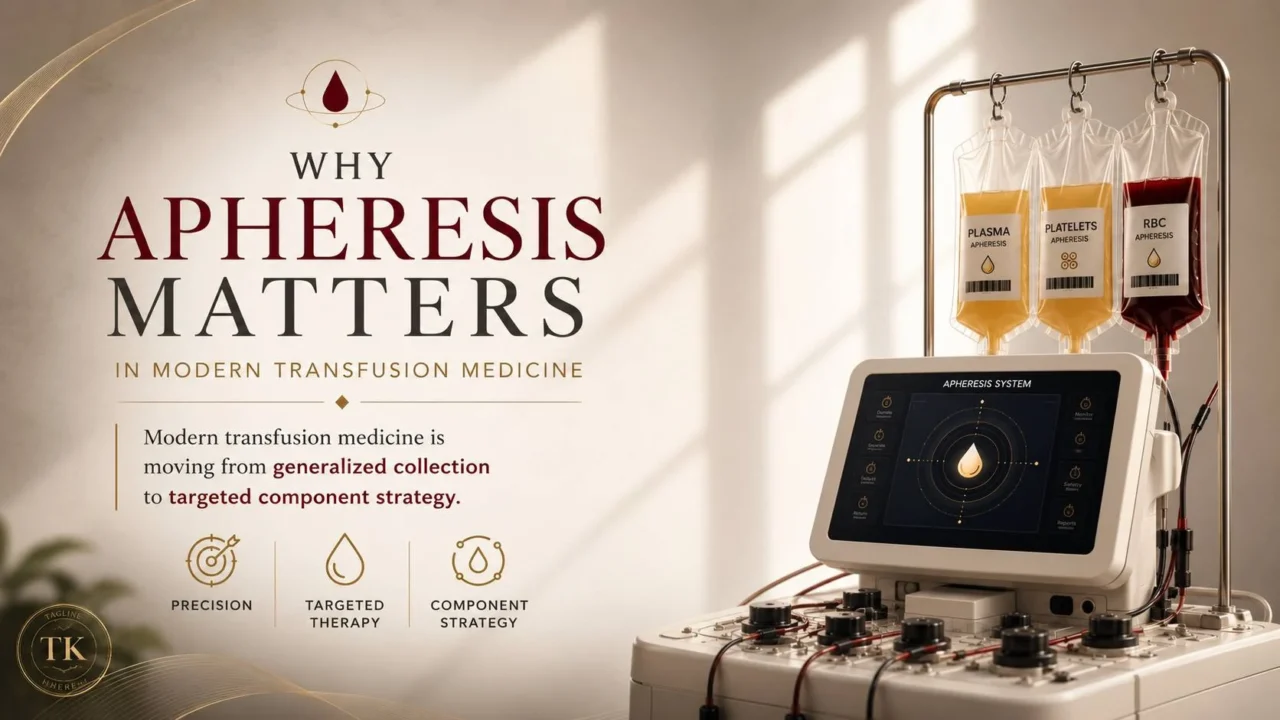
Tagreed Alkaltham: Why Apheresis Matters in Modern Transfusion Medicine
Tagreed Alkaltham, Transfusion Medicine Lab Supervisor at KSMC, shared a post on LinkedIn:
”Why Apheresis Matters in Modern Transfusion Medicine?
Apheresis is not important simply because it is advanced technology.
- It matters because modern transfusion medicine is no longer built around ‘collecting blood’ alone.
- It is increasingly built around collecting the right component, in the right dose, for the right clinical purpose.
That distinction changed everything.
Traditional whole blood donation remains essential and irreplaceable in transfusion medicine.
But apheresis introduced something different: targeted component collection.
Instead of collecting all blood components together and separating them later, apheresis allows specific components to be selectively collected while the remaining components are safely returned to the donor.
That level of selectivity created new clinical and operational possibilities.
Higher targeted component yield:
Apheresis can collect larger or more concentrated amounts of a desired component during a single procedure.
For example: single donor platelet collections may provide therapeutic platelet doses from one donor rather than pooling platelets from multiple donations.
In many settings, this may help reduce donor exposure for recipients who require repeated transfusion support.
More precise component strategy:
Not every patient requires the same transfusion approach.
Some patients primarily need:
- platelets
- plasma
- red cell exchange
- or selective therapeutic removal of pathologic components.
Apheresis supports a more focused transfusion strategy based on clinical indication rather than generalized replacement alone.
This is where transfusion medicine becomes increasingly aligned with precision based care.
Therapeutic applications beyond donation:
Apheresis is not limited to collection.
It also supports therapeutic interventions such as:
- therapeutic plasma exchange
- red cell exchange
- leukapheresis
- and stem cell collection.
In some clinical situations, apheresis becomes part of active disease management, not only transfusion support.
Inventory and operational impact:
- Apheresis may also support inventory management and component availability in specialized settings.
- Targeted collection strategies can help blood centers and transfusion services respond more effectively to specific clinical demands, shortages, or high utilization component needs.
Because modern blood banking is not only about supply.
It is also about precision allocation and component stewardship.
But the importance of apheresis is not defined by the machine itself.
It is defined by the clinical philosophy behind it:
- collect intentionally
- monitor carefully
- minimize unnecessary exposure
- and match therapy more precisely to patient need.
Modern transfusion medicine is moving from generalized collection… to targeted component strategy.
And apheresis is one of the technologies helping drive that transition.”
Stay updated with Hemostasis Today.
-
Sep 25, 2026, 12:43Thomas Dayspring: Reshaping the Biology of Atherosclerotic Plaques with New Therapies
-
Sep 25, 2026, 12:14Garima Sharma: Community Clinical Linkages for Better Postpartum Cardiovascular Care
-
Sep 25, 2026, 10:49Shefina S: From Presenting to Hosting at TRANSCON 2026
-
Sep 25, 2026, 10:37Michelle Leona Cecil: Hemophilia Advocacy and the Power of Community
-
Sep 25, 2026, 10:13Michael Baria: Platelet Concentration and PRP Outcomes in Partial Rotator Cuff Tears
-
Sep 25, 2026, 09:49Haley Coleman: Volunteering to Support Hemophilia Awareness
-
Sep 25, 2026, 08:55Hitarth Mehta: BHMS Students Gain Practical Exposure to Haemophilia Diagnosis
-
Sep 25, 2026, 07:25Varun Capoor: How Therapeutic Apheresis and Transfusion Medicine Can Complement Clinical Management in SCD
-
Sep 25, 2026, 07:14Manshi Kesharwani: SAK-GQDs Modulate Thrombus Burden and Endothelial Function in Deep Vein Thrombosis