


Heghine Khachatryan: New Insights on Thrombosis in BCR-ABL1 Negative Myeloproliferative Neoplasms
Heghine Khachatryan, Editor-in-Chief of Hemostasis Today, Head of Hemophilia and Thrombosis Center at Yeolyan Hematology and Oncology Center, shared Journal of Thrombosis and Haemostasis (JTH)’s post on LinkedIn, adding:
“New insights into thrombosis in BCR::ABL1-negative myeloproliferative neoplasms
Thrombosis remains the leading cause of morbidity and mortality in patients with Philadelphia chromosome–negative myeloproliferative neoplasms (MPNs).
Understanding the molecular mechanisms underlying thrombotic risk is essential for improving both risk stratification and targeted therapeutic approaches.
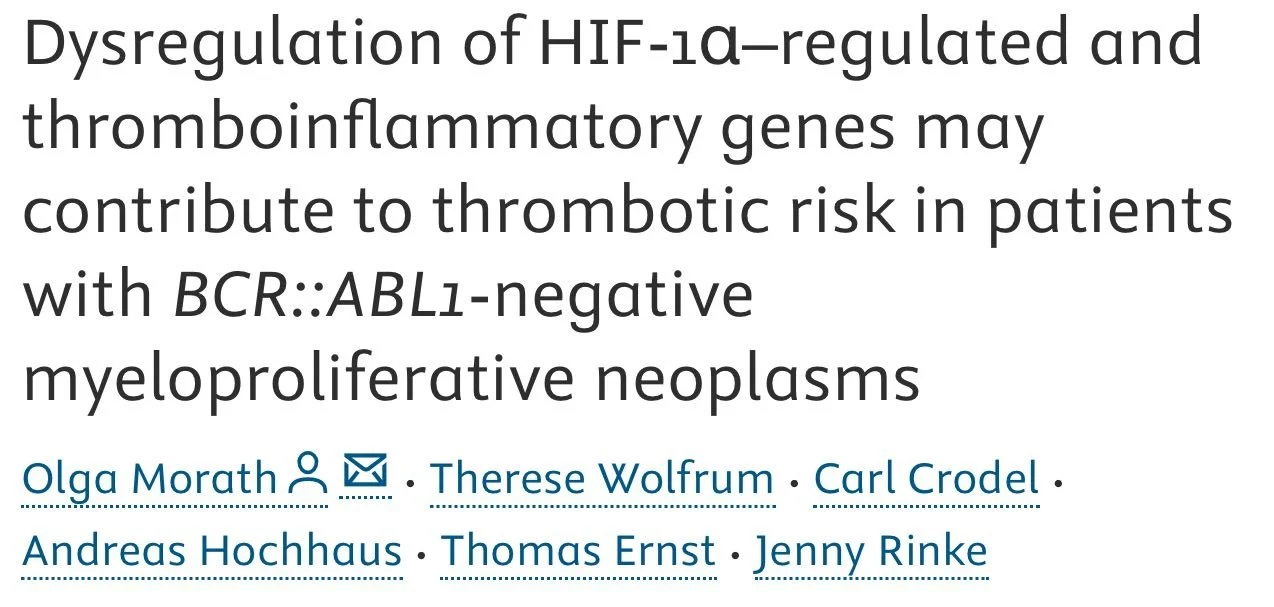
A recent study published in the Journal of Thrombosis and Haemostasis demonstrates that dysregulation of HIF-1α–regulated and thromboinflammatory genes is associated with an increased thrombotic risk in patients with BCR::ABL1-negative MPNs.
In a cohort of 120 patients, increased expression of genes including SLC2A1 and SELP correlated with a history of thrombosis, supporting the concept that hypoxia signaling and thromboinflammation are integral components of MPN pathobiology.
These findings reinforce the growing evidence that thrombotic risk in MPN extends beyond conventional clinical predictors and is closely linked to molecular and inflammatory pathways.
Identification of such biomarkers may facilitate more precise risk assessment and contribute to the development of novel targeted therapeutic strategies.”
Journal of Thrombosis and Haemostasis (JTH) shared a post on LinkedIn about a recent article by Olga Morath et al., adding:
“Dysregulation of HIF-1α–regulated and thromboinflammatory genes may contribute to thrombotic risk in patients with BCR::ABL1-negative myeloproliferative neoplasms
In 120 MPN patients, SLC2A1 and SELP gene expression were independently linked to thrombosis, with higher expression in JAK2-mutated patients suggesting a JAK2–HIF pathway connection.”
Title: Dysregulation of HIF-1α–regulated and thromboinflammatory genes may contribute to thrombotic risk in patients with BCR::ABL1-negative myeloproliferative neoplasms
Authors: Olga Morath, Therese Wolfrum, Carl Crodel, Andreas Hochhaus, Thomas Ernst, Jenny Rinke
Other posts featuring Heghine Khachatryan on Hemostasis Today.
-
Oct 12, 2026, 21:51Sam Botchey: Orthobiologics Are Advancing but the Evidence Must Keep Pace
-
Oct 12, 2026, 21:50Serum Vitamin D, Platelet Function, and Bleeding in Primary ITP – Platelets Journal
-
Oct 12, 2026, 21:30Nika Samadzadeh Tabrizi: Looking Forward to the PACeS Trial on Anticoagulation for POAF
-
Oct 12, 2026, 21:28Michael Megaly: Does Coronary Ectasia Affect Outcomes in Acute Coronary Syndromes?
-
Oct 12, 2026, 21:25Vitor Borin P. de Souza: Think Twice Before Anticoagulating an Isolated Subsegmental PE
-
Oct 12, 2026, 20:43Jazlyn A Selvasingh: Excited to Share Our Research at AAO-HNSF 2026 in Los Angeles
-
Oct 12, 2026, 20:31Natalia Kovtun: Higher Ferritin Cutoffs Now Define Iron Deficiency
-
Oct 12, 2026, 19:39Edward Loftus: Using Low-Dose Aspirin in Pregnant Women With IBD
-
Oct 12, 2026, 19:32Shruti Sachdeva: Strengthening the Fight against Anemia