


Syed A. Rizvi: Natural Blood Thinners – What Does the Science Really Say
Syed A. Rizvi, Public Health Program Specialist at Illinois Department of Public Health (IDPH), PhD Advisor in Clinical Research Program at University of Jamestown, shared a post on LinkedIn:
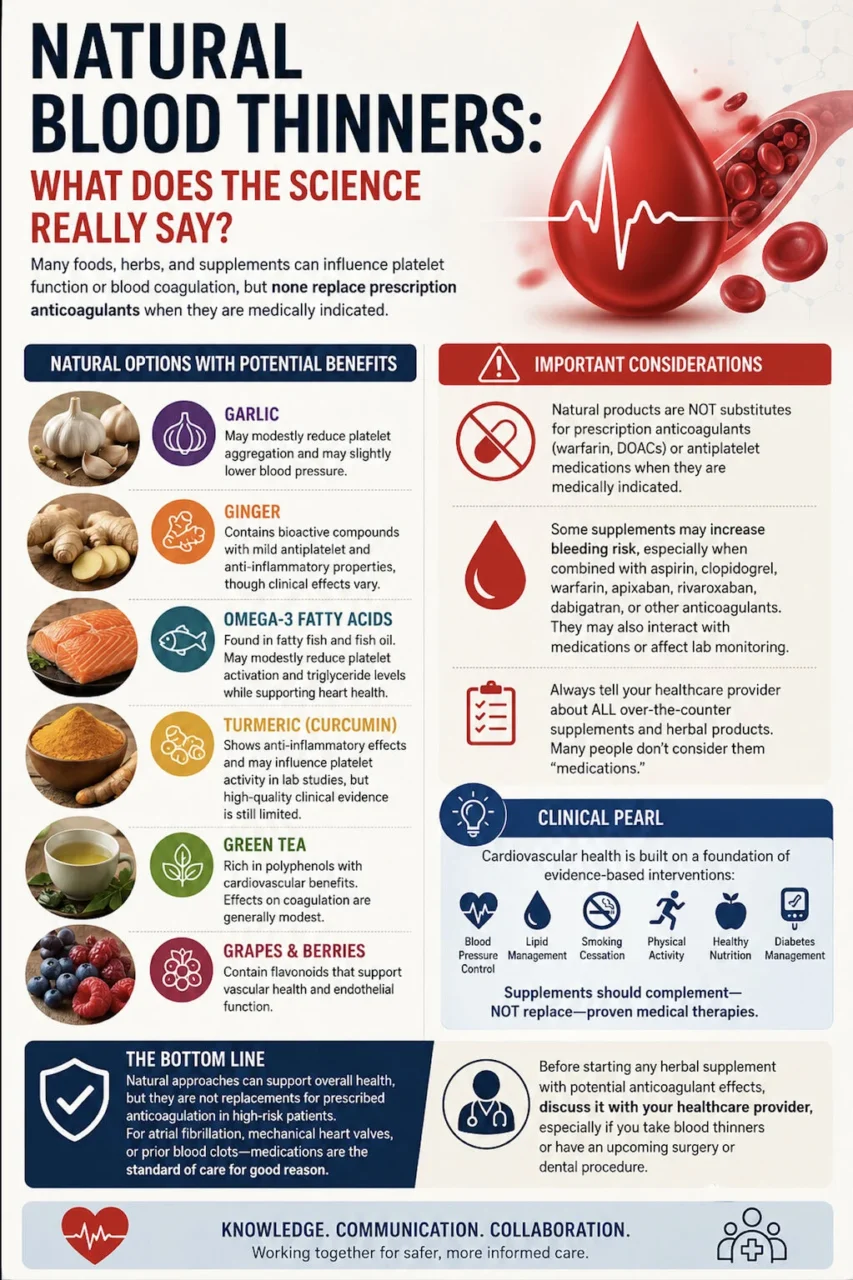
“Natural Blood Thinners: What Does the Science Really Say?
The phrase ‘natural blood thinner’ is everywhere, but it often oversimplifies a complex topic. While certain foods, herbs, and dietary supplements can influence platelet function or the coagulation cascade, none have consistently demonstrated effectiveness comparable to prescription anticoagulants or antiplatelet medications when these are medically indicated.
Several natural products have shown promising biological activity:
- Garlic – May modestly reduce platelet aggregation and slightly lower blood pressure.
- Ginger – Contains compounds with mild antiplatelet and anti-inflammatory effects, although clinical evidence remains inconsistent.
- Omega-3 fatty acids – found in fatty fish and fish oil – may modestly reduce platelet activation and triglyceride levels while supporting cardiovascular health. However, large clinical trials have produced mixed results regarding cardiovascular outcomes.
- Turmeric (Curcumin) – Demonstrates anti-inflammatory and potential antiplatelet effects in laboratory studies, but robust clinical evidence is still limited.
- Nattokinase – An enzyme derived from fermented soybeans that has shown fibrinolytic activity in experimental studies. Although promising, current evidence is insufficient to recommend it as an alternative to established anticoagulant therapy.
- Green tea, grapes, berries, and other flavonoid-rich foods provide antioxidants that support vascular and endothelial health, though their direct anticoagulant effects are generally modest.
The most important message: Natural does not always mean safe.
Many herbal supplements, including garlic, ginger, turmeric, ginkgo, high-dose vitamin E, and nattokinase, may increase bleeding risk, particularly when combined with anticoagulants such as warfarin, aspirin, clopidogrel, apixaban, rivaroxaban, dabigatran, or other anticoagulants.
Patients should also inform their healthcare providers about all supplements before surgery or invasive procedures.
Clinical Pearl: Cardiovascular health is built on evidence-based interventions, blood pressure control, lipid management, smoking cessation, regular physical activity, healthy nutrition, diabetes management, and appropriate use of prescribed medications. Supplements may complement these strategies, but they should never replace therapies that have been proven to reduce stroke, myocardial infarction, or venous thromboembolism in high-risk patients.
The best ‘blood thinner’ is not always natural; it is the one that is appropriate, evidence-based, and individualized for the patient’s clinical condition.”
Stay updated with Hemostasis Today.
-
Oct 8, 2026, 22:44ISTH 2027 Abstract Submission Opens November 23
-
Oct 8, 2026, 22:41Kunihiro Hattori Pioneering Research for People With Hemophilia A – The Albert and Mary Lasker Foundation
-
Oct 8, 2026, 17:00Sally Mandour: Platelet Size And Shape Can Reveal The Diagnosis
-
Oct 8, 2026, 16:49Neil Morgan: Advancing Understanding Of Bleeding Disorders Of Unknown Cause
-
Oct 8, 2026, 16:38Beverley Hunt: Advancing Pulmonary Embolism Care Through Collaboration And Learning
-
Oct 8, 2026, 16:19Cedric Hermans: Six Webinars Advancing Haemophilia Care And Beyond
-
Oct 8, 2026, 16:09Luana Banu: Every Donation Connects A Human Chain
-
Oct 8, 2026, 15:51Khaled Musallam: A New Era In Thalassemia Care
-
Oct 8, 2026, 15:40Juan J. Ortiz։ Catheter Directed Therapy In Pulmonary Embolism