

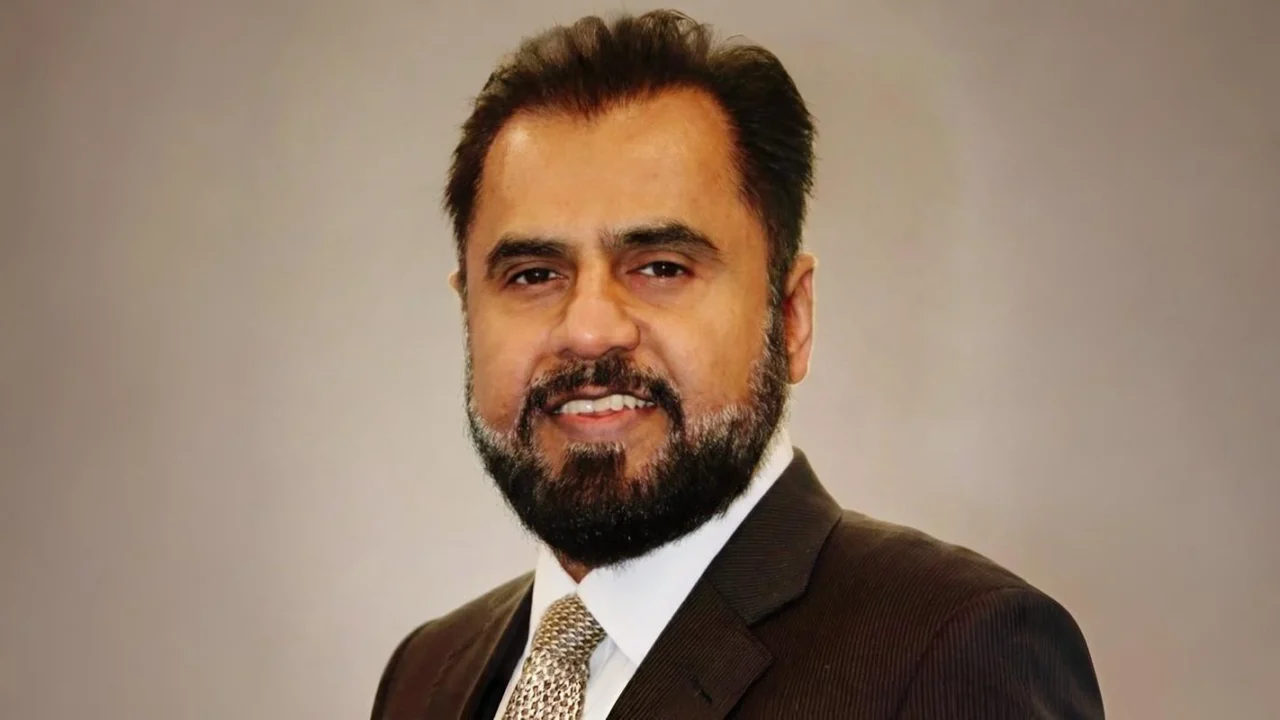
Abdul Mannan: What Is the Most Common “Freeloading” Medication Seen in Anticoagulated Patients?
Abdul Mannan, Consultant Haematologist at Betsi Cadwaladr University Health Board, shared a post on LinkedIn about a recent article by et al. published in NEJM:
“Anticoagulants and antiplatelets are not stronger together by default. Sometimes they are just bleeding together.
Your patient is on apixaban for PE.
He is also on aspirin, started 7 years ago for ‘IHD.’
What is the aspirin actually doing today?
If you cannot name a current, time-limited, platelet-driven indication, the aspirin is freeloading.
That is the core message from the 2026 Anticoagulation Forum stewardship document. And this year, we have trial data that makes the risk very real.
AQUATIC trial (NEJM, 2025): Chronic coronary syndrome. Previous stenting beyond 6 months. All patients on ongoing oral anticoagulation.
Randomised to aspirin 100 mg vs placebo.
Aspirin increased adverse cardiovascular outcomes AND major bleeding compared with placebo.
Even in high-risk stable coronary disease, aspirin on top of OAC can harm, not help.
I teach this with the Three Clocks model:
- Coronary clock — how long since PCI, MI, or CABG?
- Peripheral clock — how long since vascular stent or intervention?
- Bleeding clock — has bleeding risk changed? CKD, age, anaemia, prior GI bleed, cancer?
When the coronary and peripheral clocks have expired, the antiplatelet should often expire too.
Before every renewal, ask one question:
Is there an active platelet problem today, or is this just historical decoration?
Stopping aspirin is not doing nothing. It is a deliberate antithrombotic decision.
The best clinician is not the one who adds the most drugs. It is the one who knows which clot biology they are treating today.
What is the most common ‘freeloading’ medication you see in your anticoagulated patients?”
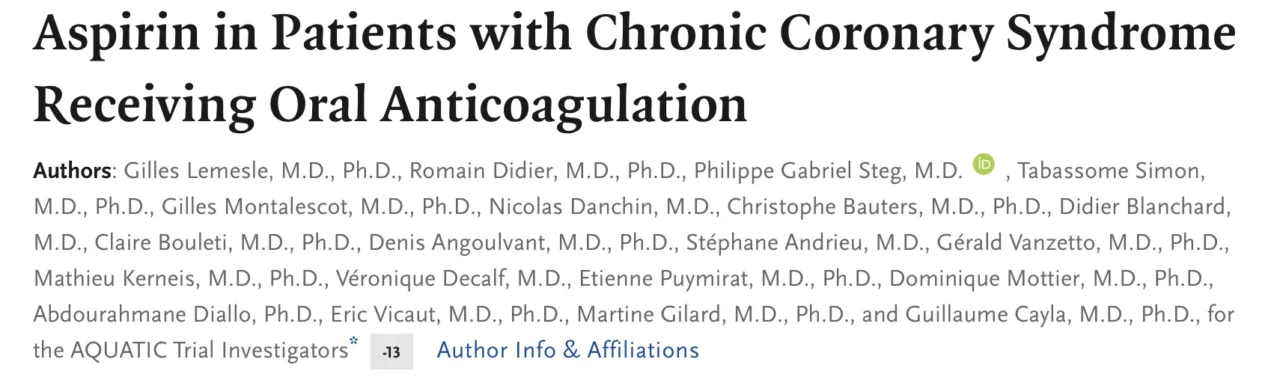
Title: Aspirin in Patients with Chronic Coronary Syndrome Receiving Oral Anticoagulation
Authors: Gilles Lemesle, Romain Didier, Philippe Gabriel Steg, Tabassome Simon, Gilles Montalescot, Nicolas Danchin, Christophe Bauters, Didier Blanchard, Claire Bouleti, Denis Angoulvant, Stéphane Andrieu, Gérald Vanzetto, Mathieu Kerneis, Véronique Decalf, Etienne Puymirat, Dominique Mottier, Abdourahmane Diallo, Eric Vicaut, Martine Gilard, Guillaume Cayla
 Other posts featuring Abdul Mannan on Hemostasis Today.
-
Oct 20, 2026, 16:51Suzan Nakasendwa: A Growing Stroke Challenge in Uganda
-
Oct 20, 2026, 16:38Steve Moon: How Does Smoking Cessation Duration Affect Ischemic Stroke Risk
-
Oct 20, 2026, 16:25Cedrice Mentor: Reducing Platelet Wastage Through Cold Storage
-
Oct 20, 2026, 16:09Thirunavukkarasu Angappan: Can a Purified Fibrinogen Concentrate Replace Cryoprecipitate
-
Oct 20, 2026, 16:01Kalyan Roy: Platelet Conservation Through Evidence-Based Transfusion Practice
-
Oct 20, 2026, 15:28Stacy E. Croteau: 33 Countries, One Mission – Better Bleeding Disorder Care
-
Oct 20, 2026, 15:19Teresa Barnes: What Does a Pulmonary Embolism Mean for Jalen Hurts?
-
Oct 20, 2026, 15:04Laura S.: Could Speaking Up Prevent Maternal Deaths from Thrombosis?
-
Oct 20, 2026, 14:44Pete Stibbs: VTE in Professional Athletes – When Fitness Is Not Enough