


Mariam Swidan: MCV-Based Anemia Classification
Mariam Swidan, Biomedical Science Graduate, Clinical Laboratory Professional, shared a post on LinkedIn:
“Clinical Lab Concepts 5
Anemia Classification (MCV-based)
Anemia is a group of diseases characterized by decreased hemoglobin and hematocrit levels.
It is commonly detected and monitored through a complete blood count (CBC).
One of the most important parameters in a CBCD is the Mean Corpuscular Volume (MCV), which measures the average size of your red blood cells.
It plays a key role in classifying different anemias,
Normal range: 80–100 femtoliters (fL)
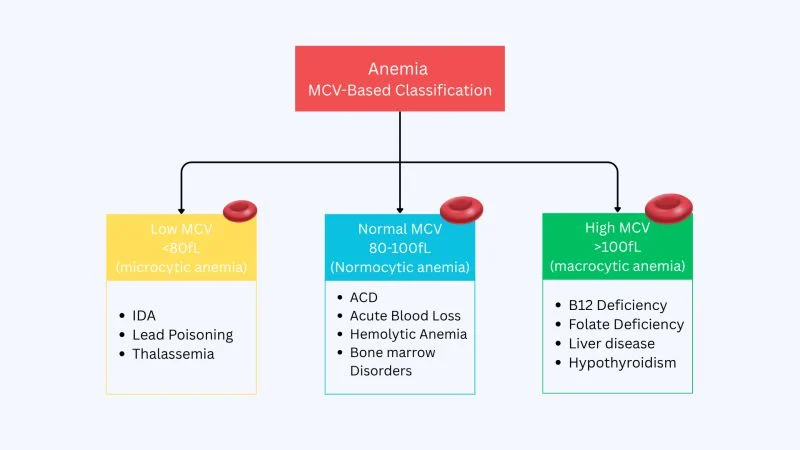
MCV-Based Classification:
- Low MCV (<80 fL): Indicates microcytic anemia (small RBCs)
Common anemias: Iron Deficiency Anemia, lead poisoning, thalassemia - Normal MCV: Indicates normocytic anemia (normal RBCs)
Common anemias: anemia of chronic disease, acute blood loss, hemolytic anemia, bone marrow disorder - High MCV (>100 fL): Indicates macrocytic anemia (big RBCs)
Common anemias: B12 deficiency, folate deficiency, liver disease, hypothyroidism
Why is the MCV important:
- Part of routine health checkups(via CBC)
- Helps narrow the cause of low anemia
- Monitor treatment response
MCV alone can’t diagnose a specific disease.
It must be determined alongside other indices such as MCH, MCHC, and RDW, as well as the patient’s clinical representation.”
Stay updated with Hemostasis Today.
-
Sep 30, 2026, 01:52Javed Anees: DADA2 – When a Young Stroke Is More Than a Stroke
-
Sep 30, 2026, 01:51How a Venous Thrombus Becomes Revascularized – ISTH
-
Sep 29, 2026, 22:45Victor Agunyego: Paracetamol – The Most Common Drug We Underestimate
-
Sep 29, 2026, 22:42Nova Sinclair: Advancing the Future of Hematology – Meet Our 2027 Organizing Committee
-
Sep 29, 2026, 22:41Lorenz Räber: Intracoronary Imaging in PCI – Why, When, How, and Which Modality?
-
Sep 29, 2026, 22:31Selma Turkovic: Pleased to Deliver the Opening Presentation at Kingston Hospital
-
Sep 29, 2026, 22:31Miguel Teran: Ultrasound and Simulation in Arterial Blood Sampling
-
Sep 29, 2026, 22:28Mohammad Refaei: Navigating Your Career in Hematology From Training to Practice
-
Sep 29, 2026, 22:27Matteo Foschi: 10 Clinical Pearls for Antithrombotic Therapy in Secondary Stroke Prevention