


Mariam Swidan: Some Red Blood Cells Can’t Handle Pressure
Mariam Swidan, Biomedical Science Graduate, Clinical Laboratory Professional, shared a post on LinkedIn:
“Clinical Lab Concepts 10- Osmotic Fragility
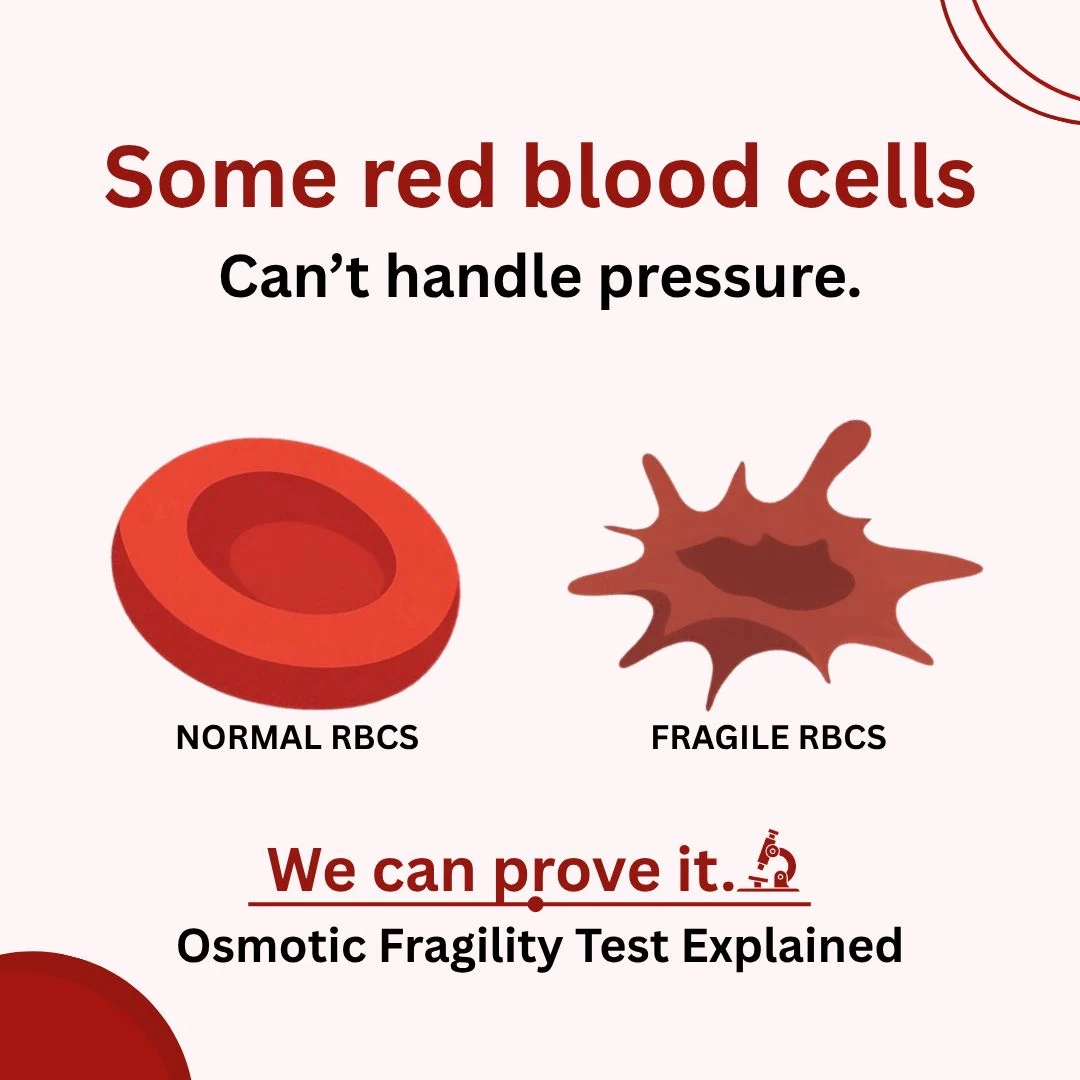
Some RBCs can’t handle pressure. We can prove it.
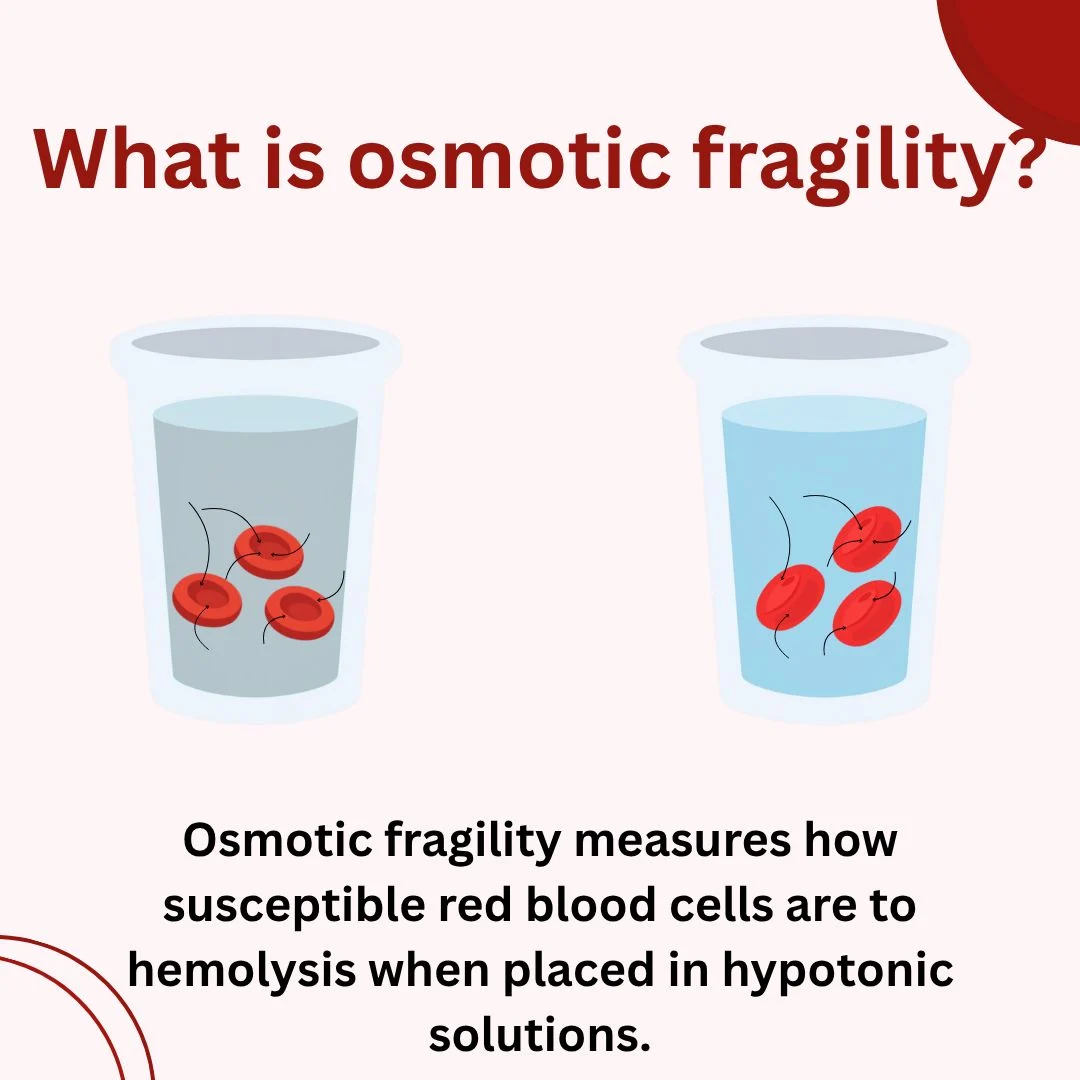
Osmotic fragility measures how susceptible red blood cells are to hemolysis when placed in hypotonic solutions.
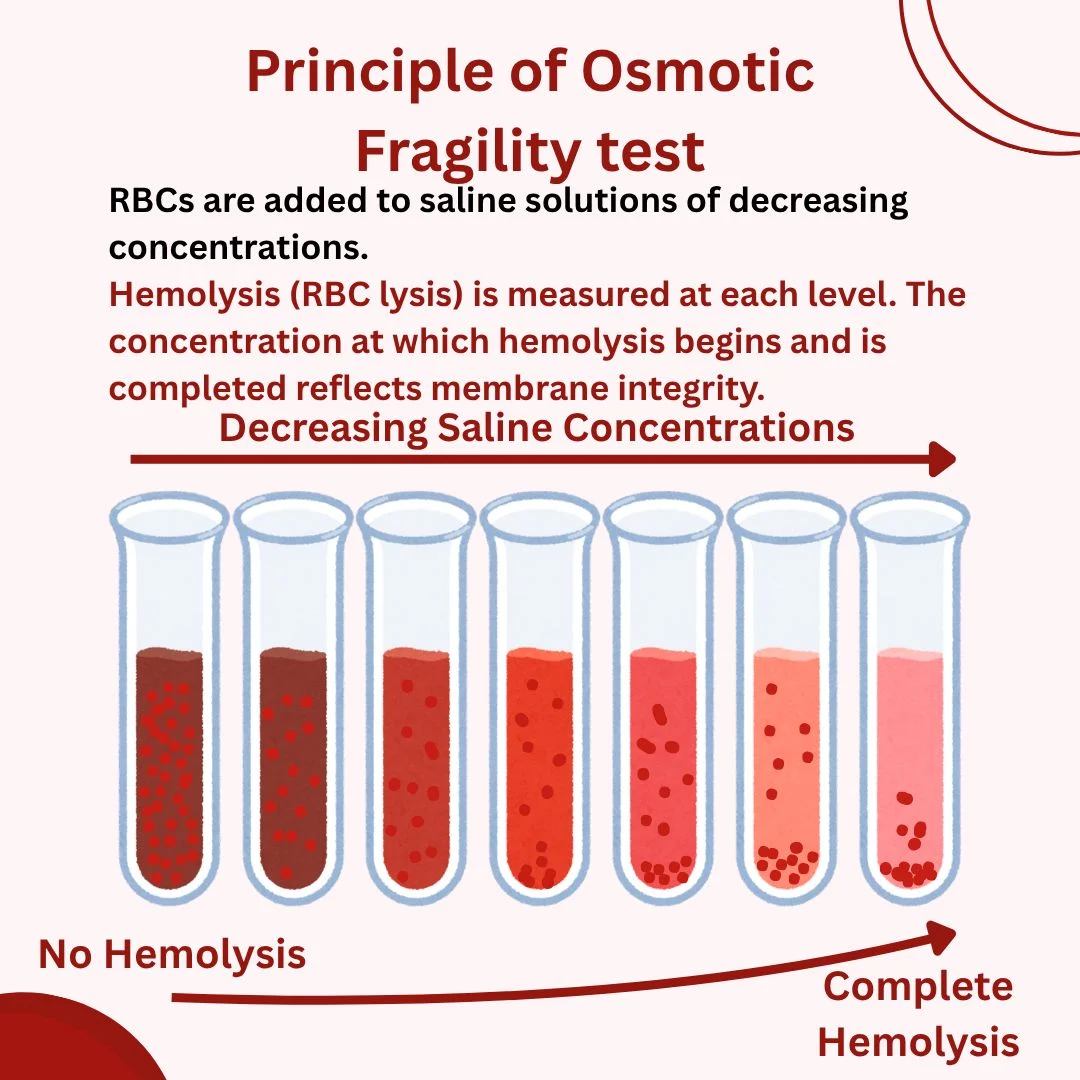
Principle
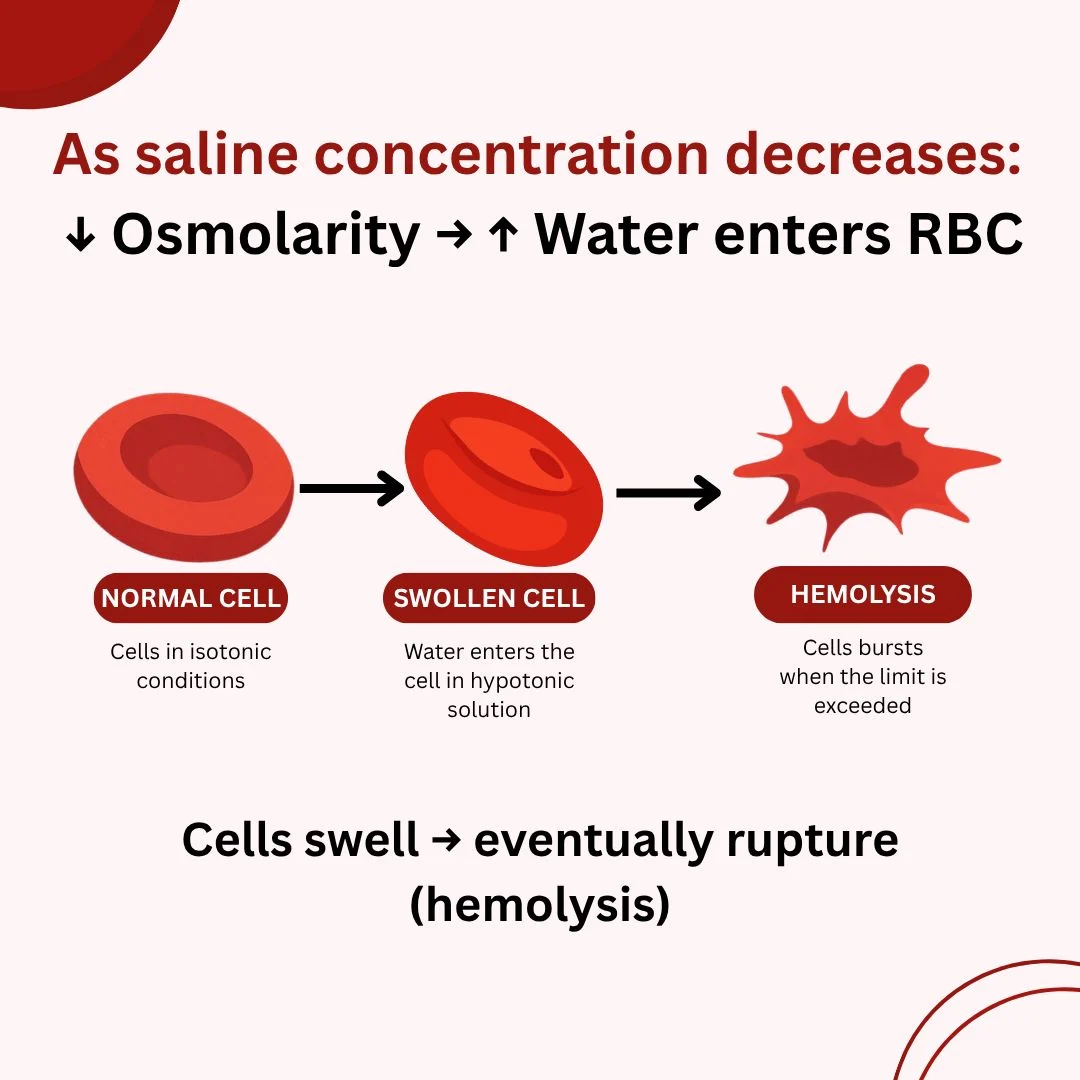
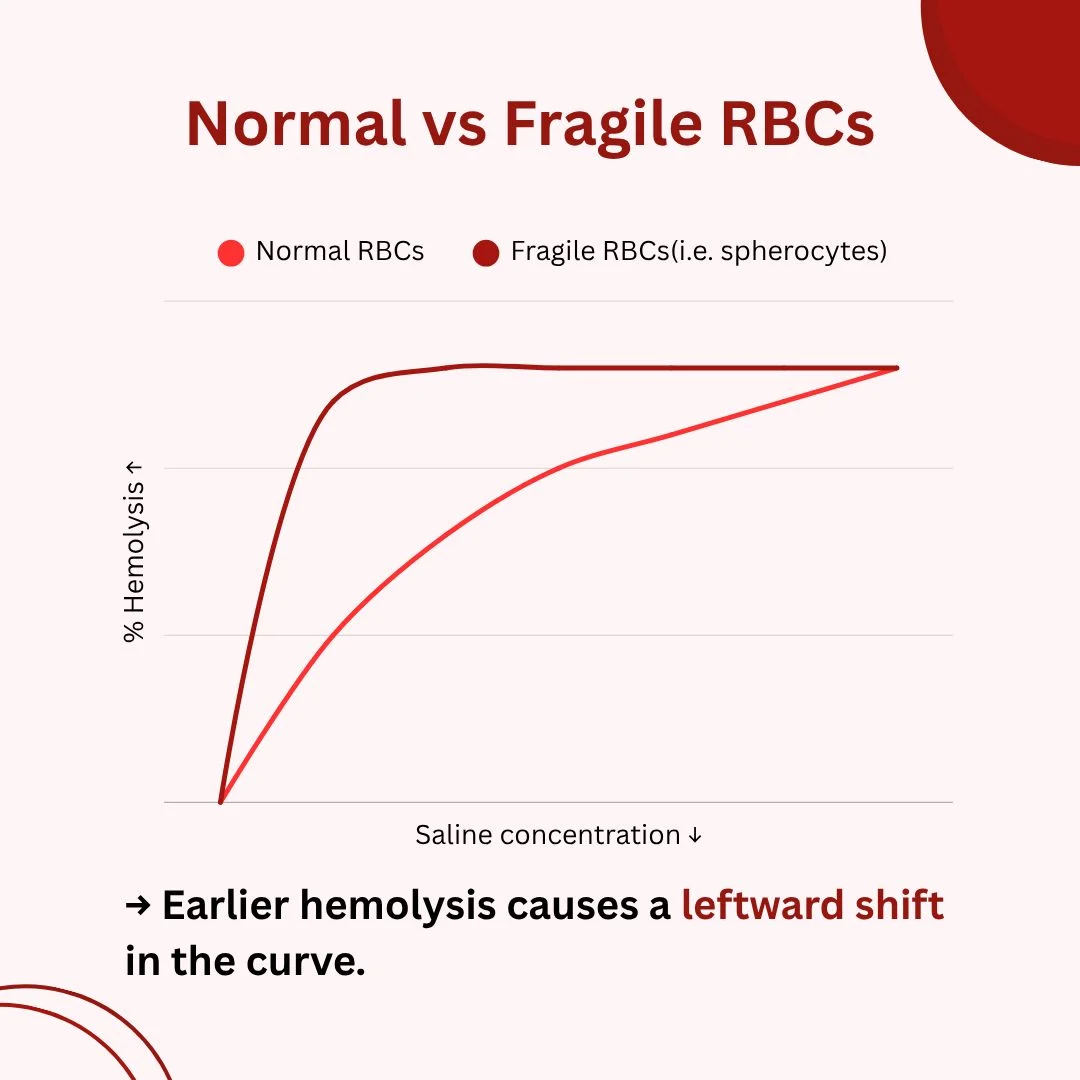
RBCs are added to a series of saline solutions with decreasing concentrations. As the solution becomes more hypotonic, water enters the cells, then RBCs swell and rupture (hemolysis).
Normal RBCs:
- Biconcave shape enhances flexibility
- Swell gradually
- Lyse later
Spherocytes:
- Decreased Surface area-to-volume ratio
- Reduced Membrane flexibility
- Rupture much earlier
Earlier hemolysis causes a leftward shift in the curve.
The concentration at which hemolysis begins and completes reflects membrane integrity.
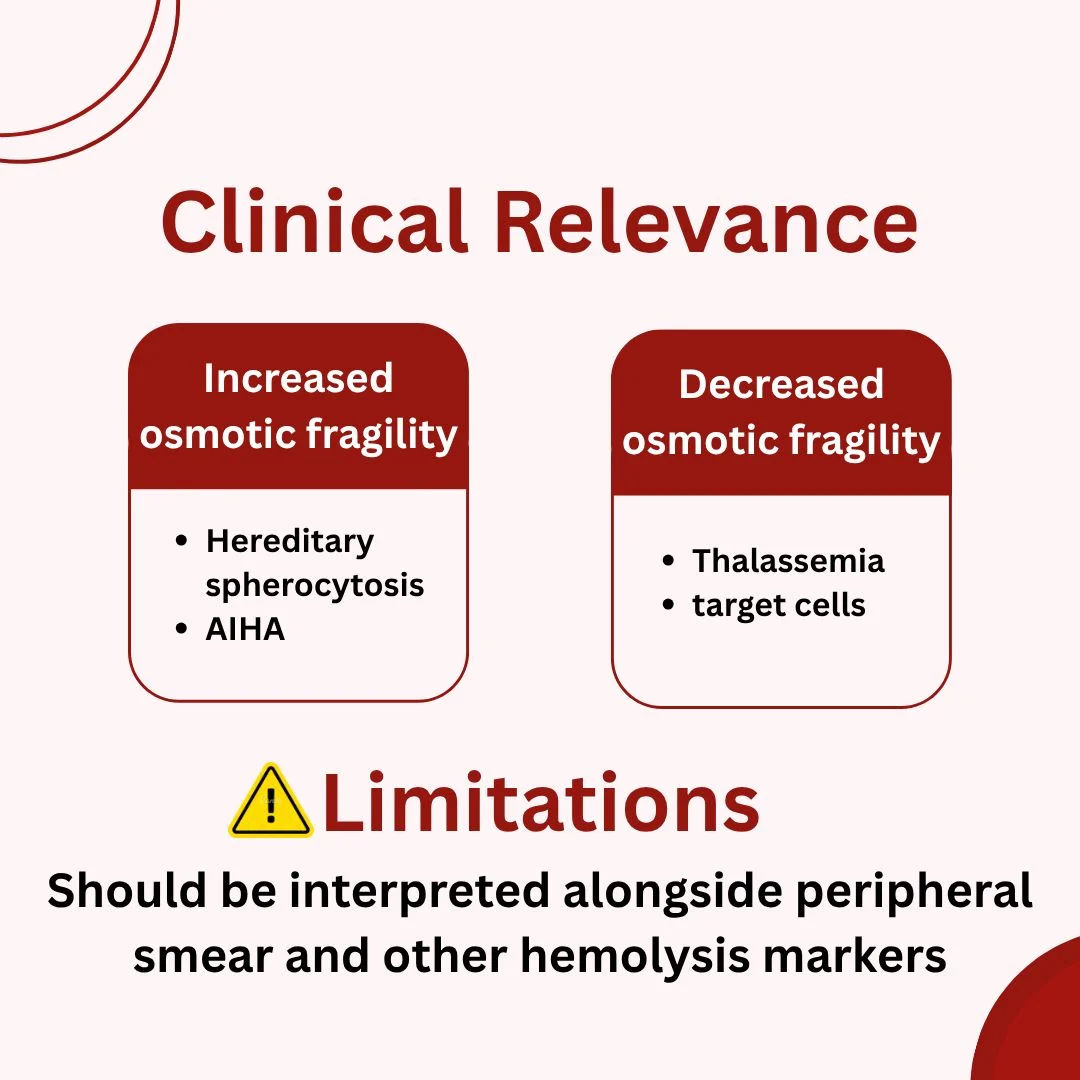
Clinical Relevance
- Increased osmotic fragility: Hereditary spherocytosis, AIHA
- Decreased fragility: Thalassemia, target cells
Limitations
Should be interpreted alongside peripheral smear and other hemolysis markers.
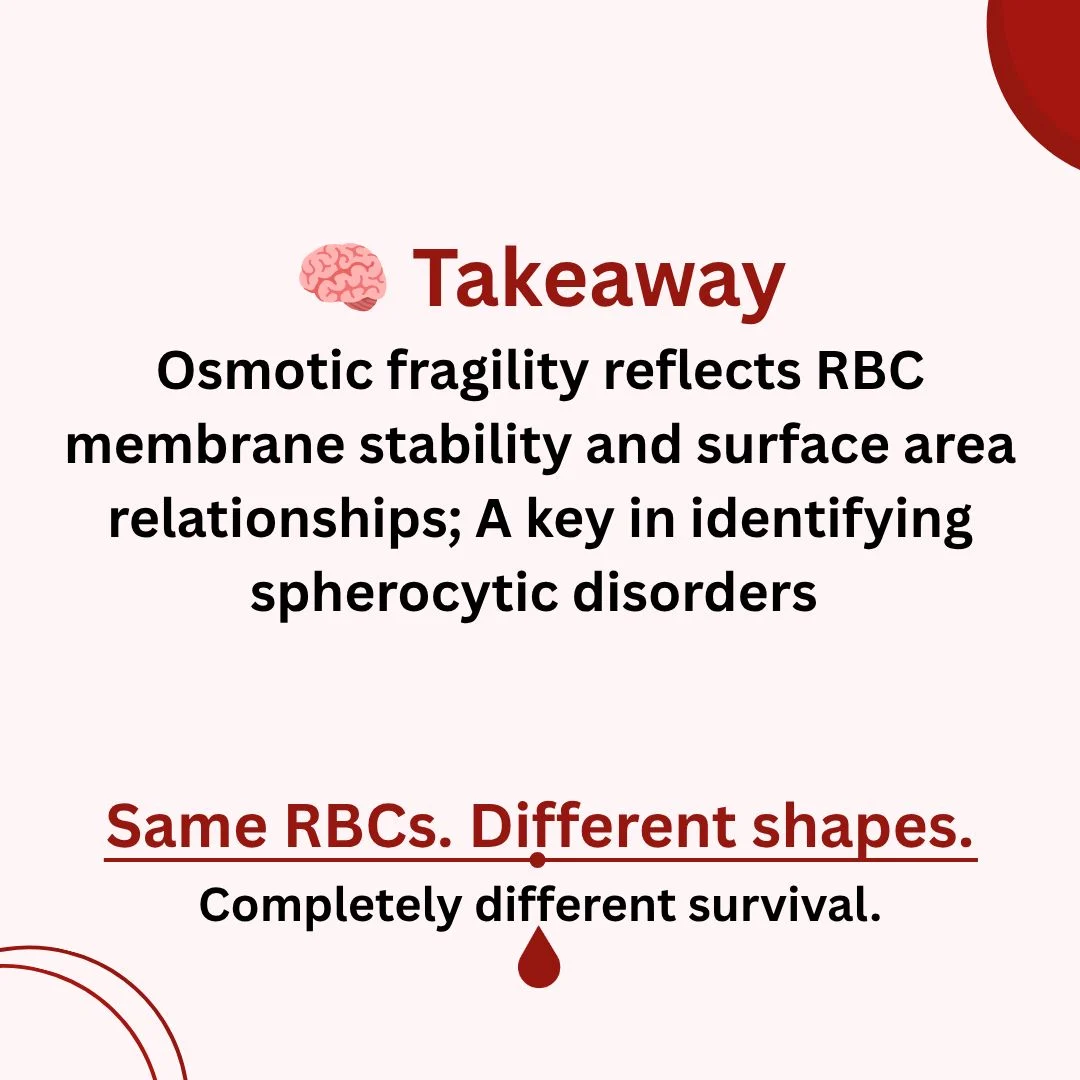
Takeaway
Osmotic fragility reflects RBC membrane stability and surface area relationships; A key in identifying spherocytic disorders
Same RBCs. Different shapes. Completely different survival.”
Find more posts featuring Mariam Swidan on Hemostasis Today.
-
Sep 21, 2026, 04:06Allison Lewin: How Gender Shapes the Way We Receive Medical Care
-
Sep 21, 2026, 03:49Jessica Lee: Walking Together for a Stronger Bleeding Disorders Community
-
Sep 21, 2026, 03:36Syed Asif Ali Shah: From Pakistan to Australia – A Clinical Haematology Milestone
-
Sep 21, 2026, 03:22Katie Baca-Motes: Estradiol Fluctuations May Help Explain Menstrual Migraine
-
Sep 21, 2026, 03:00Family History Can Reveal Hidden Risk of Aortic Dissection – The Marfan Foundation
-
Sep 21, 2026, 02:47Transitioning from Paediatric to Adult Haemophilia Care – Haemophilia Foundation Australia
-
Sep 21, 2026, 02:29Diana Castro Paupério: A New Era for Patient Blood Management
-
Sep 21, 2026, 00:29Iheanyichukwu Ike: Childhood Anaemia in Nigeria Through an Analysis of the 2018 NDHS
-
Sep 21, 2026, 00:27Nicole De Vita: The Global Burden of Iron Deficiency and Anemia in Women at SABM