

Rob Maloney: Finding the Invisible in Bleeding Disorder Care
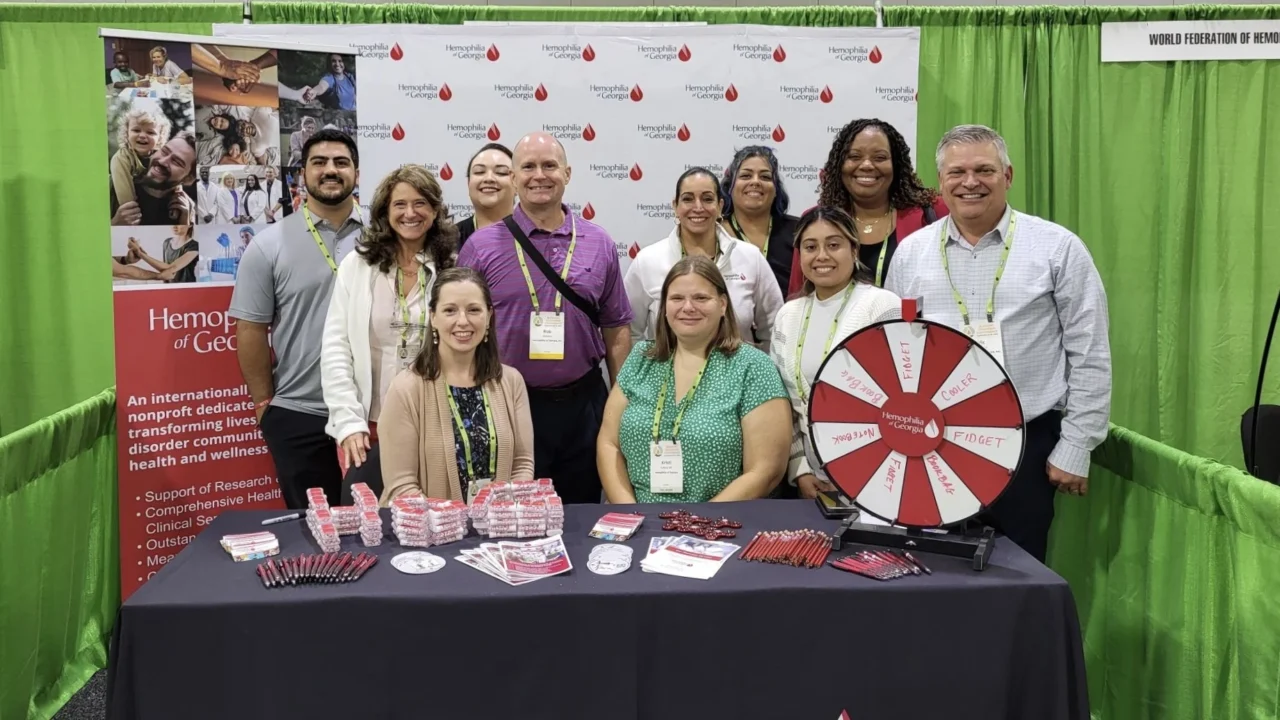
Rob Maloney, Chief Executive Officer at Hemophilia of Georgia, shared a post on LinkedIn:
“There’s a phrase that keeps coming back to me lately: The lost sheep.
Not in a dramatic sense or as a slogan. But as a responsibility.
In Georgia, we know there are people living with hemophilia or a bleeding disorder who aren’t connected to specialized care.
They’re out there.
Some live hours from Atlanta, Augusta, or Savannah.
Some were diagnosed years ago with a ‘mild case’ and told to just be careful
Some are being managed quietly by a primary care physician who’s doing their best but doesn’t specialize in rare bleeding disorders.
Some don’t even know they have it.
And because they’re not in crisis, they’re invisible.
This is one of the hardest truths about rare disease work.
If you’re not actively looking, you miss people.
I’ve walked hospital hallways long enough to know how easily this happens. The system is built to respond when something breaks. It’s not built to search.
At Hemophilia of Georgia, that changes how we think about our work.
We’re not just here for the families already in our clinics.
We’re here for the ones who haven’t found us yet.
The teenager in South Georgia who avoids sports because bruises linger too long.
The woman who assumes heavy bleeding is just something she has to live with.
The older adult who’s never met another person with the same diagnosis.
The family who doesn’t know there’s a nurse, a social worker, and a pharmacist who specialize in exactly what they’re facing.
These are people living quietly on the margins of a system that was never designed for them.
So part of our mission isn’t only care.
It’s outreach.
Education for primary care physicians.
Partnership, not competition, with local providers.
Telemedicine for families who can’t easily travel.
Letting people know they don’t have to choose between their local doctor and specialized support. There’s room for both.
This work doesn’t show up neatly in metrics. But it shows up when someone finally says, ‘I didn’t know this kind of help existed.’
That’s the moment we’re after. Because leadership in healthcare isn’t just about serving who shows up.
It’s about going after the ones who don’t even know they’re missing something.
And until every person in Georgia with a bleeding disorder knows they’re not alone, our work isn’t finished.
Not because we need to be louder.
But because some sheep don’t wander loudly.
They just quietly disappear.
And someone has to be paying attention.”
Stay updated with Hemostasis Today.
-
Sep 30, 2026, 01:52Javed Anees: DADA2 – When a Young Stroke Is More Than a Stroke
-
Sep 30, 2026, 01:51How a Venous Thrombus Becomes Revascularized – ISTH
-
Sep 29, 2026, 22:45Victor Agunyego: Paracetamol – The Most Common Drug We Underestimate
-
Sep 29, 2026, 22:42Nova Sinclair: Advancing the Future of Hematology – Meet Our 2027 Organizing Committee
-
Sep 29, 2026, 22:41Lorenz Räber: Intracoronary Imaging in PCI – Why, When, How, and Which Modality?
-
Sep 29, 2026, 22:31Selma Turkovic: Pleased to Deliver the Opening Presentation at Kingston Hospital
-
Sep 29, 2026, 22:31Miguel Teran: Ultrasound and Simulation in Arterial Blood Sampling
-
Sep 29, 2026, 22:28Mohammad Refaei: Navigating Your Career in Hematology From Training to Practice
-
Sep 29, 2026, 22:27Matteo Foschi: 10 Clinical Pearls for Antithrombotic Therapy in Secondary Stroke Prevention