


Smitirupa Mishra: Early Clues Lie in Neutrophil Morphology
Smitirupa Mishra, Consultant Pathologist at Sparsh Hospitals and Lab Head at Pathkind Labs, shared a post on LinkedIn:
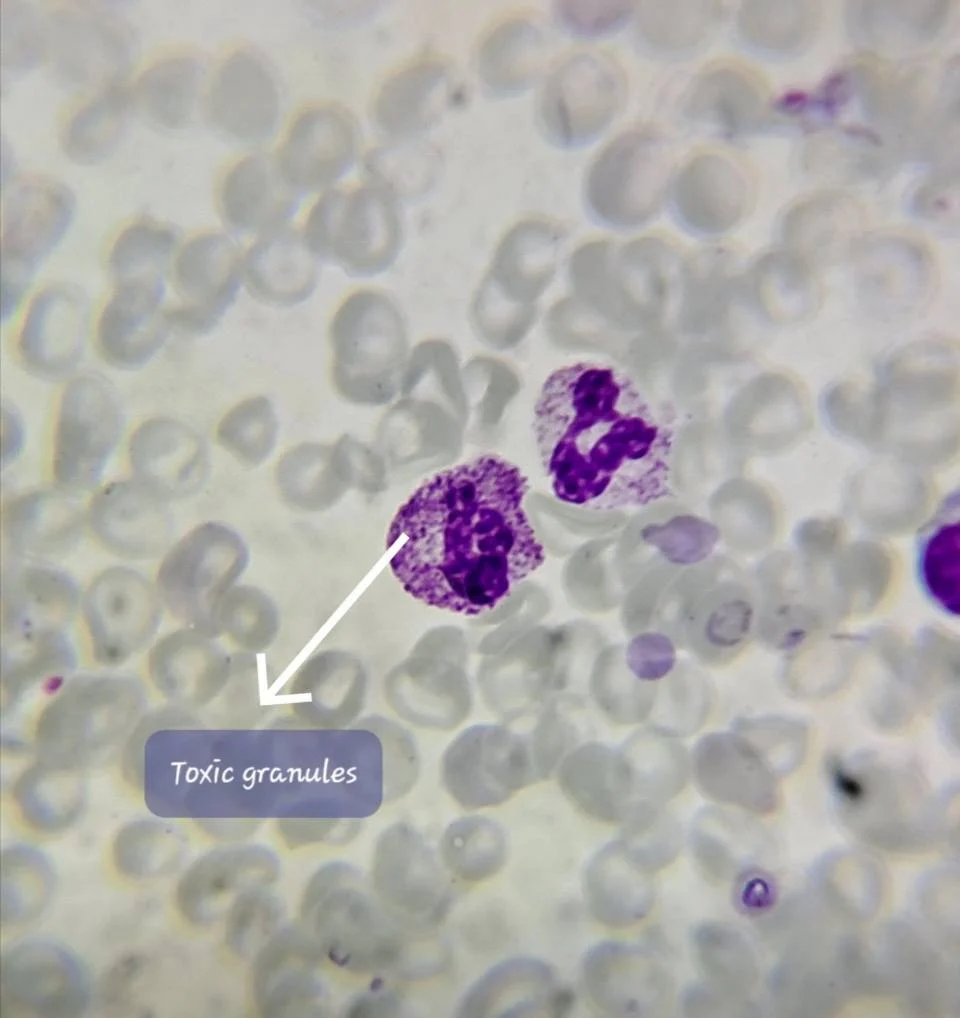
”Toxic Granules in Neutrophils – Practical Reporting and Clinical Relevance
Toxic granulation is not just a morphological curiosity-it is a dynamic indicator of systemic stress and marrow response, often guiding early clinical decisions.
What are Toxic Granules?
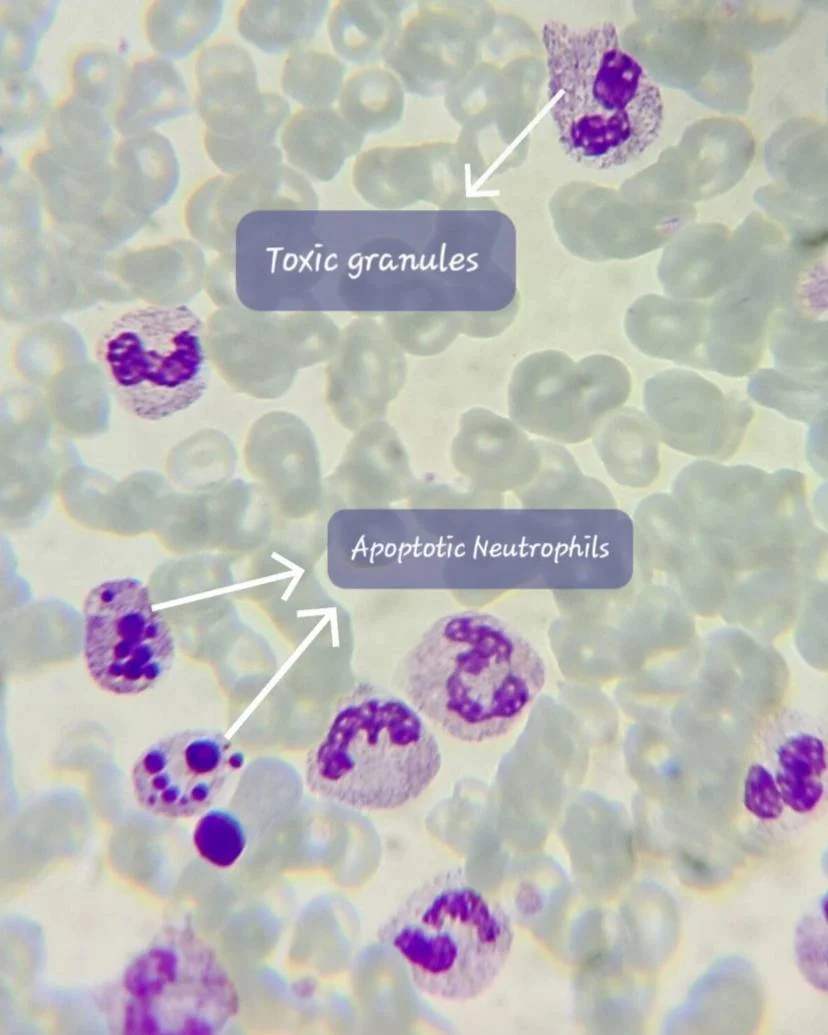
Coarse, dark blue-purple cytoplasmic granules in neutrophils representing retained primary (azurophilic) granules due to accelerated granulopoiesis under cytokine stimulation (e.g., IL-6, G-CSF).
How to Identify
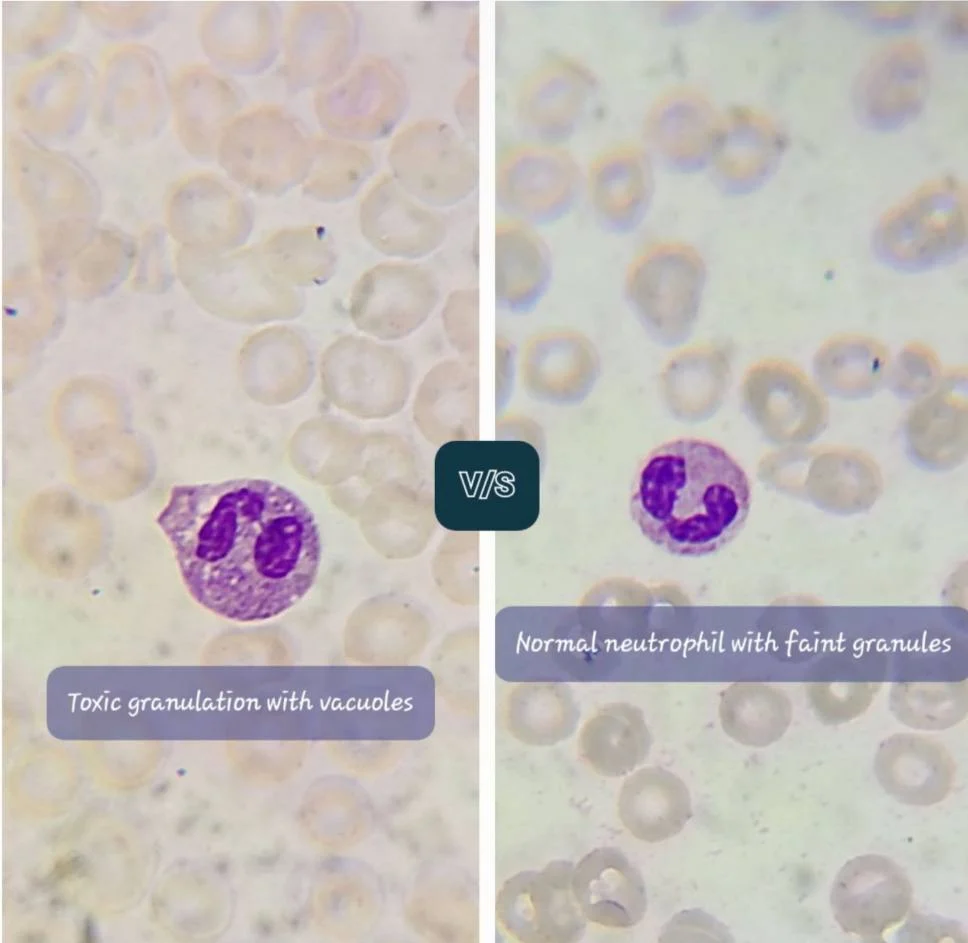
Coarse, prominent, dark granules (larger than normal)
Uneven cytoplasmic distribution
Frequently associated with:
- Döhle bodies
- Cytoplasmic vacuolation
- Left shift
Always compare with internal control neutrophils on the same smear.
When Should You Report Toxic Granulation?
Based on Morphology (Primary Criterion)
Report when:
- Moderate to marked granulation
- Seen in a significant proportion of neutrophils
- Associated with other toxic changes
Should You Mention It with Normal or High WBC Counts?
Yes – WBC count does NOT limit reporting.
1. High WBC Count (Neutrophilia)
Most common scenario
Strongly supports acute bacterial infection / inflammation
Adds weight to a reactive process
2. Normal WBC Count
Very important to report
May indicate:
Early infection (before leukocytosis develops)
Localized infection
Immunocompromised states where WBC response is blunted
Toxic granulation can be an earlier and more sensitive marker than total leukocyte count.
3. Low WBC Count (Neutropenia)
If present, it is clinically significant and potentially alarming
Suggests:
Severe infection (e.g., sepsis) with marrow exhaustion
Clinical Significance
Seen in:
- Acute bacterial infections & sepsis
- Severe inflammation (burns, trauma)
- Post G-CSF therapy
- Pregnancy (mild)
What About Apoptotic Neutrophils?
How to Recognize Apoptotic Neutrophils?
Nuclear condensation (pyknosis)
Fragmentation (karyorrhexis)
Cytoplasmic shrinkage with or without vacuoles
Is there a correlation with toxic granulation?
- Toxic granulation indicates increased production and activation
- Apoptotic neutrophils indicate increased turnover and cell death
May indicate:
Intense inflammatory response with rapid neutrophil turnover
Seen in:
- Sepsis
- Severe infections
- Cytokine storm states
It reflects a high neutrophil kinetic state:
Increased production (toxic change) plus increased destruction (apoptosis)
How This Helps Clinicians
- Detect early infection, even with normal counts
- Identify severity and systemic involvement
- Distinguish reactive vs neoplastic neutrophilia
- Flag high-risk states (toxic changes plus neutropenia)
- Monitor treatment response
Pitfalls
- Don’t overcall in poorly stained smears
- Avoid reporting when minimal or focal
- Correlate with clinical context always
Take-Home Message
- Report toxic granulation based on morphology-not WBC count
- Its presence with normal or low counts is often more clinically significant
- Association with apoptotic neutrophils suggests high inflammatory turnover and severity.”
Stay updated with Hemostasis Today.
-
Sep 24, 2026, 06:52Gina Sado: Screening-Detected Atrial Fibrillation Carries High Risk of Heart Failure
-
Sep 24, 2026, 06:33Benjamin Vipler: Optimal Oral Anticoagulation Choice in Atrial Fibrillation and Advanced CKD
-
Sep 24, 2026, 06:08Christopher Salerno: AI-Powered At-Home Anemia Screening Advances Telehealth Access
-
Sep 24, 2026, 05:38Aya Qattan: When a Normal CBC Does Not Mean Normal Iron Status
-
Sep 24, 2026, 05:11Mastering Warm Autoimmune Hemolytic Anemia Diagnosis and Practice – ASH Education
-
Sep 23, 2026, 16:04Monia Ezzalfani: Advancing Patient-Centered Care in Hemophilia A and B
-
Sep 23, 2026, 15:49Bilge Başak: How Activated PRP Modulates Osteoarthritic Chondrocyte Function
-
Sep 23, 2026, 14:50Mbonjo Bitsie Dora: Strengthening Sickle Cell Care Through Education, Awareness and Innovation
-
Sep 23, 2026, 13:58The New B12 Diagnostic Algorithm: From Serum Cobalamin to Functional Deficiency