


Smitirupa Mishra: Normal Hemoglobin Does Not Always Mean Normal Genes
Smitirupa Mishra, Consultant Pathologist at Sparsh Hospitals and Lab Head at Pathkind Labs, shared a post on LinkedIn:
“After reporting daily HPLCs, and seeing so many carrier states that look completely normal on a CBC…
that’s when it really struck me:
‘Normal hemoglobin does not always mean normal genes.’
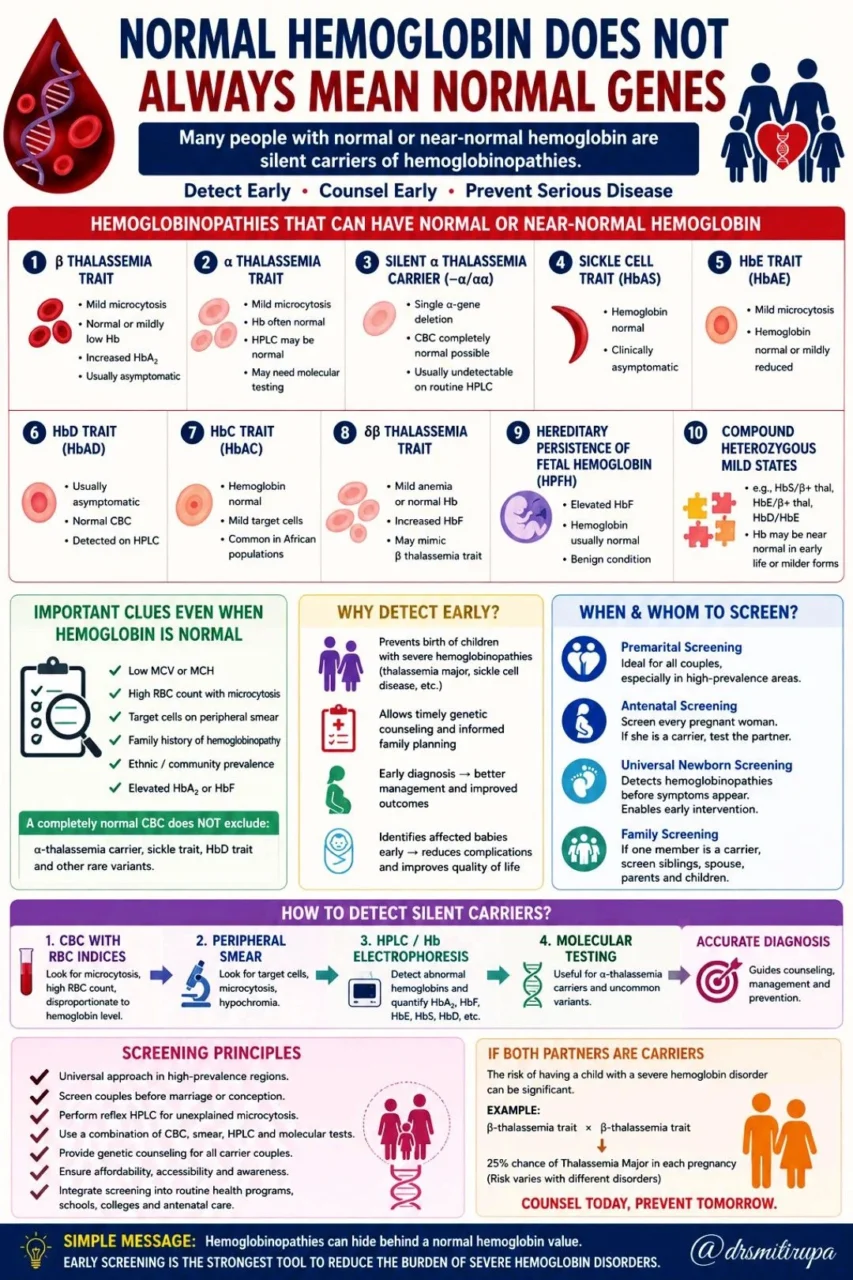
Many people walk into the lab with normal hemoglobin and no symptoms – yet they silently carry hemoglobinopathies.
These ‘silent carriers’ are often detected only through HPLC/electrophoresis.
Early detection can prevent a lifetime of complications for the next generation.
Hemoglobinopathies that may have normal or near-normal hemoglobin:
- β-thalassemia trait
- α-thalassemia trait (including silent carriers)
- Sickle cell trait (HbAS)
- HbE trait
- HbD trait
- HbC trait
- δβ-thalassemia trait
- Hereditary persistence of fetal hemoglobin (HPFH)
- Mild/compound heterozygous states (e.g., HbE/β plus thal, HbS/β plus thal)
The real goal:
Detect early.
Counsel early.
Prevent severe hemoglobinopathies.
Screening principles to follow:
- Do not rely on hemoglobin alone.
- Look for clues: low MCV/MCH, high RBC count, target cells, family/ethnic history.
- Use HPLC/electrophoresis as a screening tool.
- Screen both partners (premarital/antenatal).
- Counsel and guide at-risk couples.
- Consider molecular testing when needed (especially for α-thalassemia).
- Universal and community screening can save generations.
Every HPLC report is more than numbers – it is an opportunity to change a family’s future.
Let’s keep raising awareness, strengthening screening, and working together to reduce the burden of hemoglobin disorders.”
Stay updated with Hemostasis Today.
-
Oct 26, 2026, 15:13Heghine Khachatryan: Approaching Thrombocytopenia Through Mechanism and Clinical Context
-
Oct 26, 2026, 15:03Quentin Eichbaum։ AABB 2026 Annual Meeting Personal Highlights
-
Oct 26, 2026, 14:57A Father’s Marathon Journey Inspired by His Son – National Bleeding Disorders Foundation
-
Oct 26, 2026, 14:48Fran Huelsmeyer: The Clinical Importance of Blood Donation in Maternal Care
-
Oct 26, 2026, 14:45Maria Elisa Mancuso: Shaping the Future of Hemophilia Care with Patients
-
Oct 26, 2026, 14:35Choosing the Right VTE Risk Assessment Model for Clinical Practice
-
Oct 26, 2026, 14:29Ilenia Calcaterra: HEMOPLATE Explores Biological Factors Behind Bleeding Variability in Haemophilia A
-
Oct 26, 2026, 14:28Giovanni Solimeno: An Advanced Thrombin Injection Technique for Complex Femoral Pseudoaneurysms
-
Oct 26, 2026, 14:20Abdul Mannan: Are We Teaching Doctors to Think or Just Trust AI?